
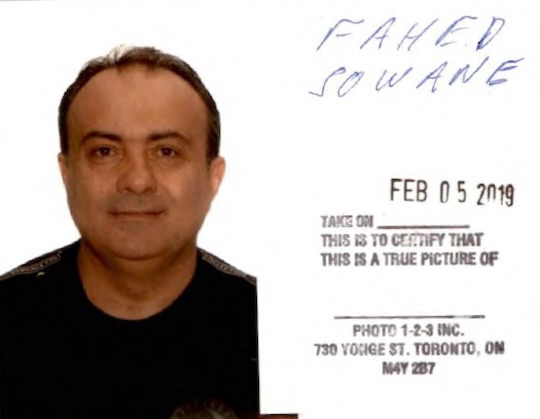
Photo of Fahed Sowane from his immigration file.
Federal Court

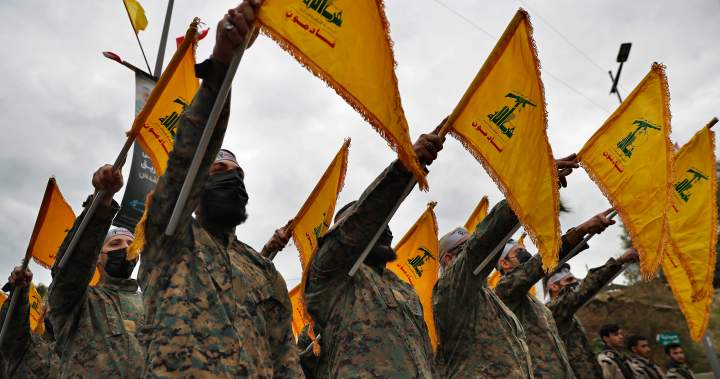
Canadian officials have accused a Toronto-area used car dealer of laundering money for the Iranian-backed terrorist group Hezbollah.
Fahed Sowane, a 57-year-old Lebanese citizen who came to Canada on a work permit in 2016, has denied the allegations.
But in heavily-redacted court records released to Global News, the officials called the Mississauga, Ont., resident a “danger to the security of Canada.”
A veteran auto trader, Sowane has exported Audi, BMW and other vehicles to the Hezbollah-controlled port of Beirut, the highly-classified documents allege.
Immigration officials concluded the shipments amounted to “money laundering to benefit Hezbollah,” according to the files.
As a result, the officials found Sowane inadmissible to Canada, meaning he is not allowed to remain in the country.
The Federal Court upheld the decision last week.
A former Canadian intelligence analyst who specializes in terror finance said high-end auto exports were a “very well-known Hezbollah financing technique.”
To move cash across borders, Hezbollah uses it to buy vehicles, which are sent to Lebanon and resold, said Jessica Davis, president of Insight Threat Intelligence.
“What this means is that money is moving from Canada to Lebanon but without ever touching the banking system,” the former Canadian Security Intelligence Service official said.
“And this is important because banks are actually pretty well equipped to detect money laundering and terrorist financing. And so this is a way that criminals circumvent all of those safeguards that we put into the financial system.”
Federal Court
The Canada Border Services Agency did not respond to questions about the matter. Sowane’s lawyer said his client was disappointed by the court’s ruling.
In emails to Global News, Dan Miller said the immigration officials on the case “could offer no evidence of any conduct of concern.”
He disputed the government’s claim that Sowane had exported vehicles to Beirut for less than he paid for them — a flag for money laundering.
Sowane’s “frustration is made all the worse because the Canadian government allows hundreds of Iranian Revolutionary Guard Corps members to reside freely in Canada, a group which he strongly opposes,” Miller added.
“Similarly, each weekend pro-Hamas supporters gather freely at the intersection of Bathurst St. and Sheppard Ave. in Toronto to intimidate the local Jewish community, and the government does nothing to stop this.”
“Instead, the government goes after small-time individuals on flimsy suspicions to pretend to be doing something, while at the same time it avoids taking any action which could offend its voter base.”
Hezbollah is a “radical Shia group” devoted to turning Lebanon into an Islamist republic like Iran, according to Public Safety Canada.
Armed, trained and financed by Tehran, it is part of the Iranian-led “axis of resistance” that also includes Gaza-based Hamas and Yemen’s Houthis.
Although bankrolled by Iran, Hezbollah also relies on drug trafficking and other crimes for revenue, and launders the proceeds, often through the global auto trade.
Iran has encouraged its axis groups to develop alternative sources of funding, said Davis, author of Illicit Money: Financing Terrorism in the 21st Century.
That includes taxation, extortion, investments and criminal networks, she said.
“Those are the kinds of things that provide longevity and financial lifelines to terrorist groups, even when their terrorist patrons cut them off.”
In a 2022 terrorist financing alert, the Financial Transactions and Reports Analysis Centre of Canada warned about Hezbollah’s activities.
The bulletin said that, after ISIS, Hezbollah was the international terrorist group most frequently spotted moving money across borders.
“A large portion of funds suspected of funding Hezbollah were sent to Lebanon,” FINTRAC wrote in the operation alert for financial institutions.
“Funds suspected of funding Hezbollah were frequently sent or received by individual/entities referencing sale of cars or listed in the automotive industry.”
A car dealer for more than three decades, Sowane launched Black Swan Trading Inc. in Ontario in 2015, according to documents filed in Federal Court.
He also worked at M&J Canada Inc., where his duties included exporting used cars and parts to overseas markets, according to the records.
The Mississauga used vehicle dealership, which described Sowane in a letter as a full-time employee, did not respond to requests for comment.
Three years after Sowane arrived in Canada on a work permit, Ontario’s Ministry of Economic Development nominated him to become a landed immigrant.
The province nominates prospective immigrants who “have the skills and experience the Ontario economy needs,” according to the government website.
The ministry responsible for the program did not respond to questions.
Federal Court
While federal immigration officials were processing Sowane’s permanent residence application, the Canadian Security Intelligence Service stepped in.
After CSIS sent a security screening brief to the CBSA in February 2024, Sowane was rejected “for being a danger to the security of Canada.”
Although immigration officials asked Sowane for records on his auto exports, they said he did not provide them, prompting officials to allege he “withheld information.”
Sowane argued he did not share the same religious beliefs as Hezbollah, but the CBSA said that “ideology may not be a factor when it comes to personal economic profit.”
His lawyer told immigration officers his client had “never had anything to do with Hezbollah and that his business activities have never had anything to do with Hezbollah.”
“The Sunnis in Lebanon hate Hezbollah and Mr. Sowane is no different. He blames Hezbollah for turning Lebanon into a failed state and says that he wants nothing to do with Hezbollah,” the lawyer wrote in an April 2024 email.
Sowane appealed the CBSA’s decision but lost.
In a decision handed down on Jan. 21, the Federal Court said the immigration department had come to its decision in a “procedurally fair and reasonable manner.”
Davis called it “a rare case of Hezbollah enforcement disruption in Canada,” which used the immigration screening system as opposed to the criminal courts.
“I think it’s really important that Canadians understand that this kind of stuff is happening in this country even when we don’t see law enforcement action,” she said.
“There are other ways that the Canadian government goes about disrupting finance networks. Immigration is a really, actually quite important, piece of that.”
Stewart.Bell@globalnews.ca
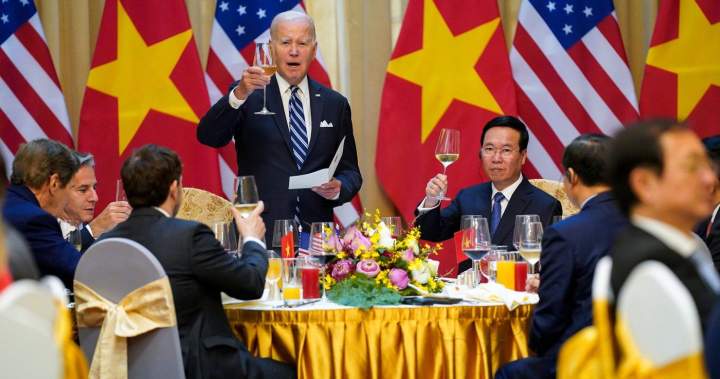
A year after Vietnam elevated its relations with Washington to the highest diplomatic level, an internal document shows its military was taking steps to prepare for a possible American “war of aggression” and considered the United States a “belligerent” power, according to a report released Tuesday.
More than just exposing Hanoi’s duality in approach toward the U.S., the document confirms a deep-seated fear of external forces fomenting an uprising against the Communist leadership in a so-called “color revolution,” like the 2004 Orange Revolution in Ukraine, or the 1986 Yellow Revolution in the Philippines.
Other internal documents that The 88 Project, a human rights organization focused on human rights abuses in Vietnam, cited in its analysis point to similar concerns over U.S. motives in Vietnam.
“There’s a consensus here across the government and across different ministries,” said Ben Swanton, co-director of The 88 Project and the report’s author. “This isn’t just some kind of a fringe element or paranoid element within the party or within the government.”
The original Vietnamese document titled “The 2nd U.S. Invasion Plan” was completed by the Ministry of Defense in August 2024.
It suggests that in seeking “its objective of strengthening deterrence against China, the U.S. and its allies are ready to apply unconventional forms of warfare and military intervention and even conduct large-scale invasions against countries and territories that ‘deviate from its orbit.’”
While noting that “currently there is little risk of a war against Vietnam,” the Vietnamese planners write that “due to the U.S.’s belligerent nature we need to be vigilant to prevent the U.S. and its allies from ‘creating a pretext’ to launch an invasion of our country.”
The Vietnamese military analysts outline what they see as a progression over three American administrations — from Barack Obama, through Donald Trump’s first term, and into Joe Biden’s presidency — with Washington increasingly pursuing military and other relationships with Asian nations to “form a front against China.”
In his term, Biden in 2023 signed a “Comprehensive Strategic Partnership” with Vietnam, elevating relations between the nations to their highest diplomatic level on par with Russia and China as “trusted partners with a friendship grounded in mutual respect.”

For news impacting Canada and around the world, sign up for breaking news alerts delivered directly to you when they happen.
In the 2024 military document, however, Vietnamese planners said that while the U.S. views Vietnam as “a partner and an important link,” it also wants to “spread and impose its values regarding freedom, democracy, human rights, ethnicity and religion” to gradually change the country’s socialist government.
“The 2nd U.S. Invasion Plan provides one of the most clear-eyed insights yet into Vietnam’s foreign policy,” Swanton wrote in his analysis. “It shows that far from viewing the U.S. as a strategic partner, Hanoi sees Washington as an existential threat and has no intention of joining its anti-China alliance. ”
Vietnam’s Foreign Ministry did not answer emails seeking comment on The 88 Project report or the document it highlighted.
The U.S. State Department refused to comment directly on the “2nd U.S. Invasion Plan,” but stressed the new partnership agreement, saying it “promotes prosperity and security for the United States and Vietnam.”
“A strong, prosperous, independent and resilient Vietnam benefits our two countries and helps ensure that the Indo-Pacific remains stable, secure, free and open,” the State Department said.
Nguyen Khac Giang, of Singapore’s ISEAS–Yusof Ishak Institute research center, said the plans highlighted tensions within Vietnam’s political leadership, where the Communist Party’s conservative, military-aligned faction has long been preoccupied with external threats to the regime.
“The military has never been too comfortable moving ahead with the Comprehensive Strategic Partnership with the United States,” Giang said.
Tensions within the government spilled into the public realm in June 2024, when U.S.-linked Fulbright University was accused of fomenting a “color revolution” by an army TV report. The Foreign Ministry defended the university, which U.S. and Vietnamese officials had highlighted when the two countries upgraded ties.
Zachary Abuza, a professor at the National War College in Washington, said the Vietnamese military still has “a very long memory” of the war with the U.S. that ended in 1975. While Western diplomats have tended to see Hanoi as most concerned by possible Chinese aggression, the document reinforces other policy papers suggesting leaders’ biggest fear is that of a “color revolution,” he said.
Further undermining trust between the U.S. and Vietnam were cuts made to the U.S. Agency for International Development by President Donald Trump’s administration, which disrupted projects such as efforts to clean up tons of soil contaminated with deadly dioxin from the military’s Agent Orange defoliant and unexploded American munitions and land mines.
“This pervasive insecurity about color revolutions is very frustrating, because I don’t see why the Communist Party is so insecure,” said Abuza, whose book “The Vietnam People’s Army: From People’s Warfare to Military Modernization?” was published last year.
“They have so much to be proud of — they have lifted so many people out of poverty, the economy is humming along, they are the darling of foreign investors.”
While China and Vietnam have been at odds over territorial claims in the South China Sea, the documents portray China more as a regional rival than a threat like the U.S.
“China doesn’t pose an existential threat to the Communist Party (of Vietnam),” Abuza said. “Indeed, the Chinese know they can only push the Vietnamese so far, because they’re fearful that the Communist Party can’t respond forcefully to China (and will) look weak and it will cause a mass uprising.”
China is Vietnam’s largest two-way trade partner, while the U.S. is its largest export market, meaning Hanoi needs to perform a balancing act in keeping up diplomatic and economic ties, while also hedging its bets.
“Even some of the more progressive leaders look at the United States, saying, ‘Yes, they like us, they’re working with us, they are good partners for now, but given the opportunity if there were a color revolution, the Americans would support it,’” Abuza said.
Under Vietnamese leader To Lam, who became Communist Party general secretary at around the same time the document was written, the country has moved to strengthen ties with the U.S., especially under Trump, Giang said.
Lam was reappointed general secretary last month and is expected to also assume the presidency, which would make him the country’s most powerful figure in decades.
With Lam at the helm, Trump’s family business has broken ground on a $1.5 billion Trump-branded golf resort and luxury real estate project in northern Hung Yen province. The Vietnamese leader almost immediately accepted Trump’s invitation to join the Board of Peace, which Giang said was an unusually swift decision given that foreign policy moves are typically calibrated with close attention to Beijing’s possible reaction.
But Trump’s military operation to capture former Venezuelan President Nicolás Maduro have given Vietnamese conservatives fresh justification for their unease about closer ties with Washington. Any U.S. military action involving Hanoi’s ally Cuba could upset Vietnam’s strategic balance, Giang added.
“Cuba is very sensitive,” he said. “If something happens in Cuba, it will send shock waves through Vietnam’s political elites. Many of them have very strong, intimate ties with Cuba.”
Overall, the first year of Trump’s second term is likely to have left the Vietnamese happy about the focus on the Western Hemisphere but wondering about other developments, Abuza said.
“The Vietnamese are going to be confused by the Trump administration, which has downplayed human rights and democracy promotion, but at the same time been willing to violate the sovereignty of states and remove leaders they don’t like,” he said.
Russia carried out a major overnight attack on Ukraine in what President Volodymyr Zelenskyy said Tuesday was a broken commitment to halt striking energy infrastructure as the countries prepared for more talks on ending Moscow’s 4-year-old full-scale invasion.
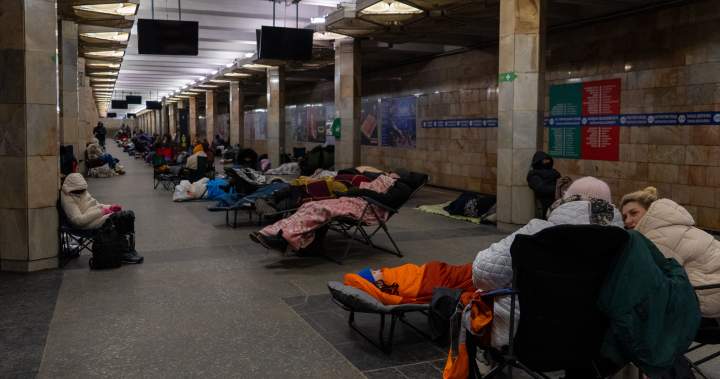
The bombardment included hundreds of drones and a record 32 ballistic missiles, wounding at least 10 people. It specifically took aim at the power grid, Zelenskyy said, as part of what Ukraine says is Moscow’s ongoing campaign to deny civilians light, heating and running water during the coldest winter in years.
“Taking advantage of the coldest days of winter to terrorize people is more important to Russia than diplomacy,” Zelenskyy said.
Temperatures in Kyiv fell to minus 20 degrees Celsius (minus 4 Fahrenheit) during the night and stood at minus 16 C (minus 3 F) on Tuesday.
NATO Secretary-General Mark Rutte visited Kyiv in a show of support. He said that the overnight strikes raise doubts about Moscow’s intentions on the eve of talks, calling them “a really bad signal.”
He added that it was clear that the attacks only strengthen Ukrainians’ resolve.
Officials have described recent talks between Moscow and Kyiv delegations as constructive. But after a year of efforts, the Trump administration is still searching for a breakthrough on key issues such as who keeps the Ukrainian land that Russia’s army has occupied, and a comprehensive settlement appears distant. The talks in Abu Dhabi, United Arab Emirates, are scheduled for Wednesday and Thursday.
Zelenskyy said Ukraine is ready to discuss how to end the fighting. “But no one is going to surrender,” he said.
A Kremlin official said last week that Russia had agreed to halt strikes on Kyiv for a week until Feb. 1 because of the frigid temperatures, following a personal request from U.S. President Donald Trump to Russian President Vladimir Putin. However, the bitter cold is continuing and so are Russia’s aerial attacks.
Zelenskyy, however, accused Russia of breaking its commitment to hold off its attacks on Ukraine’s energy assets, claiming the weeklong pause was due to come into force last Friday.
Get the day’s top news, political, economic, and current affairs headlines, delivered to your inbox once a day.
“We believe this Russian strike clearly violates what the American side discussed, and there must be consequences,” he said.
The bombardment of at least five regions of Ukraine comprised 450 long-range drones and 70 missiles, Ukrainian officials said.
Russian officials provided no immediate response to Zelenskyy’s comments.
Ukraine says Russia has tried to wear down Ukrainians’ appetite for the fight by creating hardship for the civilian population living in dark, freezing homes.
It has tried to wreck Ukraine’s electricity network, targeting substations, transformers, turbines and generators at power plants.
Ukraine’s largest private power company, DTEK, said that the overnight attack hit its thermal power plants in the ninth major assault since October.
Rutte addressed the Ukrainian parliament during his visit and said that countries in the military alliance “are ready to provide support quickly and consistently” as peace efforts drag on.
Since last summer, NATO members have provided 75% of all missiles, and 90% of those used for Ukraine’s air defense, under a financial arrangement whereby alliance countries buy American weapons to give to Ukraine, he said.
European countries, fearing Moscow’s ambitions, see their own future security as being on the line in Ukraine.
“Be assured that NATO stands with Ukraine and is ready to do so for years to come,” Rutte said. “Your security is our security. Your peace is our peace. And it must be lasting.”
In Kyiv, officials said that five people were wounded in the strikes that damaged and set fire to residential buildings, a kindergarten and a gas station in various parts of the capital, according to the State Emergency Service.
By early morning, 1,170 apartment buildings in the capital were without heating, Kyiv Mayor Vitali Klitschko said. That set back desperate repair operations that had restored heat to all but 80 apartment buildings before the attack, he said.
Russia also struck Ukraine’s northeastern Kharkiv region, where injuries were reported, and the southern Odesa region.
The attack also damaged the Hall of Fame at the National Museum of the History of Ukraine in the Second World War, in Kyiv, Ukrainian Culture Minister Tetiana Berezhna said.
“It is symbolic and cynical at the same time: The aggressor state strikes a place of memory about the fight against aggression in the 20th century, repeating crimes in the 21st,” Berezhna said.
© 2026 The Canadian Press
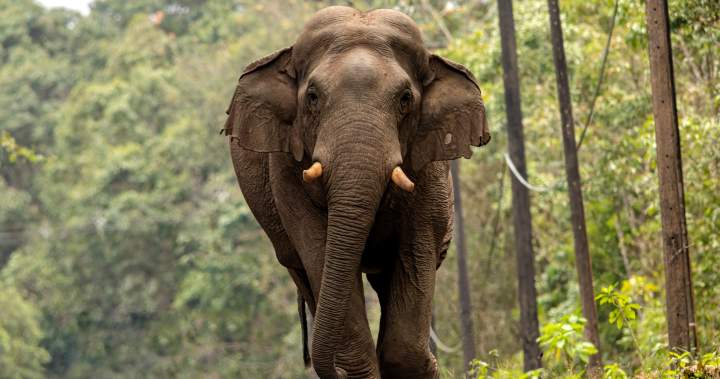
A wild bull elephant killed a tourist in a Thai national park on Monday, the third human fatality caused by the same animal, staff said in a statement.
The 65-year-old Thai tourist from Lopburi province was trampled to death while exercising near his tent in a campground in Thailand’s Khao Yai National Park, chief Chaiya Huayhongthong told AFP.
Thai newspaper the Bangkok Post said the elephant, known locally as Oyewan, charged at the man and slammed him to the ground with its trunk before stomping on him.
A doctor and rescue workers said the man bled through his mouth and nose and suffered several broken limbs and other injuries.
The camper was identified as Jirathachai Jiraphatboonyathorn, the outlet said.
His wife, who was nearby when the early morning attack occurred, escaped after park rangers frightened the animal off, according to AFP.
“He was the third person killed by Oyewan,” Huayhongthong said, adding that the elephant could have been responsible for several more deaths that remain unsolved.
Get the day’s top news, political, economic, and current affairs headlines, delivered to your inbox once a day.
In a statement on Facebook on Monday, the park acknowledged the death, saying, “Khao Yai National Park expresses its deepest condolences to the families of the deceased from the incident of wild elephants attacking tourists in Khao Yai National Park.”
Park authorities will meet on Friday to discuss what to do about the elephant, the chief said.
“We will probably decide to relocate him or change his behaviour,” Huayhongthong explained.
More than 220 people have been killed by wild elephants in Thailand since 2012, according to the Department of National Parks, Wildlife and Plant Conservation.
Wild elephant numbers have risen rapidly in Thailand — from 334 in 2015 to almost 800 last year — leading to the introduction of a contraceptive vaccine administered among female elephants in an attempt to curb birth rates, France 24 wrote.
Thousands more live in captivity, it added.
A rise in the population of elephants in Thailand increases the risk of conflict between elephants and humans, Sukhee Boonsang, a director of the Wildlife Conservation Office, told AFP last month.
Asian elephants, Thailand’s national animal, are listed as endangered by the International Union for Conservation of Nature.
Last January, a 22-year-old tourist was killed by an elephant at a sanctuary in Thailand after the animal turned on her while she was giving it a bath.
Blanca Ojanguren García, from northwest Spain, was bathing an elephant alongside her boyfriend at the Koh Yao Elephant Care Centre when the elephant attacked her.
The sanctuary’s owner said the elephant struck the woman with its trunk. No one else was injured in the attack.
Experts told local media the elephant was likely stressed by the pressure of living and interacting with tourists.
Another tourist was killed by an elephant while walking on a nature trail in Loei’s Phu Kradueng National Park in northern Thailand in December 2024, CBS reported.
— With files from Global News staff
© 2026 Global News, a division of Corus Entertainment Inc.





These ’90s fashion trends are making a comeback in 2017


The final 6 ‘Game of Thrones’ episodes might feel like a full season


अमर योद्धा: राइफलमैन जसवंत सिंह रावत की वीरगाथा


Before being named Pope Leo XIV, he was Cardinal Robert Prevost. Who is he? – National TenX News


Puerto Rico faces island-wide blackout, sparking anger from officials – National TenX News


According to Dior Couture, this taboo fashion accessory is back


BCCI किस ग्रेड के खिलाड़ी को देती है कितना पैसा? इन 5 क्रिकेटर्स का कटेगा पत्ता! होंगे कई बड़े उलटफेर


Indian-AI-software-which-caught-30-thousand-criminals-and-busted-18-terrorist-modules-its-demand-is-increasing-in-foreign-countries-also – News18 हिंदी