




Hossein Naseri, seen here in Canada in 2025, was killed by Iran’s regime forces on Jan. 9.
Handout

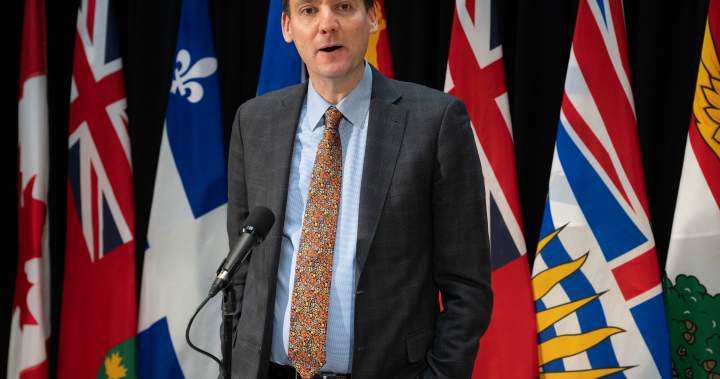
The Premier of British Columbia had some scathing comments about the Alberta separatist movement ahead of Thursday’s first ministers meeting in Ottawa.
David Eby said reported meetings between separatist leaders and U.S. Treasury officials to talk about separation “amounts to “treason.”
“I understand the desire to hold a referendum, to talk about the issues we want to talk about in Canada. We’ve got free speech, so that’s important. But to go to a foreign country and to ask for assistance in breaking up Canada. There’s an old-fashioned word for that, and that word is treason,” said Eby, who was among the premiers who spoke to the media ahead of their meeting with Prime Minister Mark Carney.
Eby has been at odds with Alberta Premier Danielle Smith over her desire for a new oil pipeline from Alberta to the northern coast of B.C.
A report in The Financial Times, citing sources familiar with the talks, reports that leaders of the Alberta Prosperity Project, the group that is spearheading the separatist movement, have already met three times with U.S. State Department officials in Washington since April.
And one of the leaders of the movement, Jeffrey Rath, recently said on social media that he looks forward to “meeting with US Treasury officials next month to discuss our feasibility study regarding a 500 Billion USD line of credit to support the transition to a free and independent Alberta.”
X/@JeffreyRWRath
U.S. President Donald Trump has made no secret of his desire for Canada to become the 51st state. Last week, U.S. Treasury Secretary Scott Bessent also appeared to throw his support behind the Alberta separatist movement when he said the province’s vast oil reserves make it “a natural partner for the U.S.”
“Albertans are very independent people,” said Bessent. “People are talking. People want sovereignty. They want what the U.S. has got,” Bessent added.

Get the day’s top news, political, economic, and current affairs headlines, delivered to your inbox once a day.
“I think we need to draw the line at people seeking the assistance of foreign countries to break up this beautiful land of ours that our forefathers, our foremothers, our parents, our grandparents fought for,” said Eby. “You know, there is a line.”
Asked if he will be raising the issue with Smith during the first minister’s meeting, Eby said, “I think that all of us, myself, Premier Smith, every premier has a role to play to say that this is unacceptable conduct.”
The issue also drew the ire of Ontario Premier Doug Ford, who called the reported meetings between Alberta separatists and U.S. officials “unacceptable” and “unethical.”
“Going behind Canada’s back and negotiating is unacceptable. We’re one country and we should all be sticking together,” said Ford. “We all know where President Trump stands. He wants Canada, and that’s not going to happen.”
Ford also called on his Alberta counterpart to speak out against the meetings between the separatists and the Americans.
“This is an opportunity for Premier Smith to stand up and say enough is enough,” said Ford. “Either you’re with Canada, or you’re not with Canada. I’m with Canada right across the board.”
“We need to be united, a united Canada. I’ve always said, united we stand, divided we fall,” Ford added.
THE CANADIAN PRESS/Adrian Wyld
Smith, who has been accused by opponents of courting the separatists, has so far not publicly denounced the movement, instead saying she would prefer to see a strong and sovereign Alberta within a united Canada, to which Alberta NDP Leader Naheed Nenshi has responded by calling it “word salad.”
The Alberta Prosperity Project has also been holding meetings across the province to gather signatures on a petition demanding the Smith government hold a referendum on separation.
The proposed question on the petition is: Do you agree that the province of Alberta should cease to be part of Canada to become an independent state?
Despite the reports of the meetings between Alberta separatists and American officials, so far, the movement’s leaders have said they don’t think anyone in the movement wants to join the U.S.
An Ipsos poll, released earlier this week, said approximately 29 per cent of Albertans would vote to separate from Canada, but only half that number would support separation when faced with the costs and consequences of doing so.
— With files from The Canadian Press
© 2026 Global News, a division of Corus Entertainment Inc.
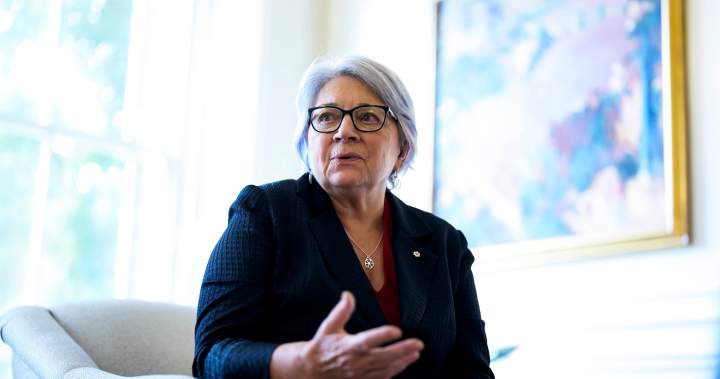
Gov. Gen. Mary Simon is in Norway for the start of a trip that will also visit Denmark and Greenland, which comes just weeks after U.S. President Donald Trump threatened annexation of Greenland.
A statement from Rideau Hall notes the trip will engage leaders of Norway, Denmark and Greenland for “Arctic collaboration” and emphasizes the role of Indigenous and northern communities in shaping the future of Arctic societies and sovereignty — including in Greenland.
In Norway, Simon is participating in the Arctic Frontiers Conference in Tromsø and will meet with royalty of the Kingdom of Norway, including Their Majesties King Harald V and Queen Sonja, as well as His Royal Highness Crown Prince Haakon, in Oslo.
Simon also spoke at a fireside chat and youth-led dialogue, which featured Indigenous Sámi women speaking on Arctic policy and diplomacy.
From Thursday to Saturday, Simon will travel to the Kingdom of Denmark and then to Greenland, a semi-autonomous Danish territory.
For news impacting Canada and around the world, sign up for breaking news alerts delivered directly to you when they happen.
In Copenhagen, she will meet with Denmark’s Prime Minister Mette Frederiksen, and in Greenland, she will meet with Prime Minister Jens-Frederik Nielsen.
Simon will also attend the opening of the Canadian consulate in Nuuk, Greenland.
Trump had threatened tariffs on countries which opposed his Greenland ambitions and, at one point, would not rule out the use of military force to annex the Danish territory.
He later said at the World Economic Forum that he would not use force.
Greenland is also a member of both NATO and the European Union.
On Jan. 21, Trump announced he had reached a “framework” for “a future deal” with Greenland and reversed course on his tariff threats, but there has been no indication the “deal” would allow the annexation Trump has sought. Instead, NATO has said it focuses on security in the region.
“Discussions among NATO allies on the framework the president referenced will focus on ensuring Arctic security through the collective efforts of allies, especially the seven Arctic allies,” a NATO spokesperson said.
“Negotiations between Denmark, Greenland, and the United States will go forward aimed at ensuring that Russia and China never gain a foothold — economically or militarily — in Greenland.”
The Prime Minister of Denmark said Greenland’s sovereignty cannot be included in any negotiations with Trump, but the door remains open for discussions about politics, security, investments and the economy.
© 2026 Global News, a division of Corus Entertainment Inc.
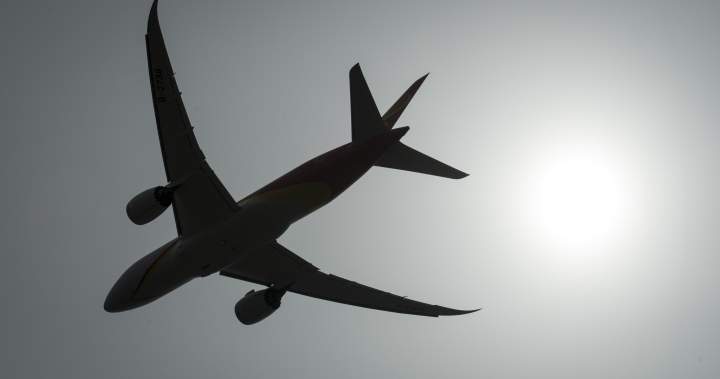
Transport Canada says it is “monitoring the situation” after Air India announced Monday that it has grounded its Boeing 787 Dreamliner jets over reports of issues with a fuel control switch.
Canada’s aviation authority responded Tuesday to a Global News request for comment on the situation, which follows several high-profile challenges for Boeing aircraft, including the grounding of the 737 Max 8 fleet for two deadly crashes in 2018 and 2019 over a software issue and a door plug blowing off a 737 Max 9 aircraft in 2024.
“Transport Canada is aware of Air India’s grounding of its Boeing 787 fleet following reports concerning a potential defect in the fuel control switch. This decision applies to aircraft registered in India,” Transport Canada said in a written statement.
“As the State of Design authority, the U.S. Federal Aviation Administration (FAA) serves as the regulator with jurisdiction over Boeing Dreamliner aircraft. The FAA has the authority to investigate any concerns related to this aircraft type and to issue corrective actions to address identified issues.
“It is the responsibility of Canadian air operators of US State of Design aircraft to obtain and comply with any airworthiness directives that may be issued by the FAA and to ensure that Canadian-registered 787 family aircraft are safe for flight prior to operation.
Get the day’s top news, political, economic, and current affairs headlines, delivered to your inbox once a day.
“Transport Canada is monitoring the situation and maintaining close communication with Canadian air operators and the FAA.”
India’s aviation regulator said on Tuesday that its investigation determined the fuel switches on the grounded Air India Dreamliner jet were found to be “satisfactory,” according to a statement.
Transport Canada said Tuesday in a followup to Global News that it has seen this update, and “our previous response remains unchanged.”
“It is ultimately the responsibility of Canadian air operators operating U.S.-registered aircraft of the State of Design to obtain and comply with any airworthiness directives issued by the FAA, and to ensure that Canadian-registered 787 family aircraft are safe for flight prior to operation,” Transport Canada said.
Global News has sent separate requests for comment to Air Canada and WestJet, which both fly Boeing Dreamliner aircraft, but did not receive a response by publication.
Air India’s decision to ground its fleet of Boeing 787 Dreamliner jets comes less than a year after a deadly crash involving one of the Dreamliners flown by the airline in June 2025 killed 260 people, including one Canadian.
An investigation into the crash determined that the fuel was cut off in the moments before the crash.
© 2026 Global News, a division of Corus Entertainment Inc.
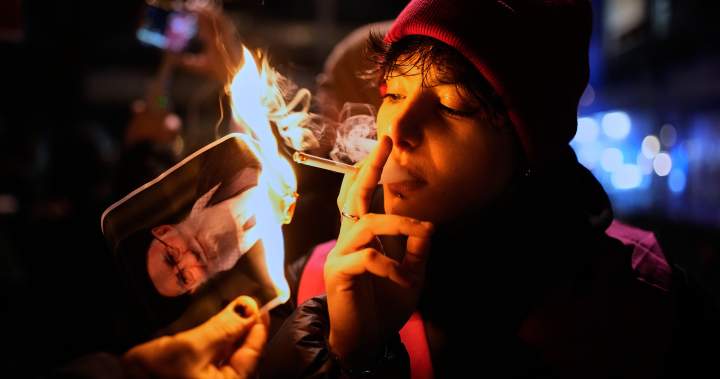
The last time Ottawa resident Mahnoosh Naseri spoke to her father, he had decided to take to the streets of Tehran to protest the Iranian regime.
It was Jan. 7 and Iranians fed up with the corruption, economic mismanagement and repressive religious rules of the regime were rallying like never before.
Two days later, her father left his apartment to join the demonstrators and never came home. It took his family four days to find him. He had been shot dead.
“He didn’t care anymore about his safety. What he cared about was the future of Iranian children,” Naseri told Global News in an interview.
Almost a month after Iranians mounted their biggest challenge to the Islamic regime that has ruled them for a half century, the shocking death toll is becoming more clear.
The protests began in late December and were growing by the day on Jan. 8, when Reza Pahlavi, the exiled son of Iran’s deposed Shah, called for mass demonstrations.
Millions marched in major cities, reassured by U.S. President Donald Trump, who had vowed that if Iran killed protesters, he would “come to their rescue.”
The uprising was the largest since the 1979 Islamic revolution, and fighters loyal to Supreme Leader Ali Khamenei responded with predictable violence. Activists say tens of thousands may have been killed.
To cover up the carnage, the regime cut off internet access, but as the bodies have piled up, families like Naseri’s have been finding out just how bad it was.
Handout
“This has touched a lot of people in the community,” said Ali Ehsassi, an Iranian-Canadian and the Member of Parliament for the Willowdale riding in Toronto.
Ehsassi said he had been hearing from community members whose friends and relatives had been detained or killed, and that Jan. 8 and 9 were “particularly bloody.”
While he did not know the Canadian government’s casualty estimates, the regime’s own figures mean it ranks as one of the bloodiest confrontations of its type in modern history.
“I have no doubt that the number of people who have died is very, very high, even by the standards of the Iranian regime,” the MP said in an interview.
In recent interviews, Global News spoke to Iranian-Canadians about the fate of those close to them who participated in the anti-regime events of Jan. 8 and 9.
“Slowly we learned the truth, and the truth was a massacre had taken place,” said Azam Jangravi, a tech industry professional in Toronto.
Among the casualties were 10 family members, Jangravi said, including one who was shot in the chest at a demonstration in Iran’s third-largest city, Esfahan.
The relative did not die at first but was afraid to seek medical help because the security forces were trolling hospitals to arrest protesters, she said.
After hiding in a house for two days, he succumbed to his injuries, said Jangravi, who fled Iran after she was convicted of showing her hair in public.
Handout
Another Iranian-Canadian, Pieman Azimi, said his nephew, a 20-year-old mechanic, had been gunned down during the demonstration.
His family searched police stations and hospitals for a day until finding him among the sea of bodies, said Azimi, who lives in Ottawa.
Another Ottawa resident described the shooting of a friend, who survived a bullet to the waist. Later, the friend told her how the suppression tactics had escalated.
“The first two days, they were shooting with paintballs,” said Nona Dourandish. “And then they decided to bring in military powers and their special units.”
The authorities used drones to monitor the city, and when a crowd gathered to chant anti-regime slogans, gunmen were quickly on the scene, she said, relaying her friend’s account.
“He said basically they were shooting people in their face, in their chest, so they would not get up. So they would not survive,” Dourandish said.
Naseri was close to her father, Hossein. “I can’t believe that my dad is gone,” she said. Harder still to believe was that he was among so many killed that day.
When Naseri was growing up in Tehran, she said she was repeatedly taken into custody for violating the regime’s strict dress code for women.
Her infractions included not covering all her hair with a headscarf and wearing shirts and pants that were deemed too short or too tight, she said.
Following the regime’s brutal crackdown against women’s rights advocates in 2022, she joined her brother in Ottawa in September 2023.
Handout
A 73-year-old retired Tehran accountant, her father visited her in Ottawa last summer. He spent three months in the capital, attending her wedding and her brother’s graduation ceremony.
“I’m so glad that I had the chance to show him some cities in Canada. He really loved the nature here, the museums and the freedom,” Naseri said.
Although he disliked the Islamic government, Hossein had previously refrained from taking part in protests, fearing that it could impact his two children.
But early last month, Naseri spoke to him on WhatsApp, and he had decided that it was time to go out to support the demonstrations.
“He told me, ‘I know you are safe. You are there. There is no danger for you two. And right now I feel free to go and, like others, ask for what we want,’” she said.
Hossein left home at about 7 p.m. on Jan. 9, she said.
Videos and eyewitness testimony amassed by Amnesty International show that, on that night, security forces positioned themselves on rooftops and opened fire.
The “deadly crackdown” was carried out primarily by the Islamic Revolutionary Guard Corps (IRGC) and Iranian police, the human rights organization said.
Thousands died, making last month “the deadliest period of repression by the Iranian authorities in decades of Amnesty’s research,” according to the group.
Naseri began to worry when she didn’t hear from her father. She sent a message to a friend who had internet access. A week later, her aunt called.
The family had searched through bodies until finding Hossein. He had been shot in the main artery in his leg, his daughter said.
Communicating with her family has been a challenge, amid fears that international calls are being monitored. Naseri still knows very little about what happened, but she believes her father could have been saved had made it to a hospital.
She blames the Revolutionary Guard, whose mission is to defend the Islamic government from both internal and external threats. “The IRGC has long experience killing protesters.”
The Mujahedin-e-Khalq, an anti-regime militant group, announced Hossein’s death, calling him one of the “martyrs of the heroic nationwide uprising.”
Canada joined Australia and the European Union on Jan. 9 in condemning “the killing of protestors, the use of violence, arbitrary arrests, and intimidation tactics by the Iranian regime against its own people.”
But Deputy Conservative leader MP Melissa Lantsman said the federal government had to do more than issue statements.
“Canada must exploit the regime’s fragility,” she said in a statement to Global News that called on the government to set up a registry for those engaged in foreign interference.
She also urged Ottawa to expel members of Iran’s regime who have arrived in Canada, and to “work with allies to keep information flowing freely to the brave Iranian people.”
“Anything would be a step above nothing.”
Liberal MP Ehasassi said the government was working on a collective response together with allies, and that Canada had already listed the IRGC as a terrorist group.
But Ehsassi said Canada has been “well ahead” of other countries in adopting measures against Iran, including banning senior regime members from the country.
Last week, the European Union followed suit, sanctioning the Revolutionary Guard, saying that “Repression cannot go unanswered.”
“Our officials in various departments are in touch with each other, deciding what there is that we can possibly do,” Ehsassi said. “Obviously, I would like to see us do a lot more. I think the Iranian-Canadian community would like to see that,” he said.
“And I have every confidence that there are going to be a suite of measures.”
The U.S. has been moving military assets to the Middle East, and on Monday, Trump warned Iran of “bad things,” but he has so far refrained from an attack and Khamanei said an American strike would trigger a regional war.
Naseri thinks the era of an Iran run by extremist mullahs has come to an end. “This protest shows that the people of Iran, they don’t accept this regime anymore.”
“They don’t want it.”
Stewart.Bell@globalnews





These ’90s fashion trends are making a comeback in 2017


The final 6 ‘Game of Thrones’ episodes might feel like a full season

अमर योद्धा: राइफलमैन जसवंत सिंह रावत की वीरगाथा

Before being named Pope Leo XIV, he was Cardinal Robert Prevost. Who is he? – National TenX News


Puerto Rico faces island-wide blackout, sparking anger from officials – National TenX News

According to Dior Couture, this taboo fashion accessory is back


BCCI किस ग्रेड के खिलाड़ी को देती है कितना पैसा? इन 5 क्रिकेटर्स का कटेगा पत्ता! होंगे कई बड़े उलटफेर


Indian-AI-software-which-caught-30-thousand-criminals-and-busted-18-terrorist-modules-its-demand-is-increasing-in-foreign-countries-also – News18 हिंदी

