
Politics
What to know about Iran’s deadly protests as government cuts off internet – National TenX News


Nationwide protests in Iran sparked by the Islamic Republic’s ailing economy are putting new pressure on its theocracy, which has responded with a deadly crackdown and shutting down the internet.
Tehran is still reeling from a 12-day war launched by Israel in June that saw the United States bomb nuclear sites in Iran. Economic pressure, which has intensified since September when the United Nations reimposed sanctions on the country over its atomic program, has sent Iran’s rial currency into a free fall, now trading at over 1.4 million to US$1.

Meanwhile, Iran’s self-described “Axis of Resistance” — a coalition of countries and militant groups backed by Tehran — has been decimated since the start of the Israel-Hamas war in 2023.
U.S. President Donald Trump has warned that if Tehran “violently kills peaceful protesters” the U.S. “will come to their rescue” — a threat that has taken on new meaning after American troops captured Venezuela’s Nicolás Maduro, a longtime ally of Tehran.
“We’re watching it very closely,” Trump has warned. “If they start killing people like they have in the past, I think they’re going to get hit very hard by the United States.”
Here’s what to know about the protests and the challenges facing Iran’s government.

More than 600 protests have taken place across all of Iran’s 31 provinces, the U.S.-based Human Rights Activists News Agency reported Tuesday. The death toll has reached at least 646, it said, with more than 10,700 arrests. The group relies on an activist network inside of Iran for its reporting and has been accurate in past unrest.
The Iranian government has not offered overall casualty figures for the demonstrations. The Associated Press has been unable to independently assess the toll, given that the internet is blocked in Iran. Iranians could dial abroad with their mobile phones Tuesday after restrictions were lifted.
Understanding the scale of the protests has been difficult. Iranian state media has provided little information about the demonstrations. Online videos offer only brief, shaky glimpses of people in the streets or the sound of gunfire.

Journalists in general in Iran also face limits on reporting such as requiring permission to travel around the country, as well as the threat of harassment or arrest by authorities. The internet shutdown has further complicated the situation.

Get breaking National news
For news impacting Canada and around the world, sign up for breaking news alerts delivered directly to you when they happen.
But the protests do not appear to be stopping, even after Supreme Leader Ayatollah Ali Khamenei said “rioters must be put in their place.”

The collapse of the rial has led to a widening economic crisis in Iran. Prices are up on meat, rice and other staples of the Iranian dinner table. The nation has been struggling with an annual inflation rate of some 40%.
In December, Iran introduced a new pricing tier for its nationally subsidized gasoline, raising the price of some of the world’s cheapest gas and further pressuring the population. Tehran may seek steeper price increases in the future, as the government now will review prices every three months. Meanwhile, food prices are expected to spike after Iran’s Central Bank in recent days ended a preferential, subsidized dollar-rial exchange rate for all products except medicine and wheat.

The protests began in late December with merchants in Tehran before spreading. While initially focused on economic issues, protesters soon began chanting anti-government statements as well. Anger has been simmering over the years, particularly after the 2022 death of 22-year-old Mahsa Amini in police custody that triggered nationwide demonstrations.
Some have chanted in support of Iran’s exiled Crown Prince Reza Pahlavi, who has called for protests.

Iran’s “Axis of Resistance,” which grew in prominence in the years after the 2003 U.S.-led invasion and subsequent occupation of Iraq, is reeling.

Israel has crushed Hamas in the devastating war in the Gaza Strip. Hezbollah, the Shiite militant group in Lebanon, has seen its top leadership killed by Israel and has been struggling since. A lightning offensive in December 2024 overthrew Iran’s longtime stalwart ally and client in Syria, President Bashar Assad, after years of war there. Yemen’s Iranian-backed Houthi rebels also have been pounded by Israeli and U.S. airstrikes.
China meanwhile has remained a major buyer of Iranian crude oil, but hasn’t provided overt military support. Neither has Russia, which has relied on Iranian drones in its war on Ukraine.

Iran has insisted for decades that its nuclear program is peaceful. However, its officials have increasingly threatened to pursue a nuclear weapon. Before the U.S. attack in June, Iran had been enriching uranium to near weapons-grade levels, making it the only country in the world without a nuclear weapons program to do so.
Tehran also increasingly cut back its cooperation with the International Atomic Energy Agency, the U.N.’s nuclear watchdog, as tensions increased over its nuclear program in recent years. The IAEA’s director-general has warned that Iran could build as many as 10 nuclear bombs should it decide to weaponize its program.

U.S. intelligence agencies have assessed that Iran has yet to begin a weapons program, but has “undertaken activities that better position it to produce a nuclear device, if it chooses to do so.”
Iran recently said it was no longer enriching uranium at any site in the country, trying to signal to the West that it remains open to potential negotiations over its atomic program to ease sanctions. But there have been no significant talks in the months since the June war.
Iran decades ago was one of the United States’ top allies in the Mideast under Shah Mohammad Reza Pahlavi, who purchased American military weapons and allowed CIA technicians to run secret listening posts monitoring the neighboring Soviet Union. The CIA fomented a 1953 coup that cemented the shah’s rule.
But in January 1979, the shah fled Iran as mass demonstrations swelled against his rule. Then came the Islamic Revolution led by Ayatollah Ruhollah Khomeini, which created Iran’s theocratic government.
Later that year, university students overran the U.S. Embassy in Tehran, seeking the shah’s extradition and sparking the 444-day hostage crisis that saw diplomatic relations between Iran and the U.S. severed.

During the Iran-Iraq war of the 1980s, the U.S. backed Iraqi leader Saddam Hussein. During that conflict, the U.S. launched a one-day assault that crippled Iran at sea as part of the so-called “Tanker War,” and later shot down an Iranian commercial airliner that the U.S. military said it mistook for a warplane.
Iran and the U.S. have seesawed between enmity and grudging diplomacy in the years since. Relations peaked with the 2015 nuclear deal, which saw Iran greatly limit its program in exchange for the lifting of sanctions. But Trump unilaterally withdrew America from the accord in 2018, sparking tensions in the Mideast that intensified after Hamas’ Oct. 7, 2023, attack on Israel.

Politics
Sick astronaut returns to Earth with crew in NASA’s 1st medical evacuation – National TenX News
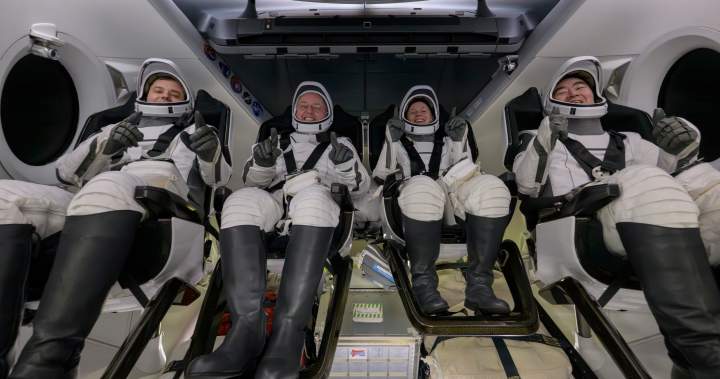
An ailing astronaut returned to Earth with three others on Thursday, ending their space station mission more than a month early in NASA’s first medical evacuation.
SpaceX guided the capsule to a middle-of-the-night splashdown in the Pacific near San Diego, less than 11 hours after the astronauts exited the International Space Station. Their first stop was a hospital for an overnight stay.
“Obviously, we took this action (early return) because it was a serious medical condition,” NASA’s new administrator Jared Isaacman said following splashdown. “The astronaut in question is fine right now, in good spirits and going through the proper medical checks.”
It was an unexpected finish to a mission that began in August and left the orbiting lab with only one American and two Russians on board. NASA and SpaceX said they would try to move up the launch of a fresh crew of four; liftoff is currently targeted for mid-February.
NASA’s Zena Cardman and Mike Fincke were joined on the return by Japan’s Kimiya Yui and Russia’s Oleg Platonov. Officials have refused to identify the astronaut who developed the health problem last week or explain what happened, citing medical privacy.
Support teams onboard the SpaceX recovery ship SHANNON work around the SpaceX Dragon Endeavour spacecraft shortly after it landed off the coast of Long Beach, Calif., Thursday, Jan. 15, 2026.
NASA via AP
While the astronaut was stable in orbit, NASA wanted them back on Earth as soon as possible to receive proper care and diagnostic testing. The entry and splashdown required no special changes or accommodations, officials said, and the recovery ship had its usual allotment of medical experts on board.
Get breaking National news
For news impacting Canada and around the world, sign up for breaking news alerts delivered directly to you when they happen.
The astronauts emerged from the capsule, one by one, within an hour of splashdown. They were helped onto reclining cots and then whisked away for standard medical checks, waving to the cameras. Isaacman monitored the action from Mission Control in Houston, along with the crew’s families.

NASA decided a few days ago to take the entire crew straight to a San Diego-area hospital following splashdown and even practiced helicopter runs there from the recovery ship. The astronaut in question will receive in-depth medical checks before flying with the rest of the crew back to Houston on Friday, assuming everyone is well enough. Platonov’s return to Moscow was unclear.
NASA stressed repeatedly over the past week that this was not an emergency. The astronaut fell sick or was injured on Jan. 7, prompting NASA to call off the next day’s spacewalk by Cardman and Fincke, and ultimately resulting in the early return. It was the first time NASA cut short a spaceflight for medical reasons. The Russians had done so decades ago.


Spacewalk preparations did not lead to the medical situation, Isaacman noted, but for anything else, “it would be very premature to draw any conclusions or close any doors at this point.” It’s unknown whether the same thing could have happened on Earth, he added.
The space station has gotten by with three astronauts before, sometimes even with just two. NASA said it will be unable to perform a spacewalk, even for an emergency, until the arrival of the next crew, which has two Americans, one French and one Russian astronaut.
This screengrab from video provided by NASA shows NASA astronaut Mike Fincke getting helped out of the SpaceX Crew-11 capsule.
NASA via AP
Isaacman said it’s too soon to know whether the launch of station reinforcements will take priority over the agency’s first moonshot with astronauts in more than a half-century. The moon rocket moves to the pad this weekend at Florida’s Kennedy Space Center, with a fueling test to be conducted by early next month. Until all that is completed, a launch date cannot be confirmed; the earliest the moon flyaround could take off is Feb. 6.
For now, NASA is working in parallel on both missions, with limited overlap of personnel, according to Isaacman.
“If it comes down to a point in time to where we have to deconflict between two human spaceflight missions, that is a very good problem to have at NASA,” he told reporters.
© 2026 The Canadian Press
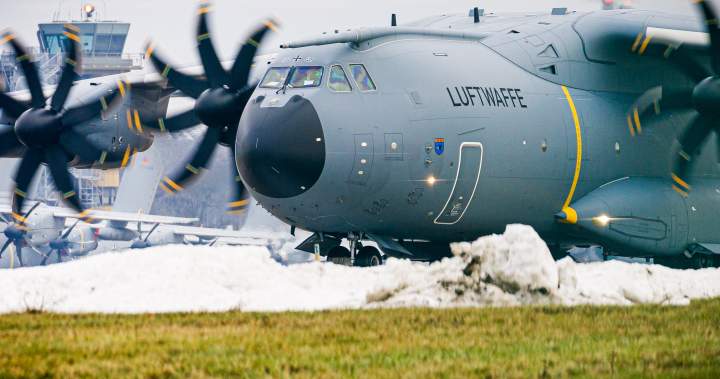
Troops from several European countries, including France, Germany, the UK, Norway and Sweden, are arriving in Greenland in a show of support for Denmark as talks between representatives of Denmark, Greenland and the U.S. on Wednesday highlighted “fundamental disagreement” between the Trump administration and European allies on the future of the Arctic island.
Denmark announced it would increase its military presence in Greenland on Wednesday and several European partners started sending symbolic numbers of troops on that day, just as the Danish and Greenlandic foreign ministers were preparing to meet with White House representatives in Washington.
The troop movements were intended to portray unity among Europeans and send a signal to U.S. President Donald Trump that an American takeover of Greenland is not necessary as NATO together can safeguard the security of the Arctic region amid rising Russian and Chinese interest.
“The first French military elements are already en route” and “others will follow,” French President Emmanuel Macron announced Wednesday, as French authorities said about 15 soldiers from the mountain infantry unit were already in Nuuk for a military exercise.
Germany will deploy a reconnaissance team of 13 personnel to Greenland on Thursday, its Defence Ministry said.
On Thursday, Danish Defence Minister Troels Lund Poulsen said the intention was “to establish a more permanent military presence with a larger Danish contribution,” according to Danish broadcaster DR. He said soldiers from several NATO countries will be in Greenland on a rotation system.
Danish Foreign Minister Lars Løkke Rasmussen, flanked by his Greenlandic counterpart Vivian Motzfeldt, said Wednesday that a “fundamental disagreement” over Greenland remains with Trump after they held highly anticipated talks at the White House with Vice President JD Vance and Secretary of State Marco Rubio.
Rasmussen added that it remains “clear that the president has this wish of conquering over Greenland” but that dialogue with the U.S. would continue at a high level over the following weeks.

Inhabitants of Greenland and Denmark reacted with anxiety but also some relief that negotiations with the U.S. would go on and European support was becoming visible.
In Greenland’s capital, Nuuk, local residents told The Associated Press they were glad the first meeting between Greenlandic, Danish and American officials had taken place but suggested it left more questions than answers.
Get breaking National news
For news impacting Canada and around the world, sign up for breaking news alerts delivered directly to you when they happen.
Several people said they viewed Denmark’s decision to send more troops, and promises of support from other NATO allies, as protection against possible U.S. military action. But European military officials have not suggested the goal is to deter a U.S. move against the island.
Maya Martinsen, 21, agreed and said it was “comforting to know that the Nordic countries are sending reinforcements” because Greenland is a part of Denmark and NATO.
The dispute, she said, is not about “national security” but rather about “the oils and minerals that we have that are untouched.”
On Wednesday, Poulsen had announced a stepped-up military presence in the Arctic “in close cooperation with our allies,” calling it a necessity in a security environment in which “no one can predict what will happen tomorrow.”
“This means that from today and in the coming time there will be an increased military presence in and around Greenland of aircraft, ships and soldiers, including from other NATO allies,” Poulsen said.
Asked whether the European troop movements were coordinated with NATO or what role the U.S.-led military alliance might play in the exercises, NATO referred all questions to the Danish authorities. However, NATO is currently studying ways to bolster security in the Arctic.

Rasmussen, the Danish foreign minister, announced the creation of a working group with the Americans to discuss ways to work through differences.
“The group, in our view, should focus on how to address the American security concerns, while at the same time respecting the red lines of the Kingdom of Denmark,” he said.

Commenting on the outcome of the Washington meeting on Thursday, Poulsen said the working group was “better than no working group” and “a step in the right direction.” He added nevertheless that the dialogue with the U.S. did not mean “the danger has passed.”
“We are really happy that action is being taken to make sure that this discussion is not just ended with that meeting alone,” Greenlandic MP Aki-Matilda Høegh-Dam said on Thursday during a news conference in Copenhagen.
She said Greenlandic people understood they were a “pivotal point” in a broader transformation of the international rules-based order and that they felt responsible not just for themselves but also for the whole world to get it right.
Høegh-Dam said the military operations should not happen “right next to our schools and right next to our kindergartens.”
Line McGee, a 38-year-old from Copenhagen, told AP that she was glad to see some diplomatic progress. “I don’t think the threat has gone away,” she said. “But I feel slightly better than I did yesterday.”
Speaking to FOX News Channel’s Special Report on Wednesday after the White House talks, Rasmussen rejected both a military takeover and the potential purchase of the island by the U.S. Asked whether he thinks the U.S. will invade, he replied: “No, at least I do not hope so, because, I mean, that would be the end of NATO.”
Rasmussen said Greenlanders were unlikely to vote for U.S. rule even if financial incentives were offered, “because I think there’s no way that U.S. will pay for a Scandinavian welfare system in Greenland, honestly speaking.”
“You haven’t introduced a Scandinavian welfare system in your own country,” he added.
Trump, in his Oval Office meeting with reporters, said: “We’ll see how it all works out. I think something will work out.”
© 2026 The Canadian Press
Politics
A Canadian citizen has died in Iran, Ottawa says as protests intensify – National TenX News
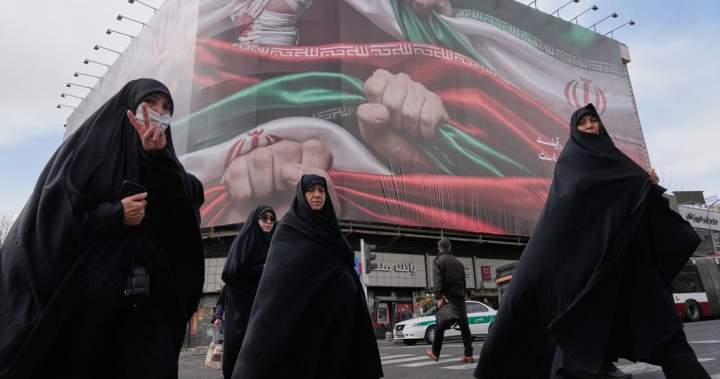
A Canadian citizen has died in Iran, Global Affairs Canada told Global News as the protests against the Iranian regime have intensified over the last few days.
“Global Affairs Canada is aware of a Canadian citizen who died in Iran. We express our condolences to the family and loved ones during this difficult time,” a spokesperson for GAC said.
As of Wednesday, there were 3,054 Canadian citizens and permanent residents registered in Iran, the spokesperson said.
Get daily National news
Get the day’s top news, political, economic, and current affairs headlines, delivered to your inbox once a day.
However, they added that since registration with GAC is voluntary, the actual number may be outdated.
Canada does not have diplomatic relations with Iran.

More to come


Sick astronaut returns to Earth with crew in NASA’s 1st medical evacuation – National TenX News

European troops arrive in Greenland after ‘disagreement’ with U.S. – National TenX News

A Canadian citizen has died in Iran, Ottawa says as protests intensify – National TenX News


-

 Fashion10 months ago
These ’90s fashion trends are making a comeback in 2017
-

 Entertainment10 months ago
The final 6 ‘Game of Thrones’ episodes might feel like a full season
-

 TenX Exclusive10 months ago
अमर योद्धा: राइफलमैन जसवंत सिंह रावत की वीरगाथा
-

 Politics8 months ago
Before being named Pope Leo XIV, he was Cardinal Robert Prevost. Who is he? – National TenX News
-

 Politics9 months ago
Puerto Rico faces island-wide blackout, sparking anger from officials – National TenX News
-

 Fashion10 months ago
According to Dior Couture, this taboo fashion accessory is back
-

 Tech10 months ago
Indian-AI-software-which-caught-30-thousand-criminals-and-busted-18-terrorist-modules-its-demand-is-increasing-in-foreign-countries-also – News18 हिंदी
-

 Politics9 months ago
Scientists detect possible signs of life on another planet — but it’s not aliens – National TenX News