
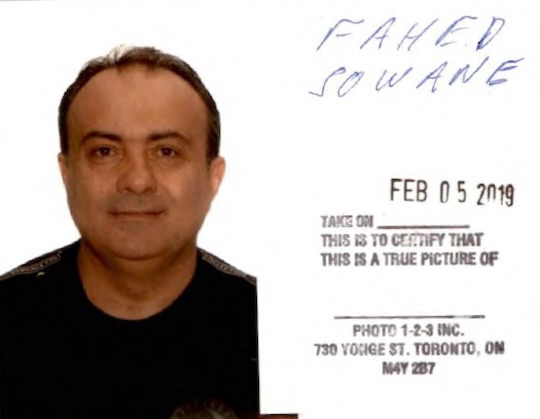
Photo of Fahed Sowane from his immigration file.
Federal Court

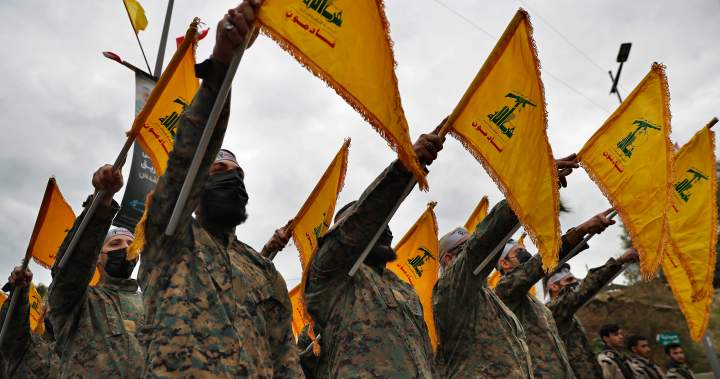
Canadian officials have accused a Toronto-area used car dealer of laundering money for the Iranian-backed terrorist group Hezbollah.
Fahed Sowane, a 57-year-old Lebanese citizen who came to Canada on a work permit in 2016, has denied the allegations.
But in heavily-redacted court records released to Global News, the officials called the Mississauga, Ont., resident a “danger to the security of Canada.”
A veteran auto trader, Sowane has exported Audi, BMW and other vehicles to the Hezbollah-controlled port of Beirut, the highly-classified documents allege.
Immigration officials concluded the shipments amounted to “money laundering to benefit Hezbollah,” according to the files.
As a result, the officials found Sowane inadmissible to Canada, meaning he is not allowed to remain in the country.
The Federal Court upheld the decision last week.
A former Canadian intelligence analyst who specializes in terror finance said high-end auto exports were a “very well-known Hezbollah financing technique.”
To move cash across borders, Hezbollah uses it to buy vehicles, which are sent to Lebanon and resold, said Jessica Davis, president of Insight Threat Intelligence.
“What this means is that money is moving from Canada to Lebanon but without ever touching the banking system,” the former Canadian Security Intelligence Service official said.
“And this is important because banks are actually pretty well equipped to detect money laundering and terrorist financing. And so this is a way that criminals circumvent all of those safeguards that we put into the financial system.”
Federal Court
The Canada Border Services Agency did not respond to questions about the matter. Sowane’s lawyer said his client was disappointed by the court’s ruling.
In emails to Global News, Dan Miller said the immigration officials on the case “could offer no evidence of any conduct of concern.”
He disputed the government’s claim that Sowane had exported vehicles to Beirut for less than he paid for them — a flag for money laundering.
Sowane’s “frustration is made all the worse because the Canadian government allows hundreds of Iranian Revolutionary Guard Corps members to reside freely in Canada, a group which he strongly opposes,” Miller added.
“Similarly, each weekend pro-Hamas supporters gather freely at the intersection of Bathurst St. and Sheppard Ave. in Toronto to intimidate the local Jewish community, and the government does nothing to stop this.”
“Instead, the government goes after small-time individuals on flimsy suspicions to pretend to be doing something, while at the same time it avoids taking any action which could offend its voter base.”
Hezbollah is a “radical Shia group” devoted to turning Lebanon into an Islamist republic like Iran, according to Public Safety Canada.
Armed, trained and financed by Tehran, it is part of the Iranian-led “axis of resistance” that also includes Gaza-based Hamas and Yemen’s Houthis.
Although bankrolled by Iran, Hezbollah also relies on drug trafficking and other crimes for revenue, and launders the proceeds, often through the global auto trade.
Iran has encouraged its axis groups to develop alternative sources of funding, said Davis, author of Illicit Money: Financing Terrorism in the 21st Century.
That includes taxation, extortion, investments and criminal networks, she said.
“Those are the kinds of things that provide longevity and financial lifelines to terrorist groups, even when their terrorist patrons cut them off.”
In a 2022 terrorist financing alert, the Financial Transactions and Reports Analysis Centre of Canada warned about Hezbollah’s activities.
The bulletin said that, after ISIS, Hezbollah was the international terrorist group most frequently spotted moving money across borders.
“A large portion of funds suspected of funding Hezbollah were sent to Lebanon,” FINTRAC wrote in the operation alert for financial institutions.
“Funds suspected of funding Hezbollah were frequently sent or received by individual/entities referencing sale of cars or listed in the automotive industry.”
A car dealer for more than three decades, Sowane launched Black Swan Trading Inc. in Ontario in 2015, according to documents filed in Federal Court.
He also worked at M&J Canada Inc., where his duties included exporting used cars and parts to overseas markets, according to the records.
The Mississauga used vehicle dealership, which described Sowane in a letter as a full-time employee, did not respond to requests for comment.
Three years after Sowane arrived in Canada on a work permit, Ontario’s Ministry of Economic Development nominated him to become a landed immigrant.
The province nominates prospective immigrants who “have the skills and experience the Ontario economy needs,” according to the government website.
The ministry responsible for the program did not respond to questions.
Federal Court
While federal immigration officials were processing Sowane’s permanent residence application, the Canadian Security Intelligence Service stepped in.
After CSIS sent a security screening brief to the CBSA in February 2024, Sowane was rejected “for being a danger to the security of Canada.”
Although immigration officials asked Sowane for records on his auto exports, they said he did not provide them, prompting officials to allege he “withheld information.”
Sowane argued he did not share the same religious beliefs as Hezbollah, but the CBSA said that “ideology may not be a factor when it comes to personal economic profit.”
His lawyer told immigration officers his client had “never had anything to do with Hezbollah and that his business activities have never had anything to do with Hezbollah.”
“The Sunnis in Lebanon hate Hezbollah and Mr. Sowane is no different. He blames Hezbollah for turning Lebanon into a failed state and says that he wants nothing to do with Hezbollah,” the lawyer wrote in an April 2024 email.
Sowane appealed the CBSA’s decision but lost.
In a decision handed down on Jan. 21, the Federal Court said the immigration department had come to its decision in a “procedurally fair and reasonable manner.”
Davis called it “a rare case of Hezbollah enforcement disruption in Canada,” which used the immigration screening system as opposed to the criminal courts.
“I think it’s really important that Canadians understand that this kind of stuff is happening in this country even when we don’t see law enforcement action,” she said.
“There are other ways that the Canadian government goes about disrupting finance networks. Immigration is a really, actually quite important, piece of that.”
Stewart.Bell@globalnews.ca
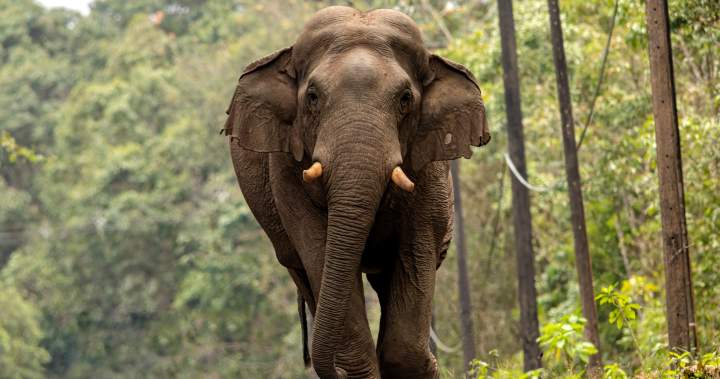
A wild bull elephant killed a tourist in a Thai national park on Monday, the third human fatality caused by the same animal, staff said in a statement.
The 65-year-old Thai tourist from Lopburi province was trampled to death while exercising near his tent in a campground in Thailand’s Khao Yai National Park, chief Chaiya Huayhongthong told AFP.
Thai newspaper the Bangkok Post said the elephant, known locally as Oyewan, charged at the man and slammed him to the ground with its trunk before stomping on him.
A doctor and rescue workers said the man bled through his mouth and nose and suffered several broken limbs and other injuries.
The camper was identified as Jirathachai Jiraphatboonyathorn, the outlet said.
His wife, who was nearby when the early morning attack occurred, escaped after park rangers frightened the animal off, according to AFP.
“He was the third person killed by Oyewan,” Huayhongthong said, adding that the elephant could have been responsible for several more deaths that remain unsolved.

Get the day’s top news, political, economic, and current affairs headlines, delivered to your inbox once a day.
In a statement on Facebook on Monday, the park acknowledged the death, saying, “Khao Yai National Park expresses its deepest condolences to the families of the deceased from the incident of wild elephants attacking tourists in Khao Yai National Park.”
Park authorities will meet on Friday to discuss what to do about the elephant, the chief said.
“We will probably decide to relocate him or change his behaviour,” Huayhongthong explained.
More than 220 people have been killed by wild elephants in Thailand since 2012, according to the Department of National Parks, Wildlife and Plant Conservation.
Wild elephant numbers have risen rapidly in Thailand — from 334 in 2015 to almost 800 last year — leading to the introduction of a contraceptive vaccine administered among female elephants in an attempt to curb birth rates, France 24 wrote.
Thousands more live in captivity, it added.
A rise in the population of elephants in Thailand increases the risk of conflict between elephants and humans, Sukhee Boonsang, a director of the Wildlife Conservation Office, told AFP last month.
Asian elephants, Thailand’s national animal, are listed as endangered by the International Union for Conservation of Nature.
Last January, a 22-year-old tourist was killed by an elephant at a sanctuary in Thailand after the animal turned on her while she was giving it a bath.
Blanca Ojanguren García, from northwest Spain, was bathing an elephant alongside her boyfriend at the Koh Yao Elephant Care Centre when the elephant attacked her.
The sanctuary’s owner said the elephant struck the woman with its trunk. No one else was injured in the attack.
Experts told local media the elephant was likely stressed by the pressure of living and interacting with tourists.
Another tourist was killed by an elephant while walking on a nature trail in Loei’s Phu Kradueng National Park in northern Thailand in December 2024, CBS reported.
— With files from Global News staff
© 2026 Global News, a division of Corus Entertainment Inc.
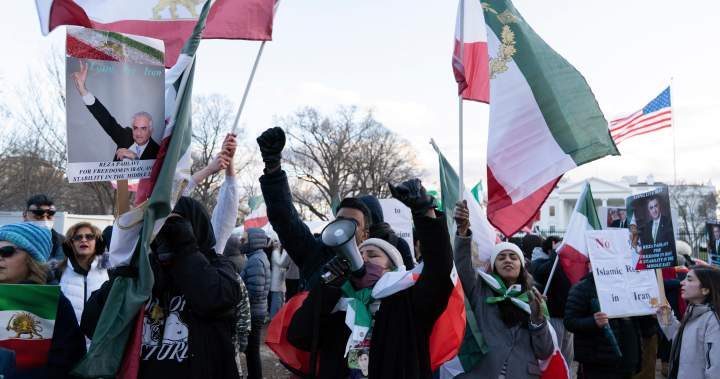
Iran’s president said Tuesday he instructed the country’s foreign minister to “pursue fair and equitable negotiations” with the United States, the first clear sign from Tehran it wants to try to negotiate as tensions remain high with Washington.
It comes after the Mideast country’s bloody crackdown on nationwide protests last month.
The announcement marked a major turn for reformist President Masoud Pezeshkian, who had broadly warned Iranians for weeks that the turmoil in his country had gone beyond his control.
It also signals that the president received support from Iran’s Supreme Leader Ayatollah Ali Khamenei for talks that the 86-year-old cleric previously had dismissed.
But possible talks were thrust into question when U.S. Central Command said Tuesday a U.S. Navy fighter jet shot down an Iranian drone that was approaching an American aircraft carrier.
In an e-mailed statement, U.S. Central Command said the drone “aggressively approached” the aircraft carrier with “unclear intent” and it “continued to fly toward the ship despite deescalatory measures taken by U.S. forces operating in international waters.”
Turkey had been working behind the scenes to make the talks happen there later this week as U.S. Mideast envoy Steve Witkoff is traveling in the region. A Turkish official later said the location of talks was uncertain but that Turkey was ready to support the process. The official did not provide further details.
Foreign ministers from Oman, Pakistan, Qatar, Saudi Arabia and the United Arab Emirates have also been invited to attend the talks, if they happen, according to the official who spoke on condition of anonymity as they did not have permission to speak to journalists.
But whether Iran and the U.S. can reach an agreement remains to be seen, particularly as U.S. President Donald Trump now has included Iran’s nuclear program in a list of demands from Tehran in any talks.
Trump ordered the bombing of three Iranian nuclear sites during the 12-day war Israel launched against Iran in June.
Writing on X, Pezeshkian said in English and Farsi that the decision came after “requests from friendly governments in the region to respond to the proposal by the President of the United States for negotiations.”
“I have instructed my Minister of Foreign Affairs, provided that a suitable environment exists — one free from threats and unreasonable expectations — to pursue fair and equitable negotiations, guided by the principles of dignity, prudence and expediency,” he said.
The U.S. has yet to acknowledge the talks will take place. A semiofficial news agency in Iran on Monday reported — then later deleted without explanation — that Pezeshkian had issued such an order to Foreign Minister Abbas Araghchi, who held multiple rounds of talks with Witkoff before the 12-day war.
On Tuesday, Araghchi spoke by phone with his counterparts from Oman, Qatar, Turkey and Kuwait, but did not mention anything about a possible venue.
Late Monday, the pan-Arab satellite channel Al Mayadeen, which is politically allied with the Iranian-backed Lebanese militant group Hezbollah, aired an interview with Ali Shamkhani, a top Khamenei adviser on security.
Get the day’s top news, political, economic, and current affairs headlines, delivered to your inbox once a day.
Shamkhani, who now sits on the country’s Supreme National Security Council and who in the 1980s led Iran’s navy, wore a naval uniform as he spoke.
He suggested that if the talks happened, they would be indirect at the beginning, then move to direct talks if a deal appeared to be attainable. Direct talks with the U.S. long have been a highly charged political issue within Iran’s theocracy, with reformists like Pezeshkian pushing for them and hard-liners dismissing them.
The talks would solely focus on nuclear issues, he added.
Asked about whether Russia could take Iran’s enriched uranium like it did in Tehran’s 2015 nuclear deal with world powers, Shamkhani dismissed the idea, saying there was “no reason” to do so. Kremlin spokesperson Dmitry Peskov on Monday said Russia had “long offered these services as a possible option that would alleviate certain irritants for a number of countries.”
“Iran does not seek nuclear weapons, will not seek a nuclear weapon and will never stockpile nuclear weapons, but the other side must pay a price in return for this,” he said.
Iran had been enriching uranium up to 60 per cent purity, a short, technical step away from weapons-grade levels. The International Atomic Energy Agency had said Iran was the only country in the world to enrich to that level that wasn’t armed with the bomb.
Iran has been refusing requests by the IAEA to inspect the sites bombed in the June war.
“The quantity of enriched uranium remains unknown, because part of the stockpile is under rubble, and there is no initiative yet to extract it, as it is extremely dangerous,” Shamkhani said.
Witkoff is expected to meet Israeli Prime Minister Benjamin Netanyahu and other Israeli security officials on Tuesday, according to a White House official who was not authorized to comment publicly about the talks and spoke on condition of anonymity.
While in Israel, Witkoff will meet with the head of the Mossad intelligence service and the Israeli military’s chief of staff, according to another official who was not authorized to speak to the media and spoke on condition of anonymity.
Israel is expected to ask that any agreement with Iran include removing enriched uranium from the country, stopping the enrichment of uranium, limiting the creation of ballistic missiles and ending support for Tehran’s proxies.
However, Shakhani in his interview rejected giving up uranium enrichment — a major obstacle in earlier talks with the U.S. In November, Araghchi said Iran was doing no enrichment in the country because of the U.S. bombing of the nuclear sites.
Witkoff will travel to Abu Dhabi, the UAE capital, later in the week for Russia-Ukraine talks, the official said.
“We have talks going on with Iran, we’ll see how it all works out,” Trump told reporters in the Oval Office on Monday. Asked what his threshold was for military action against Iran, he declined to elaborate.
“I’d like to see a deal negotiated,” Trump said. “Right now, we’re talking to them, we’re talking to Iran, and if we could work something out, that’d be great. And if we can’t, probably bad things would happen.”
Mike Pompeo, a hard-liner on Iran who served as CIA director and secretary of state in Trump’s first term, said it was “unimaginable that there can be a deal.”
“I think they may come away with some set of understandings,” Pompeo said at Dubai’s World Governments Summit. “But to think that there’s a long-term solution that actually provides stability and peace to this region while the ayatollah is still in power is something I pray for but find unimaginable.”
Also Tuesday, a ship transiting through the Strait of Hormuz, the narrow mouth of the Persian Gulf, reported being hailed on the radio “by numerous small armed vessels,” the British military’s United Kingdom Maritime Trade Operations center said.
There was no identifying information on the vessel, which continued into the Persian Gulf. The position of the incident appeared to be in Iranian territorial waters, where officials had warned of a naval drill by the paramilitary Revolutionary Guard in recent days.
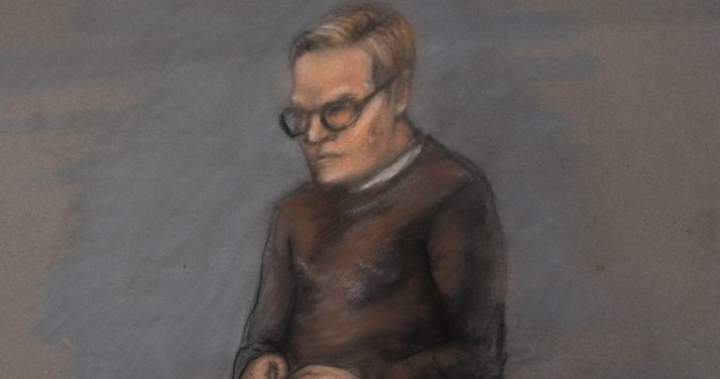
The son of Norway’s crown princess pleaded not guilty to rape charges as he went on trial Tuesday for multiple alleged offences, opening weeks of proceedings in a case that has cast a shadow on the royal family’s image.
Marius Borg Høiby, 29, is the eldest son of Crown Princess Mette-Marit from a previous relationship and the stepson of the heir to the throne, Crown Prince Haakon. Høiby has no royal title or official duties.
Høiby stood while prosecutor Sturla Henriksbø read out the 38 counts against him in the Oslo district court, asking him if he pleaded guilty. He replied “no” to the most serious charges, including the four counts of rape.
The charges also include abuse in a close relationship against one former partner, acts of violence against another and transporting 3.5 kilograms (7.7 pounds) of marijuana. Others include making death threats and traffic violations.
Høiby pleaded guilty to several driving offences, to an aggravated drugs offence and breaking a restraining order, and “partly” to threats and aggravated assault. Wearing glasses, a brown sweater and beige trousers, he spoke quietly and conferred regularly with a defence lawyer.
Prosecutors have said that Høiby could face up to 10 years in prison if convicted in the trial, which is scheduled to last until March 19. Seven alleged victims are expected to testify.
“There is equality before the law,” Henriksbø told the court. “The defendant is the son of the crown princess. He is part of the royal family. He shall nevertheless be treated in the same way as any other person who is charged with the same offences.”
For news impacting Canada and around the world, sign up for breaking news alerts delivered directly to you when they happen.
The defendant sat between defence lawyers Ellen Holager Andenæs and Petar Sekulic for the beginning of the trial and moved later to a table behind them, where he fiddled with a chain while the prosecutor outlined the allegations.
Reflecting international interest in the trial, Judge Jon Sverdrup Efjestad addressed the court in English, warning that it was prohibited to record or take photographs in the courtroom and advising that some witness testimony would be heard behind closed doors.
Andenæs argued that Høiby’s fame had already coloured the case. She said he had faced a “tsunami of publicity” over a long period that had made him “feel that he is losing control of his life,” and that the weight of public scrutiny from thousands of newspaper articles had made it difficult for him to believe he could prevail.
“Like everyone else, he is innocent until proven guilty. The verdict will be pronounced in this courtroom and not anywhere else,” the defence lawyer told the court. “It is only you who will decide this.”
Outside the courtroom, Hege Salomon, a lawyer for one of the alleged rape victims, said her client wanted to remain anonymous and was “very scared” that the public might learn her name, adding “the media coverage adds to the pressure, especially because she’s not a famous person.”
Salomon said her client had been contacted by police and decided to testify, “and she thinks it’s correct that … they have pressed charges and so on, but it was not her that initiated it.”
The investigation began in 2024. Police were first called to an apartment in Oslo’s upscale Frogner neighbourhood following reports of a violent incident. Høiby was arrested and later released, but the case expanded as additional women came forward with allegations.
The indictment prosecutors centers on four alleged rapes between 2018 and November 2024; alleged violence and threats against a former partner between the summer of 2022 and the fall of 2023; and two alleged acts of violence against a subsequent partner, along with violations of a restraining order.
It was expanded in January, when Høiby was charged with six more offences, including possession and delivery of large quantities of marijuana and further restraining order violations.
He was free pending trial until Sunday, when police said he was arrested over new allegations of assault, threats with a knife and violation of a restraining order.
Crown Prince Haakon said last week that he and Mette-Marit don’t plan to attend the trial and that the royal house doesn’t intend to comment during the proceedings.
King Harald, 88, and the royals are generally popular in Norway, but the Høiby case has been a problem for the family’s image.
The trial opened at a particularly sensitive moment. Mette-Marit faces renewed scrutiny over her past contacts with Jeffrey Epstein, who died in 2019 in a New York jail cell as he faced sex trafficking charges, following the release on Friday of a new batch of documents from the Epstein files.
They contained several hundred mentions of the crown princess, who already said in 2019 that she regretted having had contact with Epstein, Norwegian media reported. The documents, which include email exchanges, showed that Mette-Marit borrowed an Epstein-owned property in Palm Beach, Florida, for several days in 2013. Norwegian broadcaster NRK reported that the stay was arranged through a mutual friend, which was later confirmed by the royal household.
Mette-Marit said in a statement that she “must take responsibility for not having investigated Epstein’s background more thoroughly, and for not realizing sooner what kind of person he was.” She added: “I showed poor judgment and regret having had any contact with Epstein at all. It is simply embarrassing.”
© 2026 The Canadian Press





These ’90s fashion trends are making a comeback in 2017


The final 6 ‘Game of Thrones’ episodes might feel like a full season


अमर योद्धा: राइफलमैन जसवंत सिंह रावत की वीरगाथा

Before being named Pope Leo XIV, he was Cardinal Robert Prevost. Who is he? – National TenX News


Puerto Rico faces island-wide blackout, sparking anger from officials – National TenX News

According to Dior Couture, this taboo fashion accessory is back


BCCI किस ग्रेड के खिलाड़ी को देती है कितना पैसा? इन 5 क्रिकेटर्स का कटेगा पत्ता! होंगे कई बड़े उलटफेर


Indian-AI-software-which-caught-30-thousand-criminals-and-busted-18-terrorist-modules-its-demand-is-increasing-in-foreign-countries-also – News18 हिंदी