
Politics
Puerto Rico faces island-wide blackout, sparking anger from officials – National TenX News


Crews scrambled to restore power to Puerto Rico on Thursday after a blackout hit the entire island, affecting the main international airport, hospitals and hotels filled with Easter vacationers.
The outage that began past noon Wednesday left 1.4 million customers without electricity and more than 400,000 without water. More than 826,600 customers, or 56 per cent, had power back by Thursday afternoon, while 83 per cent of customers had water restored. Officials expected 90 per cent of customers to have power back within 48 to 72 hours after the outage.
“This is a shame for the people of Puerto Rico that we have a problem of this magnitude,” said Gov. Jenniffer González, who cut her weeklong vacation short and returned to Puerto Rico on Wednesday evening.
She said it would take at least three days to have preliminary information on what might have caused the blackout, which snarled traffic, forced hundreds of businesses to close and left those unable to afford generators scrambling to buy ice and candles.
“There’s still a long road of recovery,” she said. “Our system is very fragile.”
It’s the second massive blackout to hit Puerto Rico in less than four months, with the previous one occurring on New Year’s Eve.
Government under pressure to cancel energy firm contracts
“Why on holidays?” griped José Luis Richardson, who did not have a generator and kept cool by splashing water on himself every couple of hours.
The roar of generators and smell of fumes filled the air as a growing number of Puerto Ricans renewed calls for the government to cancel the contracts with Luma Energy, which oversees the transmission and distribution of power, and Genera PR, which oversees generation.

Get breaking National news
For news impacting Canada and around the world, sign up for breaking news alerts delivered directly to you when they happen.
González promised to heed those calls.
“That is not under doubt or question,” she said, but added that it’s not a quick process. “It is unacceptable that we have failures of this kind.”
González said a major outage like the one that occurred Wednesday leads to an estimated US$230 million revenue loss daily.

Ramón C. Barquín III, president of the United Retail Center, a nonprofit that represents small- and medium-sized businesses, warned that ongoing outages would spook potential investors at a time when Puerto Rico urgently needs economic development.
“We cannot continue to repeat this cycle of blackouts without taking concrete measures to strengthen our energy infrastructure,” he said.
Many also were concerned about Puerto Rico’s elderly population, with the mayor of Canóvanas deploying brigades to visit the bedridden and those who depend on electronic medical equipment.
Meanwhile, the mayor of Vega Alta opened a center to provide power to those with lifesaving medical equipment.
Wednesday night was difficult for many, including 62-year-old Santos Bones Burgos.
“I spent it on the balcony,” he said, adding that he was trying to get some fresh air.
At some point, he fell asleep and recalled waking up at 5 a.m. to a neighbor yelling, “The power is back!”
Among those unable to sleep was Dorca Navarrete, a 50-year-old house cleaner who said it was too hot.
“Last night was horrible,” she said. “I woke up with a headache.”


When she opened her eyes, she saw light and thought it couldn’t possibly be the sun at that hour. Then a smile spread across her face when she realized it was from the light she had left on in a room the day before.
What caused the blackout?
It was not immediately clear what caused the shutdown, the latest in a string of major blackouts on the island in recent years.
One possibility is that overgrown vegetation affected the grid, which, if true, should not have happened, said Josué Colón, the island’s energy czar and former executive director of Puerto Rico’s Electric Power Authority.
He noted that the authority flew daily to check on certain lines, something he said Luma should be doing.

Colón said Luma also needs to explain why all the generators shut down after there was a failure in the transmission system, when only one was supposed to go into protective mode.
Pedro Meléndez, a Luma engineer, said an investigation is ongoing. He said in a press conference Thursday that he did not immediately have details on when the company last did an air patrol, but said those occur with the frequency established in its contract.
Daniel Hernández, vice president of operations at Genera PR, said Wednesday that a disturbance hit the transmission system shortly after noon, a time when the grid is vulnerable because there are few machines regulating frequency at that hour.
Puerto Rico has struggled with chronic outages since September 2017, when Hurricane Maria pummeled the island as a powerful Category 4 storm, razing a power grid that crews are still struggling to rebuild.
The grid already had been deteriorating as a result of decades of a lack of maintenance and investment under the state’s Electric Power Authority, which is struggling to restructure $9 billion in debt.
© 2025 The Canadian Press

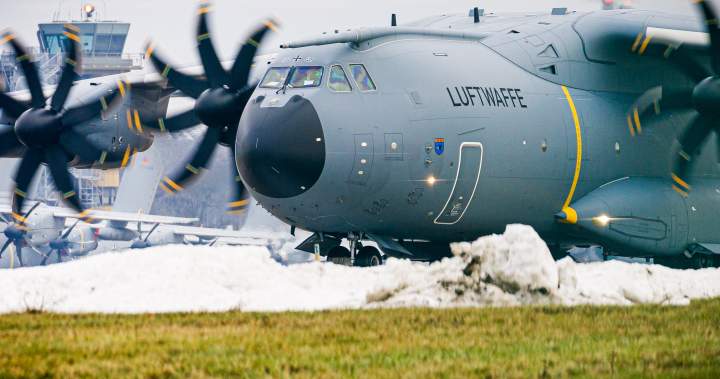
Troops from several European countries, including France, Germany, the UK, Norway and Sweden, are arriving in Greenland in a show of support for Denmark as talks between representatives of Denmark, Greenland and the U.S. on Wednesday highlighted “fundamental disagreement” between the Trump administration and European allies on the future of the Arctic island.
Denmark announced it would increase its military presence in Greenland on Wednesday and several European partners started sending symbolic numbers of troops on that day, just as the Danish and Greenlandic foreign ministers were preparing to meet with White House representatives in Washington.
The troop movements were intended to portray unity among Europeans and send a signal to U.S. President Donald Trump that an American takeover of Greenland is not necessary as NATO together can safeguard the security of the Arctic region amid rising Russian and Chinese interest.
“The first French military elements are already en route” and “others will follow,” French President Emmanuel Macron announced Wednesday, as French authorities said about 15 soldiers from the mountain infantry unit were already in Nuuk for a military exercise.
Germany will deploy a reconnaissance team of 13 personnel to Greenland on Thursday, its Defence Ministry said.
On Thursday, Danish Defence Minister Troels Lund Poulsen said the intention was “to establish a more permanent military presence with a larger Danish contribution,” according to Danish broadcaster DR. He said soldiers from several NATO countries will be in Greenland on a rotation system.
Danish Foreign Minister Lars Løkke Rasmussen, flanked by his Greenlandic counterpart Vivian Motzfeldt, said Wednesday that a “fundamental disagreement” over Greenland remains with Trump after they held highly anticipated talks at the White House with Vice President JD Vance and Secretary of State Marco Rubio.
Rasmussen added that it remains “clear that the president has this wish of conquering over Greenland” but that dialogue with the U.S. would continue at a high level over the following weeks.

Inhabitants of Greenland and Denmark reacted with anxiety but also some relief that negotiations with the U.S. would go on and European support was becoming visible.
In Greenland’s capital, Nuuk, local residents told The Associated Press they were glad the first meeting between Greenlandic, Danish and American officials had taken place but suggested it left more questions than answers.
Get breaking National news
For news impacting Canada and around the world, sign up for breaking news alerts delivered directly to you when they happen.
Several people said they viewed Denmark’s decision to send more troops, and promises of support from other NATO allies, as protection against possible U.S. military action. But European military officials have not suggested the goal is to deter a U.S. move against the island.
Maya Martinsen, 21, agreed and said it was “comforting to know that the Nordic countries are sending reinforcements” because Greenland is a part of Denmark and NATO.
The dispute, she said, is not about “national security” but rather about “the oils and minerals that we have that are untouched.”
On Wednesday, Poulsen had announced a stepped-up military presence in the Arctic “in close cooperation with our allies,” calling it a necessity in a security environment in which “no one can predict what will happen tomorrow.”
“This means that from today and in the coming time there will be an increased military presence in and around Greenland of aircraft, ships and soldiers, including from other NATO allies,” Poulsen said.
Asked whether the European troop movements were coordinated with NATO or what role the U.S.-led military alliance might play in the exercises, NATO referred all questions to the Danish authorities. However, NATO is currently studying ways to bolster security in the Arctic.


Rasmussen, the Danish foreign minister, announced the creation of a working group with the Americans to discuss ways to work through differences.
“The group, in our view, should focus on how to address the American security concerns, while at the same time respecting the red lines of the Kingdom of Denmark,” he said.

Commenting on the outcome of the Washington meeting on Thursday, Poulsen said the working group was “better than no working group” and “a step in the right direction.” He added nevertheless that the dialogue with the U.S. did not mean “the danger has passed.”
“We are really happy that action is being taken to make sure that this discussion is not just ended with that meeting alone,” Greenlandic MP Aki-Matilda Høegh-Dam said on Thursday during a news conference in Copenhagen.
She said Greenlandic people understood they were a “pivotal point” in a broader transformation of the international rules-based order and that they felt responsible not just for themselves but also for the whole world to get it right.
Høegh-Dam said the military operations should not happen “right next to our schools and right next to our kindergartens.”
Line McGee, a 38-year-old from Copenhagen, told AP that she was glad to see some diplomatic progress. “I don’t think the threat has gone away,” she said. “But I feel slightly better than I did yesterday.”
Speaking to FOX News Channel’s Special Report on Wednesday after the White House talks, Rasmussen rejected both a military takeover and the potential purchase of the island by the U.S. Asked whether he thinks the U.S. will invade, he replied: “No, at least I do not hope so, because, I mean, that would be the end of NATO.”
Rasmussen said Greenlanders were unlikely to vote for U.S. rule even if financial incentives were offered, “because I think there’s no way that U.S. will pay for a Scandinavian welfare system in Greenland, honestly speaking.”
“You haven’t introduced a Scandinavian welfare system in your own country,” he added.
Trump, in his Oval Office meeting with reporters, said: “We’ll see how it all works out. I think something will work out.”
© 2026 The Canadian Press
Politics
A Canadian citizen has died in Iran, Ottawa says as protests intensify – National TenX News
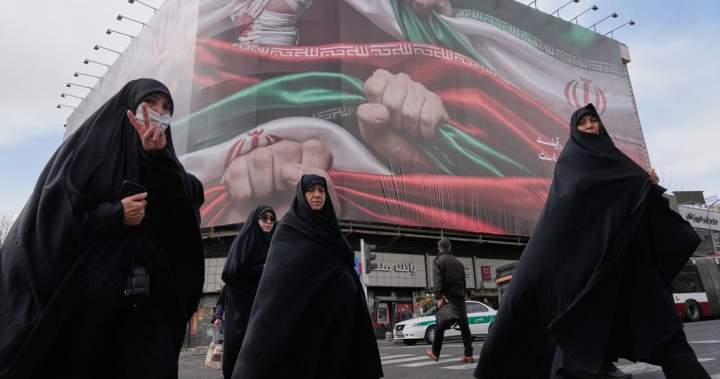
A Canadian citizen has died in Iran, Global Affairs Canada told Global News as the protests against the Iranian regime have intensified over the last few days.
“Global Affairs Canada is aware of a Canadian citizen who died in Iran. We express our condolences to the family and loved ones during this difficult time,” a spokesperson for GAC said.
As of Wednesday, there were 3,054 Canadian citizens and permanent residents registered in Iran, the spokesperson said.
Get daily National news
Get the day’s top news, political, economic, and current affairs headlines, delivered to your inbox once a day.
However, they added that since registration with GAC is voluntary, the actual number may be outdated.
Canada does not have diplomatic relations with Iran.

More to come
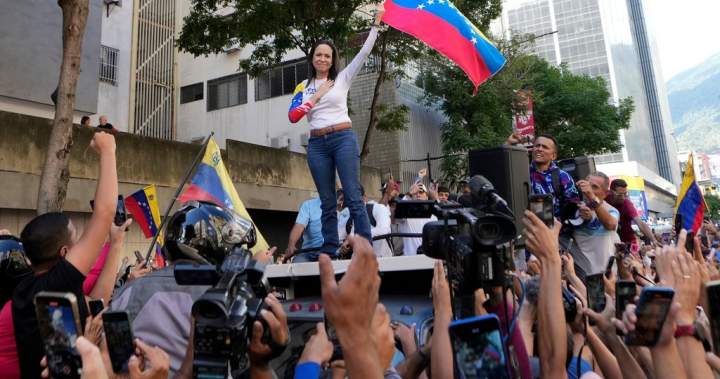
Venezuelan opposition leader and Nobel Peace Prize winner María Corina Machado will meet U.S. President Donald Trump on Thursday, an encounter that has the potential to alter the future of the oil-rich South American country.
For years, Machado has been the face of Venezuela’s pro-democracy opposition. Her political coalition won Venezuela’s last election in 2024 by a landslide, according to international observers. Machado herself had been barred from running for the presidency, so opposition candidate Edmundo González ran in her stead backed by Machado’s coalition.
Despite independent analyses indicating González received about twice as many votes as President Nicolás Maduro, Maduro refused to concede. Facing arrest, both González and Machado eventually fled the country.
FILE – Opposition leader Maria Corina Machado greets supporters during a protest against Venezuelan President Nicolas Maduro the day before his inauguration for a third term in Caracas, Venezuela, Thursday, Jan. 9, 2025. (AP Photo/Matias Delacroix, file).
RM
Machado’s meeting at the White House comes less than three weeks after Maduro was seized by U.S. forces in Caracas. In her first interview following Maduro’s arrest, Machado told Fox News Hannity: “January 3rd will go down in history as the day justice defeated a tyranny. It’s a milestone…it’s not only huge for the Venezuelan people and our future; I think it’s a huge step for humanity, for freedom and human dignity.”
“I’m planning to go back to Venezuela as soon as possible,” she said.
The Colombian border city of Cúcuta. Thousands of Venezuelans cross into Colombia every day.
Kieron O’Dea / Global News
News of Machado’s impending return was quietly celebrated by ordinary Venezuelans who spoke to Global News in Cúcuta, a city on the Colombian side of the Venezuelan border where large crowds of Venezuelans arrive daily to shop for food and other basic supplies, in order to circumvent Venezuela’s extraordinarily high prices and inflation.
“Machado is our Iron Lady,” said a smiling Juan Antonio, who was in Cúcuta for a medical appointment (Colombia provides free health care to Venezuelans).
“This is the change that we’ve been waiting for for a long time. And that lady, well, what she said and what she has done and what has been left to do, gives hope to Venezuela.”

“She has the trust of the people. Every time that María Corina Machado goes out to the street, she can reunite the family of Venezuela,” said Juan Carlos Viloria, president of the NGO Global Alliance for Human Rights and a community leader in the Venezuelan diaspora.
Viloria is one of an estimated nearly three million Venezuelans living in Colombia, following a mass exodus fuelled by Venezuela’s economic collapse and Maduro’s crackdown on human rights. “This is a historic moment, but also an extremely fragile one,” Viloria said.
Get daily National news
Get the day’s top news, political, economic, and current affairs headlines, delivered to your inbox once a day.
That fragility is expected to underpin Machado’s meeting with the U.S. president. At around the same time Machado meets with Trump, a Venezuelan government envoy is also expected to arrive in Washington to meet U.S. officials to discuss reopening the Venezuelan embassy.
After Trump announced news of Maduro’s arrest on Jan.3, a reporter asked the U.S. president whether he would endorse Machado to lead the country. Trump’s answer surprised many.
“I think it would be very tough for her to be the leader. She doesn’t have the support within or the respect within the country,” Trump said. “She’s a very nice woman, but she doesn’t have the respect.”
Instead, Trump announced his government would temporarily work with Maduro’s former vice-president, now acting Venezuelan president Delcy Rodríguez, a long-time Maduro loyalist and regime member.
FILE – Venezuelan Vice President Delcy Rodriguez smiles during a press conference at the Miraflores presidential palace in Caracas Venezuela, Nov. 18, 2024. (AP Photo/Ariana Cubillos, File).
AC
The U.S. president was angry over Machado’s decision to accept last year’s Nobel Peace Prize, an honour Trump has long coveted, which reportedly factored into Trump’s decision to dismiss Machado. Machado said last week she hoped to thank Trump personally for the U.S. intervention in Venezuela and would like to give her Nobel Prize to him. Trump called the offer “a great honour” and said “it’s very nice that she wants to come in.”
When asked if the gesture would change his view of Machado’s future role in Venezuela, the president replied, “She might be involved in some aspect of it. I will have to speak to her.”
The Nobel Committee responded with a statement that the peace prize, widely considered one of the world’s most prestigious awards, is not transferable.
December 11, 2025: Venezuelan opposition leader Maria Corina Machado, winner of the 2025 Nobel Peace Prize, acknowledges a crowd of people from the balcony of Grand Hotel Oslo after arriving in the Norwegian capital in the small hours of Dec. 11, 2025. The award ceremony took place the previous day, with her daughter Ana Corina Sosa Machado attending on her behalf. (Credit Image: © Kyodonews via ZUMA Press).
Kyodonews via ZUMA Press

Asked about Trump’s earlier remarks that Machado did not have sufficient support to lead the country, José Ernesto Hernández, National Coordinator for the Youth Wing of Machado’s opposition movement, told Global News he was “not in a position to question or interpret the words of Donald Trump,” but that “Venezuelans in and out of the country are united behind the leadership of María Corina Machado.”
Hernández, who, along with Machado, fled the country and is now living in an undisclosed location, said he was confident the Trump administration will ensure Venezuela holds new elections. “Today there is still repression throughout the country,” Hernández told Global News in an exclusive interview.
“(Elections) seem to be the goal of both the Venezuelans and the Trump administration itself, because that would provide stability and security for the entire hemisphere. A free and fair election, democratizing Venezuela is the safest way for the United States to be able to protect and guarantee its goal of national security.”
José Ernesto Hernández, National Coordinator for Vente Joven, poses with Venezuelan opposition leader María Corina Machado in this undated photo.
Submitted
Article 233 of Venezuela’s constitution requires a presidential election be held within 30 days of a permanent vacancy, such as the one caused by Maduro’s removal. But Trump has repeatedly refused to set any timeline for elections in Venezuela and has suggested they could be years away, telling the New York Times that the country must first be “restored” and that an election “will require time.”
The White House has outlined a three‑phase plan for Venezuela, which puts political transition and democratic elections at the very end, after oil sector stabilization and an economic “recovery” phase. Hernández acknowledged that “it is premature to talk about if elections will be held by a certain time.”
“First, they have to take important steps for the transition to begin. And the transition begins, as it should, with recognition of the legitimate opposition leadership,” he said.
Douglas Farah, the president of IBI Consultants based in Washington, D.C., spent a decade advising the Pentagon. He told Global News that he worked with the first Trump administration in 2019 to run war games to simulate what a post-Maduro Venezuela might look like.
“I think the potential of things taking a turn for the better are very small,” Farah said. He argued the Trump administration should prioritize democratic transition and humanitarian aid over U.S. plans for oil extraction, in order to provide stability and prevent a mass exodus of refugees.
“I think it’s clear now that the main goal for the Trump administration is oil, not democracy or the restoration of decent living for the Venezuelan people. And I think that will cause us enormous grief in the near future.”
Farah said much now depends on Machado’s ability to win over President Trump.
“I think a lot will depend on if she has any U.S. backing or not,” Farah said. “If she comes in (to Venezuela) by herself, they may not arrest her because they may think that’s way too big a step for the U.S. to swallow. But she’s certainly not going to be able to mobilize politically without U.S. support.”
A Colombian soldier monitors the Venezuelan border. The Colombian government declared a state of emergency and deployed the military after U.S. forces seized Venezuelan President Nicolas Maduro.
Kieron O’Dea / Global News


European troops arrive in Greenland after ‘disagreement’ with U.S. – National TenX News

A Canadian citizen has died in Iran, Ottawa says as protests intensify – National TenX News

Venezuelan opposition leader makes high-stakes visit to Washington – National TenX News


-

 Fashion10 months ago
These ’90s fashion trends are making a comeback in 2017
-

 Entertainment10 months ago
The final 6 ‘Game of Thrones’ episodes might feel like a full season
-

 TenX Exclusive10 months ago
अमर योद्धा: राइफलमैन जसवंत सिंह रावत की वीरगाथा
-
 Politics8 months ago
Before being named Pope Leo XIV, he was Cardinal Robert Prevost. Who is he? – National TenX News
-

 Fashion10 months ago
According to Dior Couture, this taboo fashion accessory is back
-

 Tech10 months ago
Indian-AI-software-which-caught-30-thousand-criminals-and-busted-18-terrorist-modules-its-demand-is-increasing-in-foreign-countries-also – News18 हिंदी
-

 Politics9 months ago
Scientists detect possible signs of life on another planet — but it’s not aliens – National TenX News
-

 Tech10 months ago
luggage-that-becomes-a-scooter-earns-Rs-10-crore – News18 हिंदी