
Politics
Penguins and polar bears outnumber people in some tariff-hit territories – National TenX News

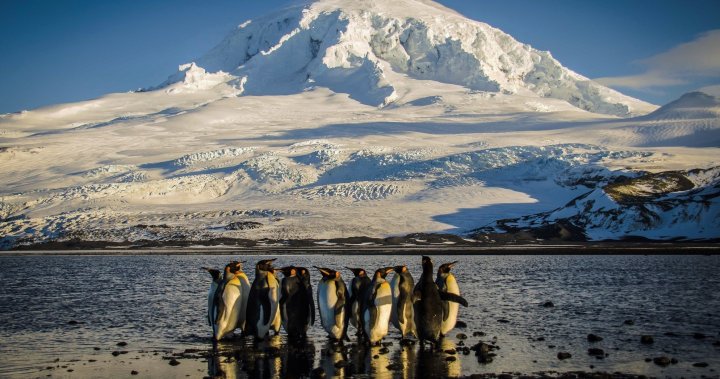
Some of the world’s least inhabited islands and territories have been hit by U.S. President Donald Trump’s “reciprocal” tariffs on all foreign trading partners — and some appear to have more penguins and polar bears than trade agreements with the U.S.
Tiny tropical islands and remote outposts in the Antarctic and far North were included in the list of dozens of countries and territories that now face a baseline tariff of 10 per cent. Some of the outlier targets face far higher tariffs, based on calculated trade deficits with the U.S., leaving world leaders scratching their heads.
“Nowhere on Earth is exempt from this,” Australian Prime Minister Anthony Albanese, whose country includes many of the territories caught up in Trump’s tariffs, told reporters Wednesday.
None of the territories listed below were included in the National Trade Estimate report on foreign trade barriers from U.S. Trade Representative Jamieson Greer’s office, released Monday.
The Trump administration has pointed to the report’s findings to justify the new global tariff policy, which is also based on a national emergency on foreign trade that Trump declared in his executive order Wednesday.
“President Trump is taking urgent action to protect the national security and economy of the United States,” Greer said in a statement. “The current lack of trade reciprocity, demonstrated by our chronic trade deficit, has weakened our economic and national security.”
Here are just some of the targets of Trump’s trade war that are raising eyebrows:
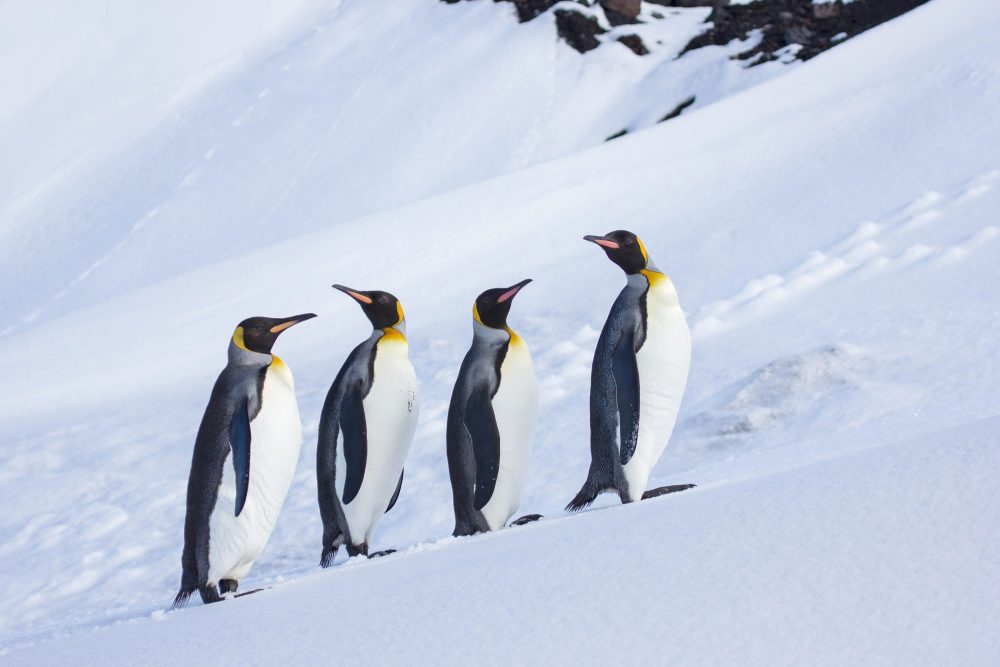
Heard and McDonald Islands – 10% tariff
This Australian territory comprises two islands in the remote Antarctic that is uninhabited by people, other than temporary Australian scientific expeditions. A permanent research station on Heard Island was closed in 1954.
The islands are home to penguins and seals and are about a two-week sail from the Australian mainland.
Despite hardly any actual trade with the U.S. — government data shows no imports from the islands last year — the territory faces the 10 per cent baseline tariff.
The CIA World Factbook says economic activity on the islands effectively ended in 1877, when elephant seal oil trade ended after the local seal population was nearly killed off.
Three tropical coral islands in the South Pacific make up the New Zealand territory of Tokelau, home to 1,500 people.
It primarily survives on subsistence agriculture, meaning hardly any crops are exported, as well as fishing.
Trade in goods with the U.S. amounted to roughly US$500,000 last year, according to U.S. government data. “Economic opportunities in Tokelau are sparse,” the CIA World Factbook says.
Global trade data compiled by the Observatory of Economic Complexity shows the U.S. is near the bottom of the territory’s export and import markets.
Christmas Island – 10% tariff
The Australian outpost in the Indian Ocean — located 360 kilometres south of the Indonesian capital Jakarta, with a population of fewer than 2,000 people — has used U.S. heavy machinery to mine phosphate for decades.

Get weekly money news
Get expert insights, Q&A on markets, housing, inflation, and personal finance information delivered to you every Saturday.
“There’s no trade between Christmas Island and America, except that we do buy mining equipment through Tractors Singapore,” said Christmas Island Shire President Gordon Thomson, referring to the regional dealer for the Texas manufacturing giant Caterpillar Inc.
“The trade, if anything, is U.S. product into Christmas Island. The only thing that we export is phosphate and that goes to Malaysia, Indonesia, maybe Thailand and a bit to the Australian mainland,” Thomson said.
In 2023, the U.S. exported US$49 million in American goods to Christmas Island, while importing just US$4.4 million, according to the U.S. Census Bureau — an outlier year in a trade relationship that is otherwise relatively small.
Svalbard and Jan Mayen – 10% tariff
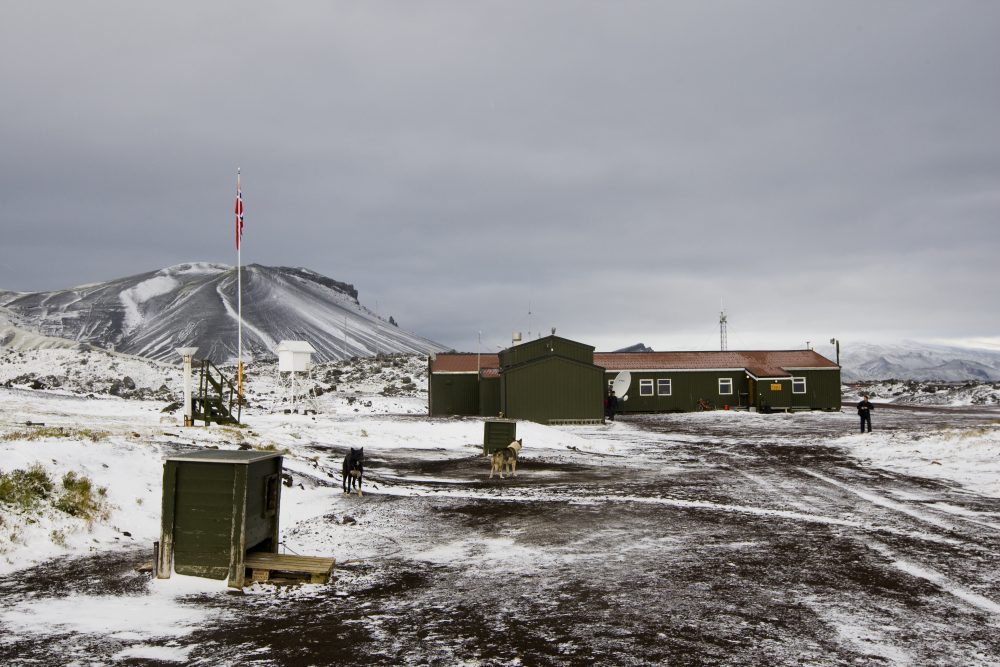
The Trump administration lumped together Svalbard, a Norwegian archipelago home to about 2,500 people, and Jan Mayen, a volcanic island 1,100 kilometres away, in its tariff list and imposed a 10 per cent levy on the combined territory.
Jan Mayen is completely uninhabited, other than a combined Norwegian military and meteorological research outpost and a local population of polar bears, and is partially covered by glaciers.
The Norwegian military’s main role there is to oversee Norway’s claim to sovereignty over the island.
U.S. Census data shows the U.S. has actually had a longstanding trade surplus with Svalbard and Jan Mayen for years, exporting far more than it imports.
The most the U.S. has imported from the territory in the past five years is around US$100,000.
British Indian Ocean Territory – 10% tariff
This overseas British territory comprises over 1,000 individual islands in the Chagos Archipelago between Indonesia and Tanzania, with a combined area of just 60 square kilometres.
The largest island, Diego Garcia, is home to a joint U.K.-U.S. military base and 4,000 British and American troops, but the territory has zero permanent residents.
U.S. government data shows millions of dollars of American goods are exported to the territory every year — likely military equipment — with far less goods imported in return.
Cocos (Keeling) Islands – 10% tariff


Another Australian territory in the Indian Ocean, this one is made up of two atolls with a combined total of 27 coral islands, with less than 600 people calling it home.
It primarily relies on tourism, and most food and other necessities are imported from Australia, yet the U.S. is a top export market for shipbuilding.
Two-way trade in goods amounts to roughly US$3 million a year, according to the U.S. Census Bureau.
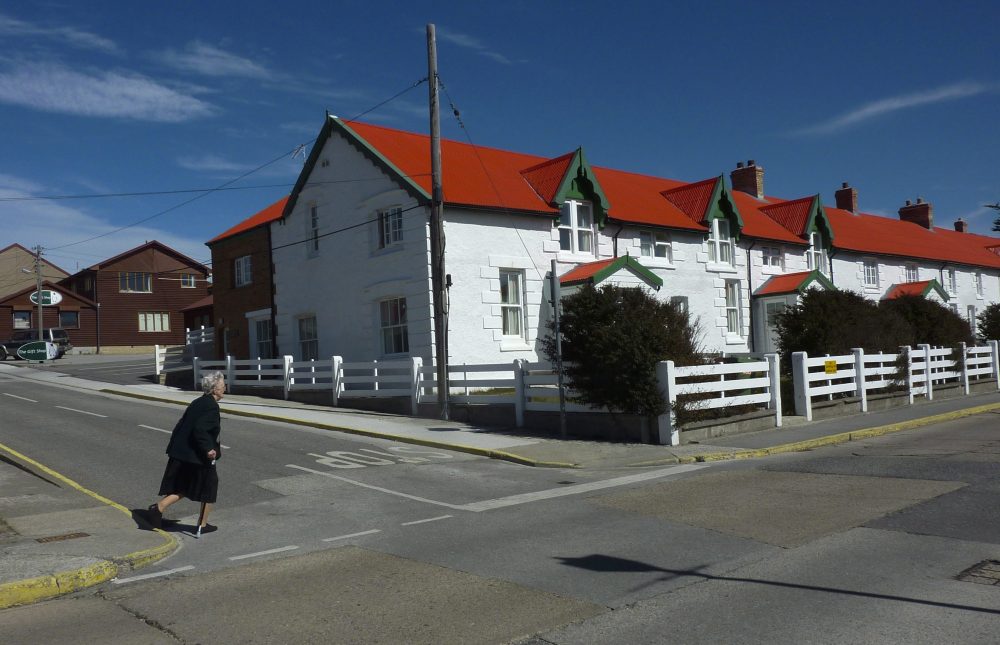
Falkland Islands – 41% tariff
Long disputed between the United Kingdom and Argentina — including a military conflict in the 1980s — the Falkland Islands is home to roughly 3,600 people in the southern Atlantic Ocean.
It relies mostly on fishing, agriculture and tourism for its economy, and wool from its sheep farming sector is a top export.
The Trump administration claims the territory’s tariffs, trade barriers and “currency manipulation” amounts to an 82 per cent tax on U.S. imports, leading it to impose a 41 per cent tariff in return.
The U.S. has reported a trade goods deficit with the Falkland Islands for years.
Last year it imported US$18.7 million more in goods than it exported, down from a US$31.2 million deficit two years prior.
Norfolk Island – 29% tariff
This Pacific island, another Australian territory with a population of around 2,000 people, also received more severe tariff treatment with a 29 per cent levy.
That’s based on what the Trump administration claims is a total 58 per cent extra charge on U.S. goods.
The island’s economy primarily revolves around tourism, and most of its minimal agricultural exports are to Europe. Albanese told the Australian Broadcasting Corporation the separate, higher tariff for an Australian territory “was somewhat unexpected and a bit strange.”
“To my knowledge, we do not export anything to the United States,” Norfolk Island Administrator George Plant, the Australian government’s representative on the island, told the AP.
“We don’t charge tariffs on anything. I can’t think of any non-tariff barriers that would be in place either, so we’re scratching our heads here.”
Norfolk Island business owners who spoke with Reuters could think of no manufacturing industry on the island.
According to U.S. government data, two-way trade with Norfolk Island amounted to less than $US1.5 million over the past three years combined.
Saint Pierre and Miquelon – 50% tariff
According to the Trump administration, this French overseas territory right next to Newfoundland and Labrador with a population around 5,000 people tariffs U.S. goods at a 99 per cent rate — justifying a 50 per cent tariff, one of the highest rates on the entire list released Wednesday.
The archipelago of eight small islands relies on fishing exports and tourism for its economy.
Besides a US$3.4 million import of goods from the territory in July 2024, trade with the U.S. is minimal, U.S. government data shows.
—With files from the Associated Press and Reuters

Politics
IMF chief backs Jerome Powell, U.S. Fed independence amid Trump pressure – National TenX News
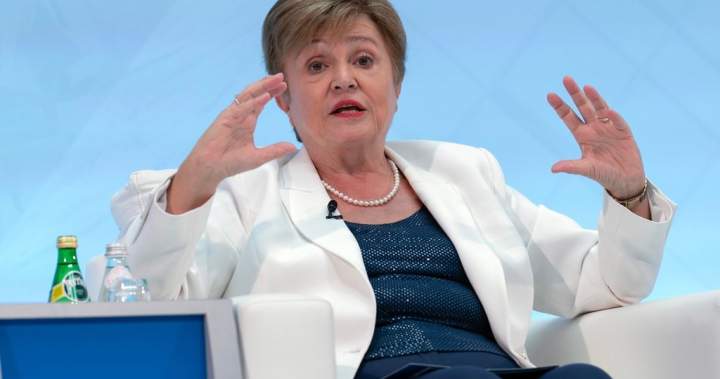
International Monetary Fund chief Kristalina Georgieva on Thursday underscored the importance of keeping central banks independent and threw her support behind beleaguered Federal Reserve Chair Jerome Powell, who is facing a Trump administration investigation for renovation cost overruns.
Georgieva told Reuters in an interview that there was ample evidence that central bank independence worked in the interest of businesses and households, and that evidence-based, data-based decision-making is good for the economy.
The IMF managing director said she had worked with Powell and respected his professionalism.
“I have worked with Jay Powell. He is a very good professional, very decent man, and I think that his standing among his colleagues tells the story,” she said, when asked about a letter of support signed by her predecessor, Christine Lagarde, now head of the European Central Bank, and other large central banks.
Powell on Sunday disclosed that the Trump administration had opened an investigation into him over cost overruns for a $2.5 billion project to renovate two historical buildings at the Fed’s Washington headquarters complex.

Get daily National news
Get the day’s top news, political, economic, and current affairs headlines, delivered to your inbox once a day.
Powell denies wrongdoing and has called the unprecedented actions a pretext to put pressure on him for not bowing to U.S. President Donald Trump’s long-running demands for sharply lower interest rates.


The probe has sparked widespread criticism from some key members of Trump’s Republican Party in the U.S. Senate, which must confirm his nominee to succeed Powell, along with foreign economic officials, investors and former U.S. government officials from both political parties.
Trump has repeatedly derided Powell’s leadership of the Fed and attacked him, often personally, over what he sees as the Fed chair’s slow moves to cut interest rates. On Wednesday, he dismissed concerns that eroding central bank independence would undermine the value of the U.S. dollar and spark inflation, telling Reuters, “I don’t care.”
Georgieva said the IMF looked carefully at issues such as monetary and financial stability, as well as the strength of a country’s institutions. It was specifically interested in the Fed, given the role of the U.S. dollar as a reserve currency.
“It would be very good to see that there is a recognition … that the Fed is precious for the Americans. It is very important for the rest of the world,” she said.
Trump has also attempted to fire another Fed official, Governor Lisa Cook, who has challenged her termination in a legal case that will be argued before the Supreme Court next week.

B.C. Premier David Eby spoke to reporters on Thursday morning from Mumbai, India, during his six-day trade mission.
He said that mining and energy companies in India are showing an interest in B.C.
“They are looking strongly to LNG as one of their ways of reducing carbon intensity, as well as reducing smog in the country,” Eby said.
“And so B.C. LNG has been an item of considerable interest, especially the projects that are reaching final investment decision over the next year — LNG Canada Phase 2, KSI Lisims LNG — as well as the projects that are under construction like Woodfibre LNG.”

Eby was also asked about the rise in extortion cases in B.C.
He said the province’s extortion task force will provide an update next week.
Get breaking National news
For news impacting Canada and around the world, sign up for breaking news alerts delivered directly to you when they happen.
“We have assembled a remarkable and historic task force, RCMP, CBSA,” Eby said.


“There are more police in Surrey right now than there have ever been. The RCMP has surged resources into the community.”
Eby said he has not been happy with the fact that there has been no update from the task force and he has asked them to provide one.
“There have been some important developments, people deported, an arrest here in India, cooperation between the Indian government and the Canadian government on this at the law enforcement level,” he added.
“That needs to continue, but, bluntly, we need better results, we need to see more arrests and whatever we can do to support the police to get the job done, we will do so.”
As of Jan. 12, Surrey police said there have been 16 reported extortion incidents in the city since the beginning of the year.
© 2026 Global News, a division of Corus Entertainment Inc.

Amid persistent doubts over the future of the Canada-United States-Mexico trade agreement (CUSMA), Mexico’s Economy Minister Marcelo Ebrard insisted on Thursday that the agreement remains firmly intact and that the three countries will close a deal to extend it.
“We’re already in the treaty review phase, and we have to finish by July 1; that’s our deadline,” Ebrard said during Mexican President Claudia Sheinbaum’s daily morning press conference.
“We have made good progress on all the points that concern each of the parties.”
Ebrard’s comments were his first on the topic since U.S. President Donald Trump again cast doubt on the treaty’s future earlier this week.
“There’s no real advantage to it, it’s irrelevant,” Trump said on Tuesday, as he toured a Ford factory in Dearborn, Michigan.
The trilateral trade agreement, known as USMCA, replaced the North American Free Trade Agreement in 2020 and is a backbone of Mexico’s economy.
The treaty, which was negotiated during Trump’s first term, requires the three countries to hold a joint review this year to extend the pact.
Get breaking National news
For news impacting Canada and around the world, sign up for breaking news alerts delivered directly to you when they happen.
If extended, the treaty will remain in place another 16 years. If not, it is subject to annual reviews.

Technically, July 1 is a key date in the treaty’s review process, but many analysts expect negotiations to extend late into 2026 and said Trump will likely avoid extending the treaty before the U.S. midterm elections in November.

Trump’s recent threats to pursue military action against cartels have also added a new layer of uncertainty to U.S.-Mexico relations.
“I think Ebrard is betting on a best-case scenario, but the window for a July successful review is closing fast,” said Alexia Bautista, a former Mexican diplomat and lead Mexico analyst at the political risk consultancy firm Horizon Engage.
“Given recent events and statements, the risk is that Trump injects security into the process, turning the trade review into a far more political negotiation.”
Pedro Casas, chief executive of the American Chamber of Commerce of Mexico, said he expects the U.S. will continue imposing tariffs on a wide spectrum of Mexican exports, regardless of the treaty’s future.
The Trump administration has imposed sweeping 50 per cent duties on steel and aluminum exports to the U.S., along with a 25 per cent tariff on cars shipped from Mexico, even when those vehicles comply with the terms of the trade deal.
“I think the most likely scenario is a positive review process where we agree to extend the treaty for another 16 years, but steep tariffs still remain on Mexican exports that undermine the strength of the agreement,” Casas said.


IMF chief backs Jerome Powell, U.S. Fed independence amid Trump pressure – National TenX News

B.C. Premier David Eby says province’s LNG, mining of interest to India TenX News

Mexico confident CUSMA will remain as Trump suggests it could expire – National TenX News


-

 Fashion10 months ago
These ’90s fashion trends are making a comeback in 2017
-

 Entertainment10 months ago
The final 6 ‘Game of Thrones’ episodes might feel like a full season
-

 TenX Exclusive10 months ago
अमर योद्धा: राइफलमैन जसवंत सिंह रावत की वीरगाथा
-

 Politics8 months ago
Before being named Pope Leo XIV, he was Cardinal Robert Prevost. Who is he? – National TenX News
-

 Politics9 months ago
Puerto Rico faces island-wide blackout, sparking anger from officials – National TenX News
-

 Fashion10 months ago
According to Dior Couture, this taboo fashion accessory is back
-

 Tech10 months ago
Indian-AI-software-which-caught-30-thousand-criminals-and-busted-18-terrorist-modules-its-demand-is-increasing-in-foreign-countries-also – News18 हिंदी
-

 Politics9 months ago
Scientists detect possible signs of life on another planet — but it’s not aliens – National TenX News