
Politics
Ontario man accused of uttering threat against Iran ‘Day of Action’ protesters in Toronto – Toronto TenX News

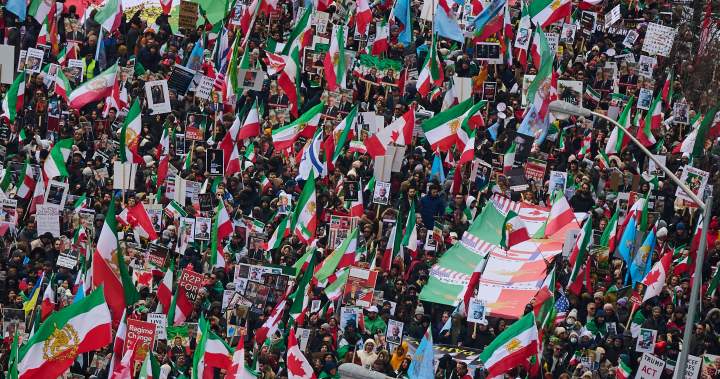
Toronto police say a man has been arrested for making online threats targeting a mass rally held Saturday against Iran’s crackdown on widespread protests in that country.
Hundreds of thousands of people attended the rally on Saturday, draped in red, white and green flags emblazoned with a golden lion — the flag Iran used before the Islamic Republic came to power in 1979.
It was one of many rallies that took place in major cities around the world, with 350,000 participating in the local event, according to Toronto police estimates. In Vancouver, the police chief said about 50,000 people marched.
According to Toronto police, the service became aware on Friday of a social media threat targeting the rally.
They allege the man making the threat stated he planned to bring a firearm to the protest with the intent of stopping the event.
Before the rally took place, Toronto police’s 32 Division intelligence services and the emergency task force executed a search warrant at the suspect’s home in Burlington.

Get daily National news
Get the day’s top news, political, economic, and current affairs headlines, delivered to your inbox once a day.
They subsequently arrested a 56-year-old Burlington man and charged him with uttering threats of death or bodily harm.
The man was scheduled to appear in court at the Toronto Regional Bail Centre on Saturday morning at 10 a.m.

Anyone with information about this incident is asked to contact police at 416-808-3200 or to call Crime Stoppers anonymously.


Iran has been gripped by countrywide protests since late December, sparked by an ongoing economic crisis. Though the economy was the initial focus, demonstrators have since pivoted to calling for an end to the Islamic Republic, with some even supporting the return of the ousted monarchy.
Iran’s government has cracked down on protests and implemented an internet blackout in the country. More than 3,000 people have been killed since protests broke out.
Saturday’s rally in Toronto was one of many happening worldwide as part of what has been labelled as a Global Day of Action.
Foreign Minister Anita Anand announced recently that Canada was imposing additional sanctions on seven people under the Special Economic Measures (Iran) Regulations.
According to a news release from Global Affairs Canada, the people being sanctions have ties to Iranian state organizations responsible for “intimidation, violence and transnational repression targeting Iranian dissidents and human rights defenders.”
Canada has now sanctioned 222 Iranian people and 256 Iranian entities, the news release said.
—with files from The Canadian Press and Associated Press
© 2026 Global News, a division of Corus Entertainment Inc.

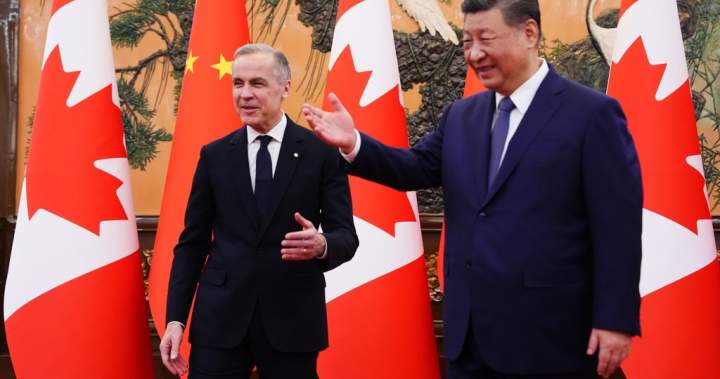
China is dropping its visa requirement for Canadian tourists and business visitors, after moves by Prime Minister Mark Carney to put relations with Beijing on a better footing.
China’s Foreign Ministry says Canadians will no longer be required to get visas for 30-days stays, starting Tuesday until at least the end of this year.
Get breaking National news
For news impacting Canada and around the world, sign up for breaking news alerts delivered directly to you when they happen.
A month ago, during his visit to Beijing, Carney said Chinese President Xi Jinping committed to visa-free access for Canadians, which China never confirmed.
For most Canadian tourists, entering mainland China currently requires a lengthy application process and roughly $140 in fees.
China has dropped visa requirements for other western nations in recent years as it tries to boost tourism following the COVID-19 pandemic.
Beijing maintained a visa for Canadians and restricted how many Chinese tourism groups could visit Canada during a years-long diplomatic spat.
© 2026 The Canadian Press
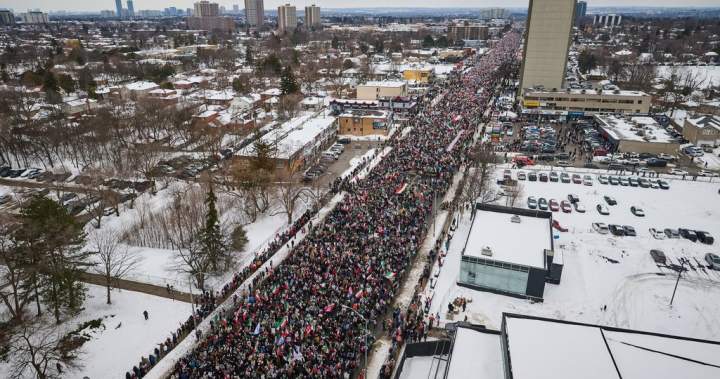
Hundreds of thousands of people marched down Yonge Street to the beat of drums and chants of “King Reza Pahlavi” at a rally in North York, as similar protests took place in major cities around the world.
Protesters held aloft and draped themselves in red, white and green flags emblazoned with a golden lion — the flag Iran used before the Islamic Republic came to power in 1979, toppling the previous monarchy.
Demonstrators called for an end to government repression in Iran as widespread protests inside the country have been met with violent crackdowns.
Toronto police estimated 350,000 people took part.
In Vancouver, the police chief said around 50,000 people marched there.
“It’s hard to see that our friends and families in Iran are being kept in prison for no reason, being shot in the head for (using) their democratic voice,” said Nima Najafi at the Toronto protest.
Najafi said he attended a protest two weeks ago in solidarity with anti-government protesters in Iran that took place at Toronto’s Sankofa Square. He said Saturday’s protest was twice as large.
Toronto police said 150,000 people attended the Sankofa Square rally.
Najafi and others called for the return of Iran’s exiled crown prince Reza Pahlavi, saying he is the only leader capable of helping Iran eventually transition to a democracy.
Thousands of protesters held pictures of Pahlavi at the march, alongside photos of people killed in Iran.
Arshia Aghdasi, a protester who said he flew to Toronto from Florida to join the rally, called on foreign powers to intervene in Iran, specifically the U.S.
Get breaking National news
For news impacting Canada and around the world, sign up for breaking news alerts delivered directly to you when they happen.
U.S. President Donald Trump has suggested the U.S. could attack Iran over the killing of peaceful demonstrators in the country. Some protesters Saturday held signs with Trump’s face on them, calling on the U.S. president to end nuclear negotiations with Iran and take military action.
Najafi said he was initially against calls for foreign powers to intervene in Iran but now he believes it is the only path forward.
“I had a friend who got shot in the head. He died. He was a pharmacist … a high school friend,” he said. “I had another friend who is imprisoned because he was a doctor treating patients.”
Iran has been gripped by countrywide protests since late December, sparked by an ongoing economic crisis that has sent the country’s currency into freefall.
While protesters were initially focused on Iran’s economy, demonstrators pivoted to calling for an end to Iran’s Islamic Republic, with some supporting the return of the ousted monarchy to power.
Iran’s government, which has cracked down on protests and implemented an internet blackout, said more than 3,000 people have been killed since protests broke out.
The U.S.-based Human Rights Activists News Agency, which has been accurate in counting deaths during previous rounds of unrest in Iran, put the death toll at over 7,000.
Arash Karimi said he was protesting on Yonge Street in solidarity with unarmed civilians who have been killed in Iran, calling government crackdowns a “one-sided war against the people.”

“Every Iranian knows someone, relatives or friends, (who have been) killed,” he said.
Amirali Ahzan, a protester who wore an Iranian lion and sun flag as well as a rainbow Pride flag on his back, said he hoped the current unrest in Iran leads to political change that will guarantee more rights for the Iranian people.
Ahzan said he fled Iran three years ago because he feared for his safety as a member of the LGBTQ community. Homosexuality is criminalized in Iran.
Before he fled, Ahzan said he was briefly jailed in Iran for attending a party where alcohol was present. Consuming alcohol is also banned in Iran.
Ahzan said it’s unclear how many LGBTQ Iranians have been killed or imprisoned since protests broke out. He said he was marching Saturday in their honour.
“I think it’s my duty to be their voice,” he said. “There are so many people like me who have been marginalized and criminalized. I do want to stand up for them.”
Ahzan said he wants Pahlavi to lead a “free Iran” and called on the exiled crown prince to improve women’s rights, trans rights and human rights in the country.
Saturday’s rally was one of many happening worldwide as part of what Pahlavi has labelled a Global Day of Action.
Pahlavi said Toronto, Munich and Los Angeles would be the main gathering points for Iranians living abroad to protest and call for regime change in Iran.
A protest in Munich was attended by more than 200,000 people, according to German news agency dpa.
Police warned the public to steer clear of the area around Saturday’s protest, which they said would cause extreme traffic and transit delays. Police closed roads, including portions of Yonge Street and North York Boulevard, ahead of the rally.
The protests came as Foreign Affairs Minister Anita Anand announced Canada is imposing additional sanctions on seven people under the Special Economic Measures (Iran) Regulations.
A news release from Global Affairs Canada said the people being sanctioned have ties to Iranian state organizations responsible for “intimidation, violence and transnational repression targeting Iranian dissidents and human rights defenders.”
It said Canada has now sanctioned 222 Iranian people and 256 Iranian entities.
— With files from The Associated Press
© 2026 The Canadian Press
Politics
Inuit look to Greenland’s social model as Canada pursues military buildup in Arctic – National TenX News
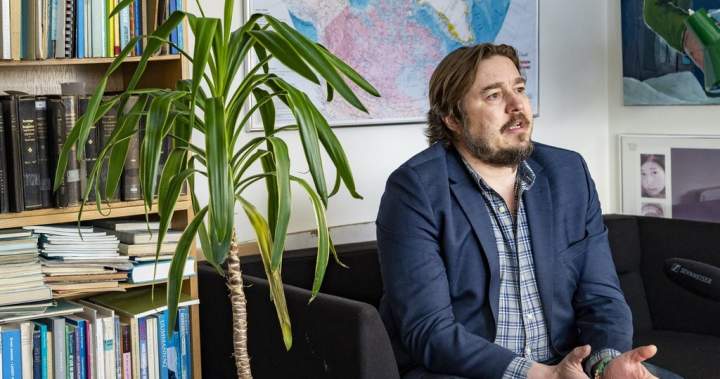
As Ottawa looks to use military spending to build up infrastructure in the Far North, Inuit say they want Canada to take tips from Greenland — where a Nordic social model adapted to local needs has built health, housing and education services deemed superior to anything in Canada’s Arctic.
“There is a lot that we can learn from them,” said Lukasi Whiteley-Tukkiapik, who leads Saqijuq, an Inuit wellness organization in Kujjuaq, Que.
Speaking last week on a charter flight from Montreal to Greenland’s capital Nuuk, where he attended the official opening of Canada’s new consulate, Whiteley-Tukkiapik said services in his community — a hub for northern Quebec — are inferior to those available in Iqaluit.
Nuuk, meanwhile, is “generations ahead of us” in providing Inuit-led social services in well-maintained buildings, he said.
As a self-governing territory of Denmark, Greenland has universal health care and unemployment insurance, free dentistry for children, subsidized daycare and education services generally offered without tuition fees.
Nuuk boasts modern schools and a hospital with four times the capacity of the one in Iqaluit — even though Nuuk’s population is only about 2.5 times the size of Iqaluit’s.
Greenland got 87 per cent of its energy from hydroelectricity in 2022, up from 59 per cent in 2000, according to the British think tank Ember. Nunavut relies almost entirely on fossil fuels like diesel.
The 2021 census found 53.1 per cent of Nunavut’s population lives in overcrowded housing, while a third live in homes in various states of disrepair. Nuuk has brightly coloured houses, cultural centres and libraries — in part because bedrock is easier to build on than the permafrost found in Iqaluit.
The Danish territory still grapples with suicide and tuberculosis — social problems it shares with Inuit communities in Canada — but Whiteley-Tukkiapik said it’s doing more to improve living standards.
“They have the same social issues (but) there’s more of an importance and it’s more on the front burner for them,” he said.
“Their health network, the social programs, the way that they tackle suicide prevention as well — they have a lot of good programs in place and they are working on them.”
Get breaking National news
For news impacting Canada and around the world, sign up for breaking news alerts delivered directly to you when they happen.
Steven Arnfjord, a University of Greenland professor who leads the Centre for Arctic Welfare, said the best aspects of the territory’s social model stem from Inuit leadership deciding how to use social services funding coming from Copenhagen.
“We educate our own social workers so they understand the culture, the language, everything, when they engage with clients. It’s not a social worker from Toronto or Ottawa or anywhere else that flies up or comes up and has to readjust,” he said.
“This is not a territory. This is a nation.”
Greenlanders get most of their medical services at home, without needing to fly to Denmark, Arnfjord said. When they do need to visit Copenhagen, Greenland Inuit stay in culturally appropriate accommodations run by Inuit organizations, similar to services offered in Ottawa and Winnipeg.
From the mid-1950s until the early 1970s, Denmark made strides on fighting tuberculosis by sending a specialized ship along Greenland’s coastline to offer X-ray screenings. The boat brought sick patients to a specialized facility in Nuuk for treatment before sending them home with a thorough recovery plan.
Arnfjord compared that to the former practice in Canada’s Far North, where people suspected of being infected with tuberculosis were once routinely sent to southern hospitals, sometimes in cramped conditions. Many of those patients never made it home because they died down south or ended up staying there.
Still, Arnfjord said, Greenland’s social system isn’t as responsive as it should be to changes in the population, compared to mainland Denmark or Sweden, where the government is constantly tweaking social welfare systems to address new problems or changing demographics.
He added Greenland’s social services still put too much emphasis on the individual in addressing problems like addiction or homelessness, ignoring the impact of extended Inuit families.
Arnfjord said he attended a parent-teacher conference in Greenland that was framed the way it would have been in Denmark — with the student having primary responsibility for learning. He said that clashes with the Inuit ethic that expects the family to work together to support a child’s education.

“It’s not the group or the collective or the family we’re talking about. The entity becomes the single individual, and that is hurtful for an Indigenous community,” he said. “Because it’s an installed version of welfare, it has this colonial history about it.”
Inuit Tapiriit Kanatami president Natan Obed represents Inuit from 51 communities across the Canadian Arctic, where cancer care and childbirth almost always require flights to hospitals in the south.
While there is a shortage of comparable data, Obed said Greenland has far more doctors per capita and more medical services than Canada’s Arctic.
“We look to Greenland and see more indicators of equity — especially social equity — and the hallmarks of sustainable communities in a way that we have yet to materialize completely here in Canada,” Obed said.
Andrea Charron, director of the Centre for Defence and Security Studies at the University of Manitoba, said Ottawa will need to improve infrastructure in Arctic communities if it wants to expand its military footprint — because military bases and airfields only function well in areas with adequate housing and services.
She cautioned that Inuit communities are accustomed to empty promises from the federal government. She said a military buildup will only benefit locals if it respects Inuit sovereignty and offers dedicated funding over years.
Ottawa, Charron said, tends to get enthusiastic about the North every few years before getting sidetracked.
“We need sustained attention and funding to this infrastructure, because what we tend to have is what I call Arctic distraction disorder,” she said.
“You have to be very clear about what the money can and cannot provide.”
Charron said better infrastructure also would shore up Canada’s security in the North against the risk of territorial or political incursions from foreign powers.
“Growing, healthy communities are a bulwark against foreign interference,” she said. “If you are lacking access to healthy food and you don’t have internet and you don’t have clean drinking water, then it’s much easier for nefarious actors to say, ‘Well, we’ll provide this for you.’ But it often comes with strings attached.”
Arnfjord added that Greenlanders have taken on a new appreciation for their social safety net in the wake of U.S. President Donald Trump’s demands for ownership of the territory and Washington’s talk of paying residents thousands of dollars.
“The level of trust and investment in a good welfare system, the benefits from that sort of thing — that’s something that you can’t supplement with a lump sum of money,” he said.
He recalled seeing dire treatment of Indigenous people and widespread homelessness while visiting Alaska in 2022.
“That’s not something that will be tolerated in Greenland.”


China drops visa requirement for Canadian tourists, business visitors – National TenX News

Ontario man accused of uttering threat against Iran ‘Day of Action’ protesters in Toronto – Toronto TenX News

Toronto sees hundreds of thousands rally for Iran ‘Day of Action’ TenX News


-

 Fashion11 months ago
These ’90s fashion trends are making a comeback in 2017
-

 Entertainment11 months ago
The final 6 ‘Game of Thrones’ episodes might feel like a full season
-
 TenX Exclusive11 months ago
अमर योद्धा: राइफलमैन जसवंत सिंह रावत की वीरगाथा
-
 Politics9 months ago
Before being named Pope Leo XIV, he was Cardinal Robert Prevost. Who is he? – National TenX News
-

 Politics10 months ago
Puerto Rico faces island-wide blackout, sparking anger from officials – National TenX News
-

 Sports11 months ago
BCCI किस ग्रेड के खिलाड़ी को देती है कितना पैसा? इन 5 क्रिकेटर्स का कटेगा पत्ता! होंगे कई बड़े उलटफेर
-
 Fashion11 months ago
According to Dior Couture, this taboo fashion accessory is back
-

 Tech11 months ago
Indian-AI-software-which-caught-30-thousand-criminals-and-busted-18-terrorist-modules-its-demand-is-increasing-in-foreign-countries-also – News18 हिंदी