
Politics
Myanmar earthquake death toll exceeds 2,700, but survivors still being found – National TenX News

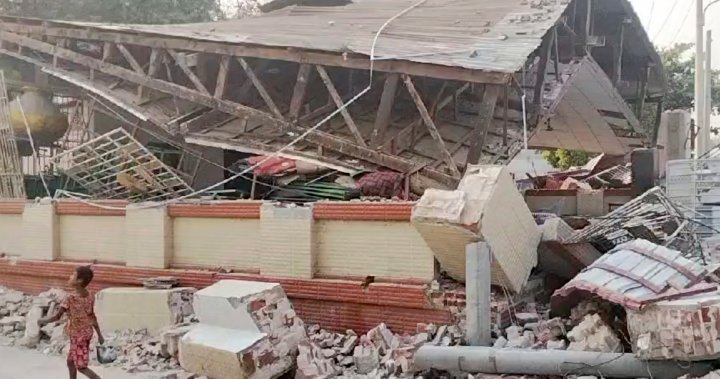
Rescue workers saved a 63-year-old woman from the rubble of a building in Myanmar’s capital on Tuesday, but hope was fading of finding many more survivors of the violent earthquake that killed more than 2,700 people, compounding a humanitarian crisis caused by a civil war.
The fire department in Naypyitaw said the woman was successfully pulled from the rubble 91 hours after being buried when the building collapsed in the 7.7 magnitude earthquake that hit midday Friday. Experts say the likelihood of finding survivors drops dramatically after 72 hours.
Death toll numbers forecast to increase
The head of Myanmar’s military government, Senior Gen. Min Aung Hlaing, told a forum for relief donations in Naypyitaw that 2,719 people have now been found dead, with 4,521 others injured and 441 missing, Myanmar’s state MRTV television reported.
He said Friday’s earthquake was the second most powerful in the country’s recorded history after a magnitude 8 quake east of Mandalay in May 1912.
The casualty figures are widely expected to rise. The earthquake hit a wide swath of the country, leaving many areas without power, telephone or cell connections and damaging roads and bridges, making the full extent of the devastation hard to assess.

Most of the reports so far have come from Mandalay, Myanmar’s second-largest city, which was near the epicenter of the earthquake, and Naypyitaw, the capital.
“The needs are massive, and they are rising by the hour,” said Julia Rees, UNICEF’s deputy representative for Myanmar.
Myanmar’s fire department said 403 people have been rescued in Mandalay and 259 bodies have been found so far. In one incident, 50 Buddhist monks who were taking a religious exam in a monastery were killed when the building collapsed, and 150 more are thought to be buried in the rubble.
Structural damage is extensive
The World Health Organization said more than 10,000 buildings overall are known to have collapsed or been severely damaged by the quake.
The earthquake also rocked neighboring Thailand, causing a high-rise building under construction to collapse and burying many workers.
Two bodies were pulled from the rubble Monday and another was recovered Tuesday, but dozens were still missing. Overall, there were 21 people killed and 34 injured in Bangkok, primarily at the construction site.

Get daily National news
Get the day’s top news, political, economic, and current affairs headlines, delivered to your inbox once a day.
In Myanmar, search and rescue efforts across the affected area paused briefly at midday Tuesday as people stood for a minute in silent tribute to the dead.
Relief efforts moving at a sluggish pace
Foreign aid workers have been arriving slowly to help in the rescue efforts, but progress lagged due to a lack of heavy machinery in many places.
In one site in Naypyitaw on Tuesday, workers formed a human chain, passing chunks of brick and concrete out hand-by-hand from the ruins of a collapsed building.
The state Global New Light of Myanmar newspaper reported Tuesday that a team of Chinese rescuers saved four people the day before from the ruins of an apartment complex. They included a 5-year-old and a pregnant woman who had been trapped for more than 60 hours.
It also reported that two teenagers were able to crawl out of the rubble of the same building using their cellphone flashlights to help guide them. Rescue workers were then able to use details from what they told them to locate their grandmother and sibling.

International rescue teams from several countries are on the scene, including from Russia, China, India, the United Arab Emirates and several Southeast Asian countries.
A small U.S. Agency for International Development disaster assessment team arrived Tuesday to determine how best to respond given limited U.S. resources due to the slashing of the foreign aid budget and dismantling of the agency as an independent operation.
A U.S. official said the three-person team had waited for visas before making the trip from neighboring Thailand following a weekend decision to provide $2 million in emergency assistance to Myanmar. The official spoke on condition of anonymity because the team’s arrival has not yet been publicly announced.
Aid pledges pouring in as officials warn of disease risk
Meantime, multiple countries have pledged millions in assistance to help Myanmar and humanitarian aid organizations with the monumental task ahead.
Even before the earthquake, more than 3 million people had been displaced from their homes by Myanmar’s brutal civil war, and nearly 20 million were in need, according to the U.N.


Many were already lacking in basic medical care and standard vaccinations, and the destruction of water and sanitation infrastructure by the earthquake and the movement of people into overcrowded shelters raises the risk of disease outbreaks, warned the U.N.’s Office for the Coordination of Humanitarian Affairs.
“Vulnerability to respiratory infections, skin diseases, vector-borne illnesses such as dengue fever, and vaccine-preventable diseases like measles is escalating,” OCHA said in its latest report.
The onset of monsoon season also a worry
Shelter is also a major problem, especially with the monsoon season looming.
Since the earthquake, many people have been sleeping outside, either because homes were destroyed or out of fear of aftershocks.
Civil war complicates disaster relief
Myanmar’s military seized power in 2021 from the democratically elected government of Aung San Suu Kyi, sparking what has turned into significant armed resistance and a brutal civil war.
Government forces have lost control of much of Myanmar, and many places were dangerous or impossible for aid groups to reach even before the quake.
Military attacks and those from some anti-military groups have not stopped in the aftermath of the earthquake, though the shadow opposition National Unity Government has called a unilateral ceasefire for its forces.
The NUG, established by elected lawmakers who were ousted in 2021, called for the international community to ensure humanitarian aid is delivered directly to the earthquake victims, urging “vigilance against any attempts by the military junta to divert or obstruct humanitarian assistance,” saying that could have “devastating consequences.”
The ceasefire plan for the armed wing of the NUG, called the People’s Defense Force, would have little effect on the battlefield, but could draw more international condemnation of continuing operations by the military, including air attacks reported by independent media.
A second armed opposition group, a coalition of three powerful ethnic minority guerrilla armies called the Three Brotherhood Alliance, announced Tuesday that it would also implement a monthlong unilateral ceasefire.

However, Min Aung Hlaing seemed to reject implementing a ceasefire, saying in his speech on Tuesday that the military will continue to take necessary defensive measures against some ethnic armed groups that were currently not carrying out combat operations, but were conducting military training, which he said amounted to hostile action.
It wasn’t immediately clear whether the military has been impeding humanitarian aid. In the past, it initially refused to allow in foreign rescue teams or many emergency supplies after Cyclone Nargis in 2008, which resulted in well more than 100,000 deaths. Even once it did allow foreign assistance, it was with severe restrictions.
In this case, however, Min Aung Hlaing pointedly said on the day of the earthquake that the country would accept outside help.
Tom Andrews, a monitor on rights in Myanmar commissioned by the U.N.-backed Human Rights Council, said on X that to facilitate aid, military attacks must stop.
“The focus in Myanmar must be on saving lives, not taking them,” he said.
–Associated Press reporters Grant Peck and Jintamas Saksornchai in Bangkok, Matthew Lee in Washington and Jamey Keaten in Geneva, contributed to this story.

Politics
IMF chief backs Jerome Powell, U.S. Fed independence amid Trump pressure – National TenX News
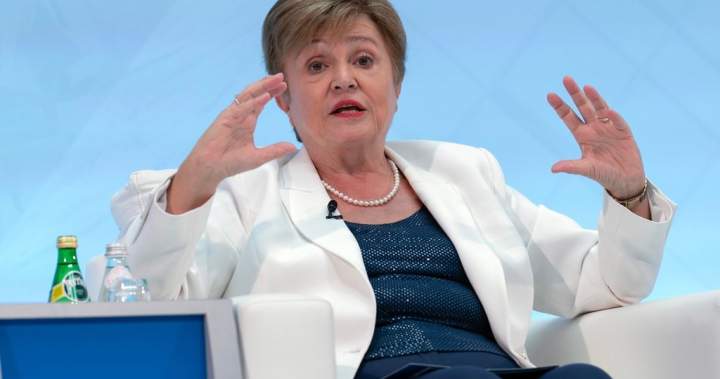
International Monetary Fund chief Kristalina Georgieva on Thursday underscored the importance of keeping central banks independent and threw her support behind beleaguered Federal Reserve Chair Jerome Powell, who is facing a Trump administration investigation for renovation cost overruns.
Georgieva told Reuters in an interview that there was ample evidence that central bank independence worked in the interest of businesses and households, and that evidence-based, data-based decision-making is good for the economy.
The IMF managing director said she had worked with Powell and respected his professionalism.
“I have worked with Jay Powell. He is a very good professional, very decent man, and I think that his standing among his colleagues tells the story,” she said, when asked about a letter of support signed by her predecessor, Christine Lagarde, now head of the European Central Bank, and other large central banks.
Powell on Sunday disclosed that the Trump administration had opened an investigation into him over cost overruns for a $2.5 billion project to renovate two historical buildings at the Fed’s Washington headquarters complex.
Get daily National news
Get the day’s top news, political, economic, and current affairs headlines, delivered to your inbox once a day.
Powell denies wrongdoing and has called the unprecedented actions a pretext to put pressure on him for not bowing to U.S. President Donald Trump’s long-running demands for sharply lower interest rates.


The probe has sparked widespread criticism from some key members of Trump’s Republican Party in the U.S. Senate, which must confirm his nominee to succeed Powell, along with foreign economic officials, investors and former U.S. government officials from both political parties.
Trump has repeatedly derided Powell’s leadership of the Fed and attacked him, often personally, over what he sees as the Fed chair’s slow moves to cut interest rates. On Wednesday, he dismissed concerns that eroding central bank independence would undermine the value of the U.S. dollar and spark inflation, telling Reuters, “I don’t care.”
Georgieva said the IMF looked carefully at issues such as monetary and financial stability, as well as the strength of a country’s institutions. It was specifically interested in the Fed, given the role of the U.S. dollar as a reserve currency.
“It would be very good to see that there is a recognition … that the Fed is precious for the Americans. It is very important for the rest of the world,” she said.
Trump has also attempted to fire another Fed official, Governor Lisa Cook, who has challenged her termination in a legal case that will be argued before the Supreme Court next week.

B.C. Premier David Eby spoke to reporters on Thursday morning from Mumbai, India, during his six-day trade mission.
He said that mining and energy companies in India are showing an interest in B.C.
“They are looking strongly to LNG as one of their ways of reducing carbon intensity, as well as reducing smog in the country,” Eby said.
“And so B.C. LNG has been an item of considerable interest, especially the projects that are reaching final investment decision over the next year — LNG Canada Phase 2, KSI Lisims LNG — as well as the projects that are under construction like Woodfibre LNG.”

Eby was also asked about the rise in extortion cases in B.C.
He said the province’s extortion task force will provide an update next week.
Get breaking National news
For news impacting Canada and around the world, sign up for breaking news alerts delivered directly to you when they happen.
“We have assembled a remarkable and historic task force, RCMP, CBSA,” Eby said.


“There are more police in Surrey right now than there have ever been. The RCMP has surged resources into the community.”
Eby said he has not been happy with the fact that there has been no update from the task force and he has asked them to provide one.
“There have been some important developments, people deported, an arrest here in India, cooperation between the Indian government and the Canadian government on this at the law enforcement level,” he added.
“That needs to continue, but, bluntly, we need better results, we need to see more arrests and whatever we can do to support the police to get the job done, we will do so.”
As of Jan. 12, Surrey police said there have been 16 reported extortion incidents in the city since the beginning of the year.
© 2026 Global News, a division of Corus Entertainment Inc.

Amid persistent doubts over the future of the Canada-United States-Mexico trade agreement (CUSMA), Mexico’s Economy Minister Marcelo Ebrard insisted on Thursday that the agreement remains firmly intact and that the three countries will close a deal to extend it.
“We’re already in the treaty review phase, and we have to finish by July 1; that’s our deadline,” Ebrard said during Mexican President Claudia Sheinbaum’s daily morning press conference.
“We have made good progress on all the points that concern each of the parties.”
Ebrard’s comments were his first on the topic since U.S. President Donald Trump again cast doubt on the treaty’s future earlier this week.
“There’s no real advantage to it, it’s irrelevant,” Trump said on Tuesday, as he toured a Ford factory in Dearborn, Michigan.
The trilateral trade agreement, known as USMCA, replaced the North American Free Trade Agreement in 2020 and is a backbone of Mexico’s economy.
The treaty, which was negotiated during Trump’s first term, requires the three countries to hold a joint review this year to extend the pact.
Get breaking National news
For news impacting Canada and around the world, sign up for breaking news alerts delivered directly to you when they happen.
If extended, the treaty will remain in place another 16 years. If not, it is subject to annual reviews.

Technically, July 1 is a key date in the treaty’s review process, but many analysts expect negotiations to extend late into 2026 and said Trump will likely avoid extending the treaty before the U.S. midterm elections in November.

Trump’s recent threats to pursue military action against cartels have also added a new layer of uncertainty to U.S.-Mexico relations.
“I think Ebrard is betting on a best-case scenario, but the window for a July successful review is closing fast,” said Alexia Bautista, a former Mexican diplomat and lead Mexico analyst at the political risk consultancy firm Horizon Engage.
“Given recent events and statements, the risk is that Trump injects security into the process, turning the trade review into a far more political negotiation.”
Pedro Casas, chief executive of the American Chamber of Commerce of Mexico, said he expects the U.S. will continue imposing tariffs on a wide spectrum of Mexican exports, regardless of the treaty’s future.
The Trump administration has imposed sweeping 50 per cent duties on steel and aluminum exports to the U.S., along with a 25 per cent tariff on cars shipped from Mexico, even when those vehicles comply with the terms of the trade deal.
“I think the most likely scenario is a positive review process where we agree to extend the treaty for another 16 years, but steep tariffs still remain on Mexican exports that undermine the strength of the agreement,” Casas said.


IMF chief backs Jerome Powell, U.S. Fed independence amid Trump pressure – National TenX News

B.C. Premier David Eby says province’s LNG, mining of interest to India TenX News

Mexico confident CUSMA will remain as Trump suggests it could expire – National TenX News


-

 Fashion10 months ago
These ’90s fashion trends are making a comeback in 2017
-

 Entertainment10 months ago
The final 6 ‘Game of Thrones’ episodes might feel like a full season
-

 TenX Exclusive10 months ago
अमर योद्धा: राइफलमैन जसवंत सिंह रावत की वीरगाथा
-

 Politics8 months ago
Before being named Pope Leo XIV, he was Cardinal Robert Prevost. Who is he? – National TenX News
-

 Politics9 months ago
Puerto Rico faces island-wide blackout, sparking anger from officials – National TenX News
-

 Fashion10 months ago
According to Dior Couture, this taboo fashion accessory is back
-

 Tech10 months ago
Indian-AI-software-which-caught-30-thousand-criminals-and-busted-18-terrorist-modules-its-demand-is-increasing-in-foreign-countries-also – News18 हिंदी
-

 Politics9 months ago
Scientists detect possible signs of life on another planet — but it’s not aliens – National TenX News