
Politics
China’s tariffs on Canada are in place. What are they targeting? TenX News

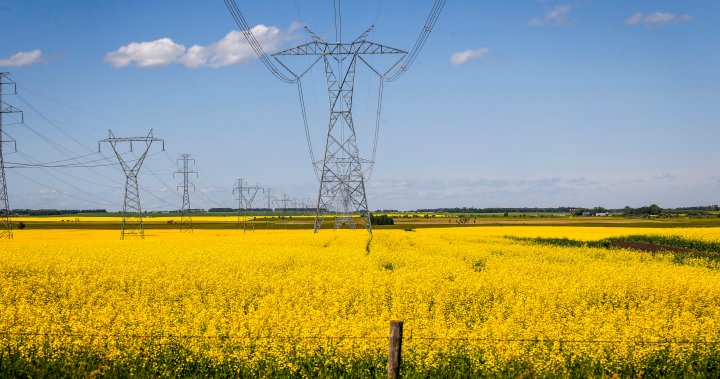
Canadian agricultural producers are warning of devastating impacts from new Chinese tariffs that began Thursday, which they say will compound the economic strain from the U.S. trade war.
China has imposed a 100 per cent levy on Canadian canola oil and meal, as well as peas, plus a 25 per cent duty on seafood and pork.
Those are on top of existing 25 per cent tariffs on a majority of exports to the U.S., which is set to bring in further “reciprocal” tariffs on April 2 that match those put on American goods.
“If you’re a processor, you’re going to feel the pressure of this in a much more meaningful way going forward,” said Erik Johnson, a senior economist and vice-president at Bank of Montreal Capital Markets.

For Tara Sawyer, an Alberta grain farmer and chair of Grain Growers of Canada whose crops include canola, the Chinese tariffs compound the tough time she and other farmers have faced over the past two to three years, with below-normal revenues due to drought and rising operating costs.
The tariffs also come just weeks before seeding begins for this season’s crops.
“This makes what’s already been challenging quite devastating, really,” she told Global News.
Why did China impose these tariffs?
The tariffs are in retaliation against Canada’s 100 per cent levies on Chinese-made electric vehicles and a 25 per cent tax on aluminum and steel products, which were announced last year.
The federal government has accused China of unfairly subsidizing its EV industry in order to get cheap vehicles into North America, threatening Canada’s auto industry.
The EV tariffs matched similar levies imposed by the U.S. for the same reason.

China launched “anti-dumping” investigations into Canadian canola imports in September 2024 in response, and announced the new tariffs on March 8 as a result.
“It’s a punitive number made up by the Chinese regime,” Daniel Trefler, an economist and professor at the University of Toronto’s Rotman School of Management, said about the 100 per cent tariff on canola products.
“Canada is trying to protect itself from what would be the total collapse of our auto sector if we allow China to massively subsidize their autos…. [Canada’s EV tariffs on China] were arrived at after careful consideration and reflects the reality in China.”
The growing trade war has upended recent efforts to improve relations between Ottawa and Beijing from the low point of 2019 and 2020, when Canada detained Huawei CFO Meng Wanzhou. China targeted canola exports in retaliation at that time too, as well as Canadian nationals in China.

Get breaking National news
For news impacting Canada and around the world, sign up for breaking news alerts delivered directly to you when they happen.
Relations are even more tense after it was revealed Wednesday that China has executed four Canadians for “drug-related crimes” this year.
What could the impact be?
China is Canada’s top export market for canola seeds, oil and meal. The Canola Council of Canada says economic activity with China was almost $5 billion last year, including nearly $1 billion in canola meal.
Sawyer, who manages a 4,000-acre grain farm in Acme, Alta., says the new tariffs effectively shut the door on that market due to the steep rate.
“Where are we going to be selling that canola, or can we?” she said. “It’s really stressful, and it’s changing all the time. There’s so much uncertainty.”

Johnson notes that canola seeds, which make up a majority of Canada’s canola trade, aren’t included in Thursday’s tariffs, although Beijing has said it is continuing to investigate alleged dumping of those exports.
When China’s anti-dumping probes were first announced, credit agency Morningstar DBRS said resulting tariffs could lead to a “billion-dollar hit” for the country and its supply chain.
The Canola Council of Canada estimates the industry lost between $1.54 billion and $2.35 billion between March 2019 and August 2020 from lost sales and lower prices due to China’s previous tariffs.
Canola prices could fall further in Canada as producers look to sell off product that was previously meant for Chinese export, Sawyer and economists say.
The Fisheries Council of Canada, meanwhile, said in a statement this month that a 25 per cent Chinese tariff on seafood products is an “existential threat” to the industry. It said the combination of tariffs from China and the U.S. will “effectively cut off” 83 per cent of Canada’s seafood export markets worldwide.
According to the federal government, China is Canada’s second-largest fish and seafood export market after the U.S., with $1.3 billion in products shipped there last year. Some export markets, like geoduck clams out of British Columbia and elvers in the Maritimes, rely almost exclusively on Chinese buyers.


As for pork, China is the third-largest export market behind the U.S. and Japan, with over $43 million in products exported over the past year.
“These Chinese tariffs could not have come at a worse time,” Keith Currie, president of the Canadian Federation of Agriculture, said in a statement this month.
Trefler said while China’s tariffs may not impact inflation, they will have “huge” effects on employment and output, with farms potentially forced to lay off workers or close altogether.
“It’s devastating not only for the individual farmers but for the communities that surround those farmers,” he said.
Johnson said China’s actions, while destabilizing to specific industries, still pose less uncertainty than the ever-evolving trade policies out of the Trump administration in the U.S., which continue to be the driving factor for recession fears.
“There’s already been some emphasis on [diversifying trade away from China] for years,” he said. “The challenge is, some of that reshuffling has been toward a partner [the U.S.] that we’re now less certain of.”
How are governments responding?
The federal government and provinces where affected sectors are concentrated are being asked to support producers whose bottom lines will be hit.
Agriculture Minister Kody Blois said Wednesday that he has spoken with his counterparts in Alberta and Saskatchewan about using “all the tools in our toolbox, including our Business Risk Management programs, to support our canola, pea and pork farmers.”
“We’re focused on making sure there are supports, to make sure that there are mechanisms in place to support those impacted producers,” he told reporters after a cabinet meeting in Ottawa. He said more details will be shared in the coming days.
“This is significant.”

Alberta’s government set aside $4 billion this year to manage its response to tariffs, up $2 billion from the year before.
Alberta Premier Danielle Smith told reporters Wednesday there was a potential for a “made in Canada solution” to ensure canola crops can get to market.
“I don’t have a solution for pork yet,” Smith said. “I have doubled my bacon intake as a measure of support.”
Manitoba’s budget, announced Thursday, included broad plans for hundreds of millions of dollars for supports for businesses, agricultural producers and individuals, and also introduced new tax measures to help spur investment.
Saskatchewan, with a slim $12-million surplus in its budget tabled Wednesday, did not set aside money to help manage the potential impact of tariffs.
Nova Scotia Fisheries Minister Kent Smith told reporters Wednesday that the government can provide assistance to seafood producers from its $200-million contingency fund established to deal with the impact of tariffs if necessary.
But he also downplayed the potential short-term impact of China’s new levies, saying he heard “cautious optimism” from producers at a three-day seafood expo he attended with Premier Tim Houston this week.
Industry groups say government will eventually have to step in with new supports to address China’s tariffs specifically, saying the relief launched in response to U.S. tariffs won’t be sufficient.
Sawyer said she’s particularly concerned about farmers’ mental health as they deal with additional stress.
“Everybody is struggling with what to do,” she said.
— with files from The Canadian Press

Politics
IMF chief backs Jerome Powell, U.S. Fed independence amid Trump pressure – National TenX News
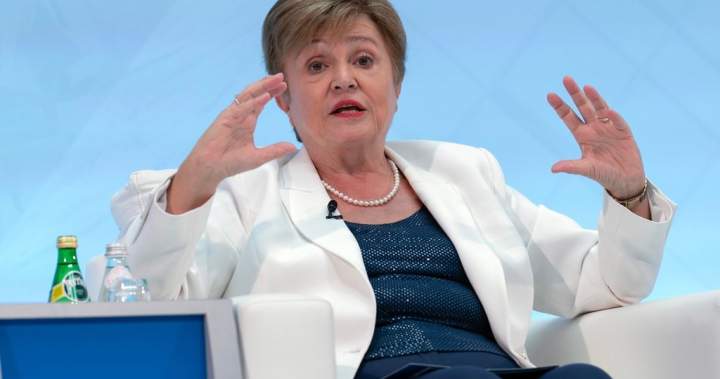
International Monetary Fund chief Kristalina Georgieva on Thursday underscored the importance of keeping central banks independent and threw her support behind beleaguered Federal Reserve Chair Jerome Powell, who is facing a Trump administration investigation for renovation cost overruns.
Georgieva told Reuters in an interview that there was ample evidence that central bank independence worked in the interest of businesses and households, and that evidence-based, data-based decision-making is good for the economy.
The IMF managing director said she had worked with Powell and respected his professionalism.
“I have worked with Jay Powell. He is a very good professional, very decent man, and I think that his standing among his colleagues tells the story,” she said, when asked about a letter of support signed by her predecessor, Christine Lagarde, now head of the European Central Bank, and other large central banks.
Powell on Sunday disclosed that the Trump administration had opened an investigation into him over cost overruns for a $2.5 billion project to renovate two historical buildings at the Fed’s Washington headquarters complex.
Get daily National news
Get the day’s top news, political, economic, and current affairs headlines, delivered to your inbox once a day.
Powell denies wrongdoing and has called the unprecedented actions a pretext to put pressure on him for not bowing to U.S. President Donald Trump’s long-running demands for sharply lower interest rates.


The probe has sparked widespread criticism from some key members of Trump’s Republican Party in the U.S. Senate, which must confirm his nominee to succeed Powell, along with foreign economic officials, investors and former U.S. government officials from both political parties.
Trump has repeatedly derided Powell’s leadership of the Fed and attacked him, often personally, over what he sees as the Fed chair’s slow moves to cut interest rates. On Wednesday, he dismissed concerns that eroding central bank independence would undermine the value of the U.S. dollar and spark inflation, telling Reuters, “I don’t care.”
Georgieva said the IMF looked carefully at issues such as monetary and financial stability, as well as the strength of a country’s institutions. It was specifically interested in the Fed, given the role of the U.S. dollar as a reserve currency.
“It would be very good to see that there is a recognition … that the Fed is precious for the Americans. It is very important for the rest of the world,” she said.
Trump has also attempted to fire another Fed official, Governor Lisa Cook, who has challenged her termination in a legal case that will be argued before the Supreme Court next week.

B.C. Premier David Eby spoke to reporters on Thursday morning from Mumbai, India, during his six-day trade mission.
He said that mining and energy companies in India are showing an interest in B.C.
“They are looking strongly to LNG as one of their ways of reducing carbon intensity, as well as reducing smog in the country,” Eby said.
“And so B.C. LNG has been an item of considerable interest, especially the projects that are reaching final investment decision over the next year — LNG Canada Phase 2, KSI Lisims LNG — as well as the projects that are under construction like Woodfibre LNG.”

Eby was also asked about the rise in extortion cases in B.C.
He said the province’s extortion task force will provide an update next week.
Get breaking National news
For news impacting Canada and around the world, sign up for breaking news alerts delivered directly to you when they happen.
“We have assembled a remarkable and historic task force, RCMP, CBSA,” Eby said.


“There are more police in Surrey right now than there have ever been. The RCMP has surged resources into the community.”
Eby said he has not been happy with the fact that there has been no update from the task force and he has asked them to provide one.
“There have been some important developments, people deported, an arrest here in India, cooperation between the Indian government and the Canadian government on this at the law enforcement level,” he added.
“That needs to continue, but, bluntly, we need better results, we need to see more arrests and whatever we can do to support the police to get the job done, we will do so.”
As of Jan. 12, Surrey police said there have been 16 reported extortion incidents in the city since the beginning of the year.
© 2026 Global News, a division of Corus Entertainment Inc.
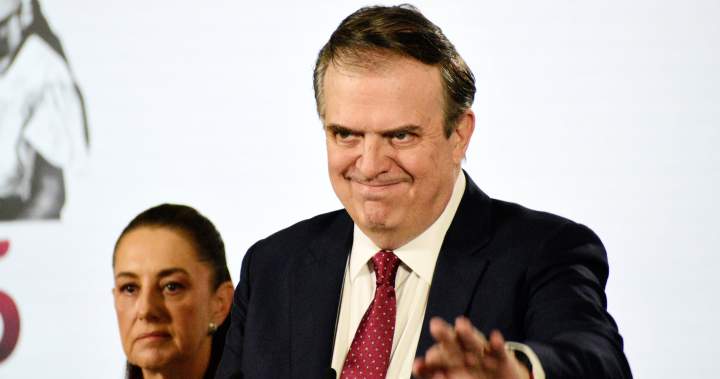
Amid persistent doubts over the future of the Canada-United States-Mexico trade agreement (CUSMA), Mexico’s Economy Minister Marcelo Ebrard insisted on Thursday that the agreement remains firmly intact and that the three countries will close a deal to extend it.
“We’re already in the treaty review phase, and we have to finish by July 1; that’s our deadline,” Ebrard said during Mexican President Claudia Sheinbaum’s daily morning press conference.
“We have made good progress on all the points that concern each of the parties.”
Ebrard’s comments were his first on the topic since U.S. President Donald Trump again cast doubt on the treaty’s future earlier this week.
“There’s no real advantage to it, it’s irrelevant,” Trump said on Tuesday, as he toured a Ford factory in Dearborn, Michigan.
The trilateral trade agreement, known as USMCA, replaced the North American Free Trade Agreement in 2020 and is a backbone of Mexico’s economy.
The treaty, which was negotiated during Trump’s first term, requires the three countries to hold a joint review this year to extend the pact.
Get breaking National news
For news impacting Canada and around the world, sign up for breaking news alerts delivered directly to you when they happen.
If extended, the treaty will remain in place another 16 years. If not, it is subject to annual reviews.

Technically, July 1 is a key date in the treaty’s review process, but many analysts expect negotiations to extend late into 2026 and said Trump will likely avoid extending the treaty before the U.S. midterm elections in November.

Trump’s recent threats to pursue military action against cartels have also added a new layer of uncertainty to U.S.-Mexico relations.
“I think Ebrard is betting on a best-case scenario, but the window for a July successful review is closing fast,” said Alexia Bautista, a former Mexican diplomat and lead Mexico analyst at the political risk consultancy firm Horizon Engage.
“Given recent events and statements, the risk is that Trump injects security into the process, turning the trade review into a far more political negotiation.”
Pedro Casas, chief executive of the American Chamber of Commerce of Mexico, said he expects the U.S. will continue imposing tariffs on a wide spectrum of Mexican exports, regardless of the treaty’s future.
The Trump administration has imposed sweeping 50 per cent duties on steel and aluminum exports to the U.S., along with a 25 per cent tariff on cars shipped from Mexico, even when those vehicles comply with the terms of the trade deal.
“I think the most likely scenario is a positive review process where we agree to extend the treaty for another 16 years, but steep tariffs still remain on Mexican exports that undermine the strength of the agreement,” Casas said.


IMF chief backs Jerome Powell, U.S. Fed independence amid Trump pressure – National TenX News

B.C. Premier David Eby says province’s LNG, mining of interest to India TenX News

Mexico confident CUSMA will remain as Trump suggests it could expire – National TenX News


-

 Fashion10 months ago
These ’90s fashion trends are making a comeback in 2017
-

 Entertainment10 months ago
The final 6 ‘Game of Thrones’ episodes might feel like a full season
-

 TenX Exclusive10 months ago
अमर योद्धा: राइफलमैन जसवंत सिंह रावत की वीरगाथा
-

 Politics8 months ago
Before being named Pope Leo XIV, he was Cardinal Robert Prevost. Who is he? – National TenX News
-

 Politics9 months ago
Puerto Rico faces island-wide blackout, sparking anger from officials – National TenX News
-

 Fashion10 months ago
According to Dior Couture, this taboo fashion accessory is back
-

 Tech10 months ago
Indian-AI-software-which-caught-30-thousand-criminals-and-busted-18-terrorist-modules-its-demand-is-increasing-in-foreign-countries-also – News18 हिंदी
-

 Politics9 months ago
Scientists detect possible signs of life on another planet — but it’s not aliens – National TenX News