Politics
Cardinals urged before conclave to pick pope who seeks unity – National TenX News

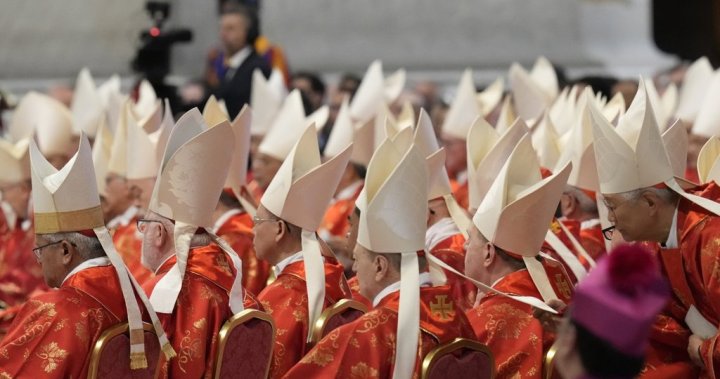
With all the pomp, drama and solemnity that the Catholic Church can muster, 133 cardinals on Wednesday began centuries-old rituals to elect a successor to Pope Francis, celebrating a morning Mass before opening the most geographically diverse conclave in the faith’s 2,000-year history.
The dean of the College of Cardinals, Cardinal Giovanni Battista Re, presided over the service, urging the voters to set aside all personal interests and find a pope who prizes unity. The world today needs a leader who can awaken consciences, he said.
From the altar of St. Peter’s Basilica, Re prayed that the cardinals can agree “on the pope that our time needs,” as he offered a final set of marching orders before they enter the Sistine Chapel later Wednesday to begin the secret voting.
Hailing from 70 countries, the cardinals are being sequestered from the outside world, their cellphones surrendered and airwaves around the Vatican jammed to prevent all communications until they find a new leader for the 1.4 billion-member church.
Francis named 108 of the 133 “princes of the church,” choosing many pastors in his image from far-flung countries like Mongolia, Sweden and Tonga that had never had a cardinal before.

His decision to surpass the usual limit of 120 cardinal electors and include younger ones from the “global south” — often marginalized countries with lower economic clout — has injected an unusual degree of uncertainty in a process that is always full of mystery and suspense, with smoke signals telling the world if a pope has been elected or not.
Many cardinals hadn’t met one another until last week and lamented they needed more time to get to know each another, raising questions about how long it might take for one man to secure the two-thirds majority, or 89 ballots, necessary to become the 267th pope.
“Wait and see, a little patience, wait and see,” said Cardinal Mario Zenari, the Vatican’s ambassador to Syria.
A final Mass, then ‘All out’
The cardinals began the day by participating in the Mass in St. Peter’s Basilica, attended by Vatican officials and the public as pilgrims outside braved brief rain showers to watch the proceedings on giant TV screens. The 91-year-old dean of the college, Re, prayed for cardinals to find the wisdom, counsel and understanding to elect a worthy new shepherd.

Get daily National news
Get the day’s top news, political, economic, and current affairs headlines, delivered to your inbox once a day.
Wearing bright red vestments, the cardinals processed down the central aisle of the basilica as the Sistine Chapel’s boys’ choir sang. They took up their seats around the main altar, which lies above the traditional burial place of St. Peter, considered to be the first pope.
Re had presided at Francis’ funeral, delivering a heartfelt sermon on the reforming 12-year papacy overseen by Francis, history’s first Latin American pope.
At 4:30 p.m. (1430 GMT; 10:30 a.m. EDT) the cardinals will walk solemnly into the Sistine Chapel, chanting the meditative “Litany of the Saints” and the Latin hymn “Veni Creator,” imploring the saints and the Holy Spirit to help them pick a pope.
Once there, they pledge to maintain secrecy about what is about to transpire and to not allow any interference from outsiders to influence their voting.

Standing before Michelangelo’s vision of heaven and hell in “The Last Judgment,” each cardinal places his hand on the Gospel and swears to carry out that duty.
The awesomeness of the chapel’s frescoes, and Michelangelo’s in particular, is meant to remind the cardinals of the weighty responsibility they bear. In his regulations for the conclave, St. John Paul II wrote that in the Sistine Chapel, “everything is conducive to an awareness of the presence of God.”
After the cardinals take their oaths, a senior cardinal delivers a meditation. The master of papal liturgical ceremonies, Archbishop Diego Ravelli, calls out “Extra omnes,” Latin for “all out.” Anyone not eligible to vote then leaves and the chapel doors close, allowing the work to begin.
The cardinals don’t have to take a first vote on Wednesday, but they are expected to. Assuming no winner is found, the Vatican said black smoke could be expected out of the Sistine Chapel chimney at around 7 p.m.
The cardinals retire for the night and return Thursday morning. They can hold up to two ballots in the morning and two in the afternoon until a winner is found.
While cardinals this week said they expected a short conclave, it will likely take at least a few rounds of voting. For much of the past century, it has taken between three and 14 ballots to find a pope. John Paul I — the pope who reigned for 33 days in 1978 — was elected on the fourth ballot. His successor, John Paul II, needed eight. Francis was elected on the fifth in 2013.
Lobbying before the conclave


While the cardinals are supposed to resist any “secular” influences in their choice, such lobbying abounded in Rome in the days before the conclave as various groups reminded cardinals of what ordinary Catholics want in a leader.
Young Catholics penned an open letter reminding cardinals that there is no church without young people, women and the laity. Conservative Catholic media slipped cardinals copies of a glossy book containing their assessments of contenders. Survivors of clergy sexual abuse warned cardinals that they would be held accountable if they failed to find a leader who will crack down on decades of abuse and cover-up.
Advocates for women’s ordination were sending pink smoke signals over the Vatican to demand that women be allowed to be priests and participate in a conclave.

Even the White House got involved, posting a photo of President Donald Trump dressed as a pope. Trump said it was a joke, but the gesture was denounced by former Italian Premier Romano Prodi as “indecent” political interference in matters of faith that harked back to times when secular rulers habitually wielded religion to stay in power.
Lisette Herrera, a 54-year-old tourist from the Dominican Republic, was deeply moved to find herself by chance in Rome as the conclave began. She decided Wednesday morning to skip the Spanish Steps and Trevi Fountain and pray instead in St. Peter’s Square.
“I’m praying to the Holy Spirit for a young pope who would stay with us for a long time,” she said. “I don’t believe in conclave politics, I just feel that the Holy Spirit is here and that’s all we need to know.”
Armando Statti, a pilgrim from Crotone, Italy, said he expected cardinals would settle on a pope in the image of Francis or John Paul II.
“We hope he will be announced as soon as possible, for the sake of the whole world and for peace, and that he will embrace everyone,” he said.
Challenges facing a new pope
Many challenges face the new pope and weigh on the cardinals — above all whether to continue and consolidate Francis’ progressive legacy on promoting women, LGBTQ+ acceptance, the environment and migrants, or roll it back to try to unify a church that became more polarized during his pontificate. The clergy sex abuse scandal hung over the pre-conclave talks.
Since Francis chose 80 per cent of the voters, continuity is likely, but the form it might take is uncertain and identifying front-runners has been a challenge.
But some names keep appearing on lists of “papabile,” or cardinals having the qualities to be pope.
— Cardinal Pietro Parolin, 70, an Italian who was Francis’ secretary of state and the Vatican No. 2, is a leading contender.
— Filipino Cardinal Luis Tagle, 67, is a top candidate to be history’s first Asian pope. He had a similarly high-profile job, heading the Vatican’s evangelization office responsible for the Catholic Church in much of the developing world.
— Hungarian Cardinal Peter Erdo, 72, the archbishop of Budapest, is a leading candidate representing the more conservative wing of the church.
—AP reporters Giada Zampano and Vanessa Gera contributed.

Politics
Canadian canola farmers express ‘cautious optimism’ over trade agreement with China TenX News
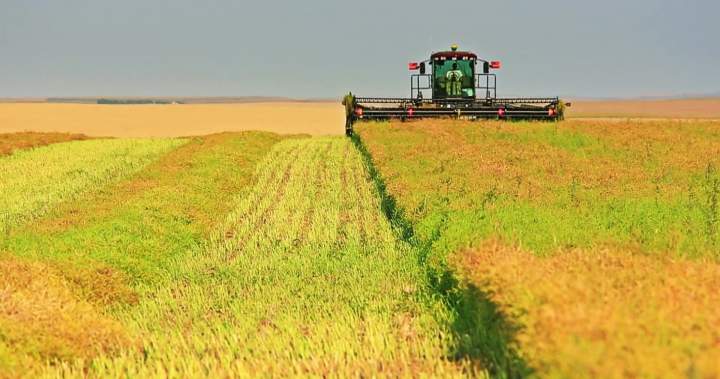
“It’s a huge step forward, but a little disappointing at the same time.”
That’s how Stephen Vandervalk, who grows canola near Fort McLeod, Alta. and is also vice-president of the Wheat Growers Association, reacted to news of the preliminary trade deal between Canada and China.
The agreement, announced Friday, following a meeting between Prime Minister Mark Carney and Chinese President Xi Jinping, in Beijing, is expected to slash punishing tariffs on the sale of Canadian agriculture and seafood products to China, part of a tit-for-tat tariff war between the two countries.
Prime Minister Mark Carney meets with President of China Xi Jinping at the Great Hall of the People in Beijing, China, on Jan. 16, 2026.
THE CANADIAN PRESS/Sean Kilpatrick
It started in the summer of 2024, when Canada announced a 100 per cent tariff on Chinese electric automobiles that Ottawa claimed were being dumped on global markets.
China responded in 2025 with tariffs of up to 100 per cent on some Canadian canola products, along with a 25 per cent levy on Canadian pork and seafood products.
Prime Minister Mark Carney, fourth right, meets with President of China Xi Jinping, fourth left, at the Great Hall of the People in Beijing, China, on Jan. 16, 2026.
THE CANADIAN PRESS/Sean Kilpatrick
The deal announced Friday is expected to result in Beijing slashing duties on canola seed to 15 per cent by March 1, 2026, in return for Canada allowing 49,000 Chinese electric vehicles to be sold in Canada at a tariff of just 6.1 per cent. That number will increase to about 70,000 vehicles within five years.
Ottawa also expects to have tariffs on Canadian canola meal, lobsters, crabs and peas reduced or removed from March 1 until at least the end of the year.

While Vandervalk called the agreement “a huge step forward,” he also expressed “cautious optimism,” saying a 15 per cent tariff on canola meal means Canada could still struggle to be competitive with other countries, like Australia, that can sell the same products to the Chinese market.
He’s also concerned about how Americans will react to the deal because the 100 per cent tariff on Chinese EVs was put in place by both Canada and the U.S. to help protect the North American auto industry.

Get weekly money news
Get expert insights, Q&A on markets, housing, inflation, and personal finance information delivered to you every Saturday.
“They’re our biggest trading partner for sure, they take almost all of our canola meal. When you crush canola seed, you get oil, and you get meal. So a huge market is our canola meal and oil and seed everything into the U.S., so it’s for sure much, much larger than China,” said Vandervalk.
“So if we somehow get a little bit of access to China at the expense of having potentially no access to our largest trading partner, we have huge concerns with that,” added Vandervalk.
The trade war between Canada and China prompted the Chinese government to impose tariffs of up to 100 per cent on the import of some Canadian canola products.
Global News
In an emailed statement, the Canola Council of Canada and Canadian Canola Growers Association called news of the deal on tariffs, “an important milestone in Canada’s trading relationship with China.”
“The Canadian canola industry has been clear since the outset that these tariffs are a political issue requiring a political solution. We are pleased to see significant progress in restoring market access for seed and meal and will continue to build on this development by working to achieve permanent and complete tariff relief, including for canola oil, moving forward,” reads the statement.
Andre Harpe, Chair of the Alberta Canola Producers, who farms near Grand Prairie, Alta., called the tentative agreement “great news.”
“I was up at three o’clock this morning looking at the announcement and I did happen to glance at the prices then and they were up quite a bit. So it was a good response to see from the market,” said Harpe.
“I’m really, really hoping things settle down a little bit, but it’s been a roller-coaster ride. It’s been absolutely terrible. The uncertainty, you know,” added Harpe.
Saskatchewan Premier Scott Moe (centre), was among the delegates who accompanied Prime Minister Mark Carney on his trip to China.
Global News
Saskatchewan Premier Scott Moe, who accompanied the Prime Minister on his trip to China and spoke to Global News from there, was almost euphoric in his reaction to the agreement, calling it “a good day for Canadians.”
“This is very significant. It is going to literally allow billions of dollars of agricultural products of all kinds, whether it’s canola, pulse crops, seafood, to flow again, which was not moving in any way to our second largest trading partner in the world,” said Moe. “So this is an absolute deal of tremendous significance to not only the Canadian agriculture industry, but to the Canadian economy.”
Related News
-
![]()
Saskatchewan Premier praises canola deal between Canada and China
-
![]()
Canola and food exports: What Budget 2025 proposes as trade war continues


“Not only does this restore trade that was existing, but it definitely provides a very foundation for us build additional trade opportunities with not only a country like China, but many Asian countries in the area,” added Moe.
Federal Conservative labour critic, Kyle Seeback, who represents the riding of Dufferin-Caledon in southern Ontario, the centre of Canada’s automobile manufacturing industry, characterized the trade deal as a double-edged sword.
“I think that if you’re a canola farmer, you’re cautiously optimistic. I think if you are an auto worker in Canada, you’re extremely worried about what this is going to mean for the Canadian auto sector,” said Seeback.
He’s also concerned that, so far, China has only agreed to lower tariffs until the end of 2026.
“We’re dealing with China and China has a history of not being a reliable trading partner,” said Seeback. “So it’s always dangerous when you make these kinds of deals with China.”
“I think that this is going to come back to be viewed as an absolutely terrible decision to try and enter into a strategic alliance with China,” Seeback added. “Time will tell, but I think the liberals are going to one day deeply regret that they’ve made this decision.”
With files from The Canadian Press.

Politics
X outages reported by tens of thousands of users worldwide: Downdetector – National TenX News
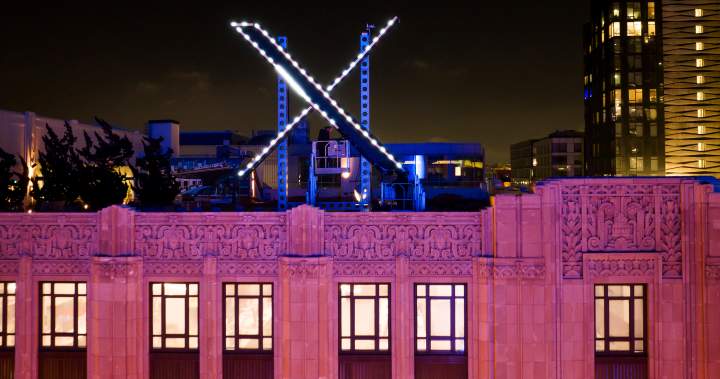
X, formerly Twitter, was down for tens of thousands of users worldwide on Friday, according to outage tracking website Downdetector.com.
There were more than 62,000 reports of issues with the social media platform as of 10:22 a.m. EST, according to Downdetector, which tracks outages by collating status reports from a number of sources.
Get daily National news
Get the day’s top news, political, economic, and current affairs headlines, delivered to your inbox once a day.
Users in the U.K. reported around 11,000 incidents and over 3,000 issues were reported in India.


The actual number of affected users may differ from what is shown on the platform, as the reports are submitted by users.
Politics
Trump says he may tariff countries that don’t ‘go along’ with Greenland plans – National TenX News
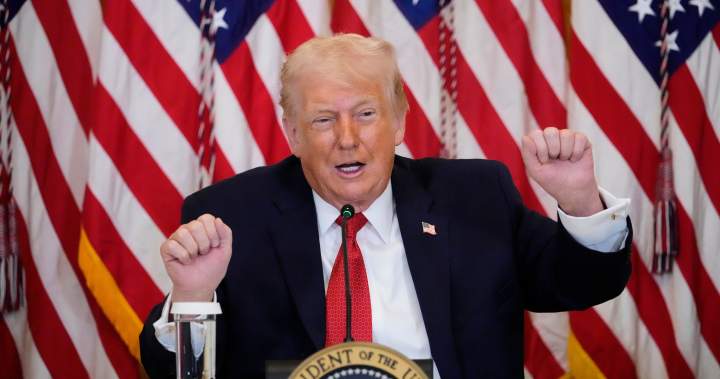
U.S. President Donald Trump suggested Friday that he may punish countries with tariffs if they don’t back the U.S. controlling Greenland, a message that came as a bipartisan Congressional delegation sought to lower tensions in the Danish capital.
Trump for months has insisted that the U.S. should control Greenland, a semiautonomous territory of NATO ally Denmark, and said earlier this week that anything less than the Arctic island being in U.S. hands would be “unacceptable.”
During an unrelated event at the White House about rural health care, he recounted Friday how he had threatened European allies with tariffs on pharmaceuticals.
“I may do that for Greenland too,” Trump said. “I may put a tariff on countries if they don’t go along with Greenland, because we need Greenland for national security. So I may do that,” he said.
He had not previously mentioned using tariffs to try to force the issue.
Earlier this week, the foreign ministers of Denmark and Greenland met in Washington this week with U.S. Vice President JD Vance and Secretary of State Marco Rubio.
That encounter didn’t resolve the deep differences but did produce an agreement to set up a working group — on whose purpose Denmark and the White House then offered sharply diverging public views.
European leaders have insisted that is only for Denmark and Greenland to decide on matters concerning the territory, and Denmark said this week that it was increasing its military presence in Greenland in cooperation with allies.

A relationship ‘we need to nurture’
In Copenhagen, a group of senators and members of the House of Representatives met Friday with Danish and Greenlandic lawmakers, and with leaders including Danish Prime Minister Mette Frederiksen.
Delegation leader Sen. Chris Coons, a Delaware Democrat, thanked the group’s hosts for “225 years of being a good and trusted ally and partner” and said that “we had a strong and robust dialog about how we extend that into the future.”
Get daily National news
Get the day’s top news, political, economic, and current affairs headlines, delivered to your inbox once a day.
Sen. Lisa Murkowski, an Alaska Republican, said after meeting lawmakers that the visit reflected a strong relationship over decades and “it is one that we need to nurture.” She told reporters that “Greenland needs to be viewed as our ally, not as an asset, and I think that’s what you’re hearing with this delegation.”
The tone contrasted with that emanating from the White House. Trump has sought to justify his calls for a U.S. takeover by repeatedly claiming that China and Russia have their own designs on Greenland, which holds vast untapped reserves of critical minerals. The White House hasn’t ruled out taking the territory by force.
“We have heard so many lies, to be honest and so much exaggeration on the threats towards Greenland,” said Aaja Chemnitz, a Greenlandic politician and member of the Danish parliament who took part in Friday’s meetings. “And mostly, I would say the threats that we’re seeing right now is from the U.S. side.”
Murkowski emphasized the role of Congress in spending and in conveying messages from constituents.

“I think it is important to underscore that when you ask the American people whether or not they think it is a good idea for the United States to acquire Greenland, the vast majority, some 75%, will say, we do not think that that is a good idea,” she said.
Along with Sen. Jeanne Shaheen, a New Hampshire Democrat, Murkowski has introduced bipartisan legislation that would prohibit the use of U.S. Defense or State department funds to annex or take control of Greenland or the sovereign territory of any NATO member state without that ally’s consent or authorization from the North Atlantic Council.

Inuit council slams White House
The dispute is looming large in the lives of Greenlanders. Greenland’s prime minister, Jens-Frederik Nielsen, said on Tuesday that “if we have to choose between the United States and Denmark here and now, we choose Denmark. We choose NATO. We choose the Kingdom of Denmark. We choose the EU.””
The chair of the Nuuk, Greenland-based Inuit Circumpolar Council, which represents around 180,000 Inuit from Alaska, Canada, Greenland, and Russia’s Chukotka region on international issues, said persistent statements from the White House that the U.S. must own Greenland offer “a clear picture of how the US administration views the people of Greenland, how the U.S. administration views Indigenous peoples, and peoples that are few in numbers.”
Sara Olsvig told The Associated Press in Nuuk that the issue is “how one of the biggest powers in the world views other peoples that are less powerful than them. And that really is concerning.”
Indigenous Inuit in Greenland do not want to be colonized again, she said.
© 2026 The Canadian Press


Canadian canola farmers express ‘cautious optimism’ over trade agreement with China TenX News

X outages reported by tens of thousands of users worldwide: Downdetector – National TenX News

Trump says he may tariff countries that don’t ‘go along’ with Greenland plans – National TenX News


-

 Fashion10 months ago
These ’90s fashion trends are making a comeback in 2017
-

 Entertainment10 months ago
The final 6 ‘Game of Thrones’ episodes might feel like a full season
-

 TenX Exclusive10 months ago
अमर योद्धा: राइफलमैन जसवंत सिंह रावत की वीरगाथा
-
 Politics8 months ago
Before being named Pope Leo XIV, he was Cardinal Robert Prevost. Who is he? – National TenX News
-

 Politics9 months ago
Puerto Rico faces island-wide blackout, sparking anger from officials – National TenX News
-
 Fashion10 months ago
According to Dior Couture, this taboo fashion accessory is back
-

 Tech10 months ago
Indian-AI-software-which-caught-30-thousand-criminals-and-busted-18-terrorist-modules-its-demand-is-increasing-in-foreign-countries-also – News18 हिंदी
-

 Politics9 months ago
Scientists detect possible signs of life on another planet — but it’s not aliens – National TenX News