
Politics
Canadian ice master makes Olympic history with 1st indoor temporary speedskating rink TenX News


No ice is colder and harder than speedskating ice.
The precision it takes has meant that Olympic speedskaters have never competed for gold on a temporary indoor rink – until the 2026 Milan Cortina Winter Games.
In the pursuit of maximum glide and minimum friction, Olympic officials brought on ice master Mark Messer, a veteran of six previous Olympic speedskating tracks and the ice technician in charge of the Olympic Oval in Calgary, Canada — one of the fastest tracks in the world with over 300 records.
Messer has been putting that experience to work one thin layer of ice at a time since the end of October at the new Speed Skating Stadium, built inside adjacent trade fair halls in the city of Rho just north of Milan.
“It’s one of the biggest challenges I’ve had in icemaking,’’ Messer said during an interview less than two weeks into the process.
Ice Master Mark Messer poses in the stadium where the speed skating competitions will take place at the 2026 Winter Olympic Games on the outskirts of Milan, Italy.
AP Photo/Luca Bruno
If Goldilocks were a speedskater, hockey ice would be medium hard, for fast puck movement and sharp turns. Figure skating ice would be softer, allowing push off for jumps and so the ice doesn’t shatter on landing. Curling ice is the softest and warmest of all, for controlled sliding.
For speedskating ice to be just right, it must be hard, cold and clean. And very, very smooth.
“The blades are so sharp, that if there is some dirt, the blade will lose the edge,’’ Messer said, and the skater will lose speed.
Speedskater Enrico Fabris, who won two Olympic golds in Turin in 2006, has traded in his skates to be deputy sports manager at the speedskating venue in Rho. For him, perfect ice means the conditions are the same for all skaters — and then if it’s fast ice, so much the better.
“It’s more of a pleasure to skate on this ice,” he said.
Messer’s first Olympics were in Calgary in 1988 — the first time speedskating was held indoors.

Get daily National news
Get the day’s top news, political, economic, and current affairs headlines, delivered to your inbox once a day.
“That gave us some advantages because we didn’t have to worry about the weather, wind blowing or rain,’’ he said.
Canadian national long track speed skating team members train on the ice at the Olympic Oval in Calgary, Alta., Friday, June 11, 2021.
THE CANADIAN PRESS/Jeff McIntosh
Now Messer is upping the challenge by becoming the first ice master to build a temporary rink for the Olympics.
Before he arrived in Italy, workers spent weeks setting up insulation to level the floor and then a network of pipes and rubber tubes that carry glycol — an antifreeze — that is brought down to -7 or -8 C to make the ice.
Water is run through a purification system — but it can’t be too pure, or the ice that forms will be too brittle. Just the right amount of impurities “holds the ice together,’’ Messer said.
The first layers of water are applied slowly, with a spray nozzle; after the ice reaches a few centimeters it is painted white — a full day’s work — and the stripes are added to make lanes.
“The first one takes about 45 minutes. And then as soon as it freezes, we go back and do it again, and again and again. So we do it hundreds of times,’’ Messer said.
As the ice gets thicker, and is more stable, workers apply subsequent layers of water with hoses. Messer attaches his hose to hockey sticks for easier spreading.
What must absolutely be avoided is dirt, dust or frost — all of which can cause friction for the skaters, slowing them down. The goal is that when the skaters push “they can go as far as possible with the least amount of effort,’’ Messer said.
The Zamboni ice resurfacing machine plays a key role in keeping the track clean, cutting off a layer and spraying water to make a new surface.
Olympic Oval ice maker Mark Messer drives the backup ice cleaning machine during a break in the action at the men’s 500m long track speedskating event at the 2010 Vancouver Winter Olympic Winter Games.
THE CANADIAN PRESS/Adrian Wyld
One challenge is gauging how quickly the water from the resurfacing machine freezes in the temporary rink.
Another is getting the ice to the right thickness so that the Zamboni, weighing in at six tons, doesn’t shift the insulation, rubber tubing or ice itself.
“When you drive that out, if there’s anything moving it will move. We don’t want that,’’ Messer said.
Related News
-
![]()
NHL brass still concerned about Olympic rink at upcoming Milan Games

Final adjustments
The rink got its first big test on Nov. 29-30 during a Junior World Cup event.
In a permanent rink, test events are usually held a year before the Olympics, leaving more time for adjustments. “We have a very small window to learn,’’ Messer acknowledged.
Dutch speedskater Kayo Vos, who won the men’s neo-senior 1,000 meters, said the ice was a little soft — but Messer didn’t seem too concerned.
“We went very modest to start, now we can start to change the temperatures and try to make it faster and still maintain it as a safe ice,’’ he said.
Fine-tuning the air temperature and humidity and ice temperature must be done methodically — taking into account that there will be 6,000 spectators in the venue for each event.
The next real test will be on Jan. 31, when the Olympians take to the ice for their first training session.
“Eighty percent of the work is done but the hardest part is the last 20 percent, where we have to try to find the values and the way of running the equipment so all the skaters get the same conditions and all the skaters get the best conditions,’’ Messer said.


Politics
Sick astronaut returns to Earth with crew in NASA’s 1st medical evacuation – National TenX News
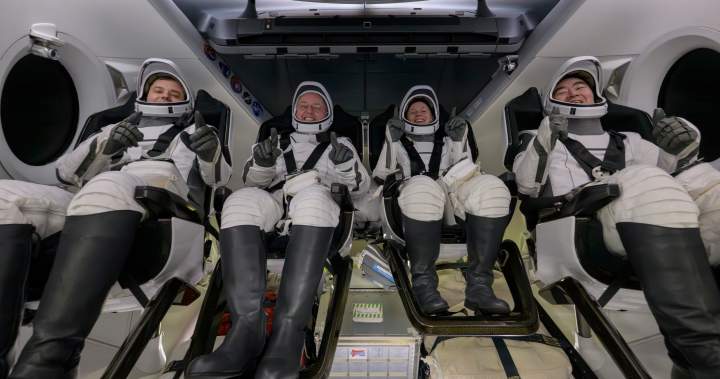
An ailing astronaut returned to Earth with three others on Thursday, ending their space station mission more than a month early in NASA’s first medical evacuation.
SpaceX guided the capsule to a middle-of-the-night splashdown in the Pacific near San Diego, less than 11 hours after the astronauts exited the International Space Station. Their first stop was a hospital for an overnight stay.
“Obviously, we took this action (early return) because it was a serious medical condition,” NASA’s new administrator Jared Isaacman said following splashdown. “The astronaut in question is fine right now, in good spirits and going through the proper medical checks.”
It was an unexpected finish to a mission that began in August and left the orbiting lab with only one American and two Russians on board. NASA and SpaceX said they would try to move up the launch of a fresh crew of four; liftoff is currently targeted for mid-February.
NASA’s Zena Cardman and Mike Fincke were joined on the return by Japan’s Kimiya Yui and Russia’s Oleg Platonov. Officials have refused to identify the astronaut who developed the health problem last week or explain what happened, citing medical privacy.
Support teams onboard the SpaceX recovery ship SHANNON work around the SpaceX Dragon Endeavour spacecraft shortly after it landed off the coast of Long Beach, Calif., Thursday, Jan. 15, 2026.
NASA via AP
While the astronaut was stable in orbit, NASA wanted them back on Earth as soon as possible to receive proper care and diagnostic testing. The entry and splashdown required no special changes or accommodations, officials said, and the recovery ship had its usual allotment of medical experts on board.
Get breaking National news
For news impacting Canada and around the world, sign up for breaking news alerts delivered directly to you when they happen.
The astronauts emerged from the capsule, one by one, within an hour of splashdown. They were helped onto reclining cots and then whisked away for standard medical checks, waving to the cameras. Isaacman monitored the action from Mission Control in Houston, along with the crew’s families.

NASA decided a few days ago to take the entire crew straight to a San Diego-area hospital following splashdown and even practiced helicopter runs there from the recovery ship. The astronaut in question will receive in-depth medical checks before flying with the rest of the crew back to Houston on Friday, assuming everyone is well enough. Platonov’s return to Moscow was unclear.
NASA stressed repeatedly over the past week that this was not an emergency. The astronaut fell sick or was injured on Jan. 7, prompting NASA to call off the next day’s spacewalk by Cardman and Fincke, and ultimately resulting in the early return. It was the first time NASA cut short a spaceflight for medical reasons. The Russians had done so decades ago.


Spacewalk preparations did not lead to the medical situation, Isaacman noted, but for anything else, “it would be very premature to draw any conclusions or close any doors at this point.” It’s unknown whether the same thing could have happened on Earth, he added.
The space station has gotten by with three astronauts before, sometimes even with just two. NASA said it will be unable to perform a spacewalk, even for an emergency, until the arrival of the next crew, which has two Americans, one French and one Russian astronaut.
This screengrab from video provided by NASA shows NASA astronaut Mike Fincke getting helped out of the SpaceX Crew-11 capsule.
NASA via AP
Isaacman said it’s too soon to know whether the launch of station reinforcements will take priority over the agency’s first moonshot with astronauts in more than a half-century. The moon rocket moves to the pad this weekend at Florida’s Kennedy Space Center, with a fueling test to be conducted by early next month. Until all that is completed, a launch date cannot be confirmed; the earliest the moon flyaround could take off is Feb. 6.
For now, NASA is working in parallel on both missions, with limited overlap of personnel, according to Isaacman.
“If it comes down to a point in time to where we have to deconflict between two human spaceflight missions, that is a very good problem to have at NASA,” he told reporters.
© 2026 The Canadian Press

Troops from several European countries, including France, Germany, the UK, Norway and Sweden, are arriving in Greenland in a show of support for Denmark as talks between representatives of Denmark, Greenland and the U.S. on Wednesday highlighted “fundamental disagreement” between the Trump administration and European allies on the future of the Arctic island.
Denmark announced it would increase its military presence in Greenland on Wednesday and several European partners started sending symbolic numbers of troops on that day, just as the Danish and Greenlandic foreign ministers were preparing to meet with White House representatives in Washington.
The troop movements were intended to portray unity among Europeans and send a signal to U.S. President Donald Trump that an American takeover of Greenland is not necessary as NATO together can safeguard the security of the Arctic region amid rising Russian and Chinese interest.
“The first French military elements are already en route” and “others will follow,” French President Emmanuel Macron announced Wednesday, as French authorities said about 15 soldiers from the mountain infantry unit were already in Nuuk for a military exercise.
Germany will deploy a reconnaissance team of 13 personnel to Greenland on Thursday, its Defence Ministry said.
On Thursday, Danish Defence Minister Troels Lund Poulsen said the intention was “to establish a more permanent military presence with a larger Danish contribution,” according to Danish broadcaster DR. He said soldiers from several NATO countries will be in Greenland on a rotation system.
Danish Foreign Minister Lars Løkke Rasmussen, flanked by his Greenlandic counterpart Vivian Motzfeldt, said Wednesday that a “fundamental disagreement” over Greenland remains with Trump after they held highly anticipated talks at the White House with Vice President JD Vance and Secretary of State Marco Rubio.
Rasmussen added that it remains “clear that the president has this wish of conquering over Greenland” but that dialogue with the U.S. would continue at a high level over the following weeks.

Inhabitants of Greenland and Denmark reacted with anxiety but also some relief that negotiations with the U.S. would go on and European support was becoming visible.
In Greenland’s capital, Nuuk, local residents told The Associated Press they were glad the first meeting between Greenlandic, Danish and American officials had taken place but suggested it left more questions than answers.
Get breaking National news
For news impacting Canada and around the world, sign up for breaking news alerts delivered directly to you when they happen.
Several people said they viewed Denmark’s decision to send more troops, and promises of support from other NATO allies, as protection against possible U.S. military action. But European military officials have not suggested the goal is to deter a U.S. move against the island.
Maya Martinsen, 21, agreed and said it was “comforting to know that the Nordic countries are sending reinforcements” because Greenland is a part of Denmark and NATO.
The dispute, she said, is not about “national security” but rather about “the oils and minerals that we have that are untouched.”
On Wednesday, Poulsen had announced a stepped-up military presence in the Arctic “in close cooperation with our allies,” calling it a necessity in a security environment in which “no one can predict what will happen tomorrow.”
“This means that from today and in the coming time there will be an increased military presence in and around Greenland of aircraft, ships and soldiers, including from other NATO allies,” Poulsen said.
Asked whether the European troop movements were coordinated with NATO or what role the U.S.-led military alliance might play in the exercises, NATO referred all questions to the Danish authorities. However, NATO is currently studying ways to bolster security in the Arctic.

Rasmussen, the Danish foreign minister, announced the creation of a working group with the Americans to discuss ways to work through differences.
“The group, in our view, should focus on how to address the American security concerns, while at the same time respecting the red lines of the Kingdom of Denmark,” he said.

Commenting on the outcome of the Washington meeting on Thursday, Poulsen said the working group was “better than no working group” and “a step in the right direction.” He added nevertheless that the dialogue with the U.S. did not mean “the danger has passed.”
“We are really happy that action is being taken to make sure that this discussion is not just ended with that meeting alone,” Greenlandic MP Aki-Matilda Høegh-Dam said on Thursday during a news conference in Copenhagen.
She said Greenlandic people understood they were a “pivotal point” in a broader transformation of the international rules-based order and that they felt responsible not just for themselves but also for the whole world to get it right.
Høegh-Dam said the military operations should not happen “right next to our schools and right next to our kindergartens.”
Line McGee, a 38-year-old from Copenhagen, told AP that she was glad to see some diplomatic progress. “I don’t think the threat has gone away,” she said. “But I feel slightly better than I did yesterday.”
Speaking to FOX News Channel’s Special Report on Wednesday after the White House talks, Rasmussen rejected both a military takeover and the potential purchase of the island by the U.S. Asked whether he thinks the U.S. will invade, he replied: “No, at least I do not hope so, because, I mean, that would be the end of NATO.”
Rasmussen said Greenlanders were unlikely to vote for U.S. rule even if financial incentives were offered, “because I think there’s no way that U.S. will pay for a Scandinavian welfare system in Greenland, honestly speaking.”
“You haven’t introduced a Scandinavian welfare system in your own country,” he added.
Trump, in his Oval Office meeting with reporters, said: “We’ll see how it all works out. I think something will work out.”
© 2026 The Canadian Press
Politics
A Canadian citizen has died in Iran, Ottawa says as protests intensify – National TenX News
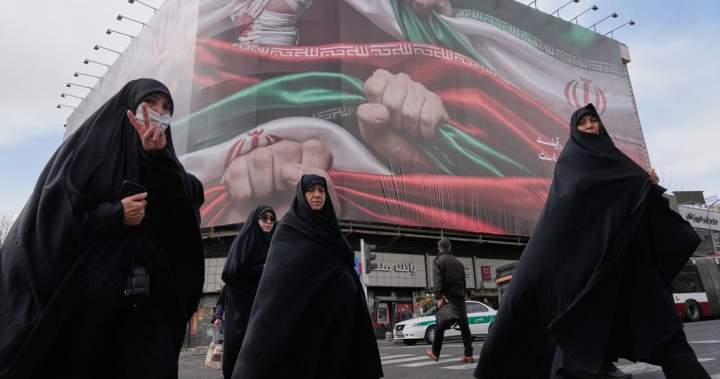
A Canadian citizen has died in Iran, Global Affairs Canada told Global News as the protests against the Iranian regime have intensified over the last few days.
“Global Affairs Canada is aware of a Canadian citizen who died in Iran. We express our condolences to the family and loved ones during this difficult time,” a spokesperson for GAC said.
As of Wednesday, there were 3,054 Canadian citizens and permanent residents registered in Iran, the spokesperson said.
Get daily National news
Get the day’s top news, political, economic, and current affairs headlines, delivered to your inbox once a day.
However, they added that since registration with GAC is voluntary, the actual number may be outdated.
Canada does not have diplomatic relations with Iran.

More to come


Sick astronaut returns to Earth with crew in NASA’s 1st medical evacuation – National TenX News

European troops arrive in Greenland after ‘disagreement’ with U.S. – National TenX News

A Canadian citizen has died in Iran, Ottawa says as protests intensify – National TenX News


-

 Fashion10 months ago
These ’90s fashion trends are making a comeback in 2017
-

 Entertainment10 months ago
The final 6 ‘Game of Thrones’ episodes might feel like a full season
-

 TenX Exclusive10 months ago
अमर योद्धा: राइफलमैन जसवंत सिंह रावत की वीरगाथा
-

 Politics8 months ago
Before being named Pope Leo XIV, he was Cardinal Robert Prevost. Who is he? – National TenX News
-

 Politics9 months ago
Puerto Rico faces island-wide blackout, sparking anger from officials – National TenX News
-

 Fashion10 months ago
According to Dior Couture, this taboo fashion accessory is back
-

 Tech10 months ago
Indian-AI-software-which-caught-30-thousand-criminals-and-busted-18-terrorist-modules-its-demand-is-increasing-in-foreign-countries-also – News18 हिंदी
-

 Politics9 months ago
Scientists detect possible signs of life on another planet — but it’s not aliens – National TenX News