
Politics
Air Canada suspends all flights to Cuba, effective immediately – National TenX News

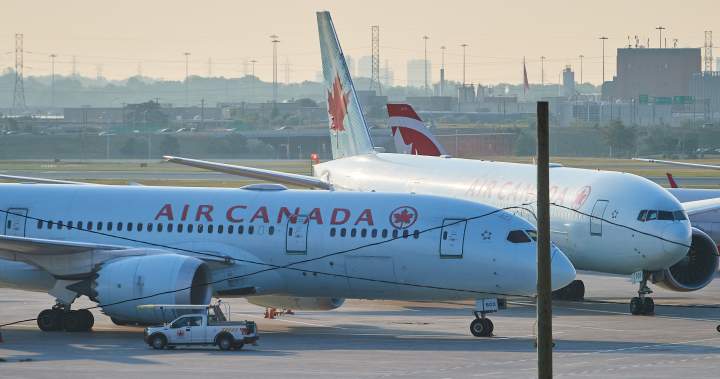
Air Canada is suspending its service to Cuba due to an ongoing shortage of aviation fuel on the island. This suspension follows threats from U.S. President Donald Trump to impose tariffs on countries providing oil to Cuba.
In a news release shared with Global News, Air Canada said that over the following days, the airline will operate empty flights southbound to pick up “approximately 3,000 customers already at destination and return them home.”
“Air Canada took the decision following advisories issued by governments (NOTAMs) regarding the unreliability of the aviation fuel supply at Cuban airports. It is projected that as of February 10 aviation fuel will not be commercially available at the island’s airports. For remaining flights, Air Canada will tanker in extra fuel and make a technical stops as necessary to refuel on the return journey if necessary,” the news release added.
Air Canada will continue to monitor the situation to determine an appropriate restart of normal service to Cuba at a future date, according to the company.
Air Canada says its immediate priority “is to return customers already in Cuba to Canada.”
“It will operate empty ferry flights to the island over the coming days to maintain its regular schedule from Cuba to Canada over the near-term to pick up these customers,” Air Canada added.

Air Canada and Air Canada Vacations are also introducing a flexible rebooking policy for customers travelling to Cuba, while introducing a refund policy that allows customers who had scheduled departures to Cuba and experienced flight cancellations to automatically receive a full refund in their original form of payment. Air Canada says these customers do not need to contact Air Canada Vacation’s Contact Centre.
Those people currently in Cuba who booked an Air Canada Vacations package will receive direct support from Air Canada Vacations’ local representatives.
WestJet and Air Transat confirm flights still running

Get breaking National news
For news impacting Canada and around the world, sign up for breaking news alerts delivered directly to you when they happen.
WestJet and Air Transat have not yet suspended flights.
Air Transat confirmed in a statement to Global News that it will continue to “operate flights as scheduled by implementing contingency measures.”
“We have been informed by Cuban authorities of a temporary suspension of kerosene supply at airports across the country. Despite this situation, which is beyond our control, we expect to operate our flights as scheduled by implementing contingency measures, such as a technical stop when necessary,” a spokesperson for Air Transat said.
“In the meantime, we remain in close communication with local authorities and are closely monitoring the situation,” the airline added.
Air Transat has implemented a “special flexibility policy for customers with upcoming travel to Cuba.”
For those departing up to Feb. 28, date or destination changes are permitted without penalty, or a full refund will be issued. For departures between March 1 and April 30, date or destination changes are permitted without penalty, with a travel credit issued for the value of the original booking.
WestJet, in a statement to Global News, confirmed it is still maintaining flights to the island nation, and assured passengers that “flights arrive in Cuba with sufficient fuel to safely depart Cuba.”
“WestJet has activated its Flex Change/Cancel policy on westjet.com, enabling guests with upcoming travel to Cuba to adjust their plans without penalty. Sunwing.ca has also been updated with flexible travel options for Sunwing Vacations guests,” a spokesperson for WestJet Media & Sunwing Media said.
“Our focus continues to remain on the safety of our guests and our WestJetters. It is also important to note, that all WestJet flights arrive in Cuba with sufficient fuel to safely depart Cuba,” the airline added.
Cuba travel advisory
The Government of Canada recently updated its travel warnings for many popular vacation destinations, including Cuba.
“Exercise a high degree of caution in Cuba due to worsening shortages of electricity, fuel and basic necessities including food, water, and medicine, which can also affect resorts. The situation is unpredictable and could deteriorate, disrupting flight availability on short notice,” the warning said.
Canada’s travel advisory warns travellers that Cuba schedules “long daily power cuts” to reduce pressure on the electrical network.


“Sometimes, unexpected nationwide power outages occur and can last more than 24 hours,” the warning said.
Most large hotels and resorts use generators during power outages but fuel shortages may impact generator use and the availability or various services and utilities such as food service, light, running water and hot water, according to the warning.
It’s advised that Canadians travelling to Cuba monitor local media for the latest information, try to keep your phone charged and plan accordingly.
The advisories also notes that Cuba faces “chronic and severe shortages of basic necessities” including things like food, bottled water, public water supply, medication, fuel and hard currency.
“Fuel shortages affect a wide range of services. Travelling across the island is extremely challenging. Public transportation services, including taxis, are often disrupted, leaving tourists with few options to travel. Some travellers have been temporarily stranded with a rental car. There are often long line-ups at gas stations that have led to altercations,” the warning said.
Read the full Cuba travel advisory from the Canadian government.
Trump threatens tariffs on any country selling oil to Cuba
The Cuban fuel shortage began after Trump signed an executive order threatening to impose tariffs on countries providing oil to Cuba last week.
The order would primarily put pressure on Mexico, a government that has acted as an oil lifeline for Cuba, and has constantly voiced solidarity for the U.S. adversary, even as Mexican President Claudia Sheinbaum has sought to build a strong relationship with Trump.
Trump was asked by a reporter Thursday whether he was trying to “choke off” Cuba, which he called a “failing nation.”
“The word ‘choke off’ is awfully tough,” Trump said. “I’m not trying to, but it looks like it’s something that’s just not going to be able to survive.”
Cuban Foreign Minister Bruno Rodríguez and a number of other Cuban officials condemned Trump’s executive order. Rodríguez called it a “brutal act of aggression against Cuba and its people … who are now threatened with being subjected to extreme living conditions.”
Global News has reached out to Transport Canada but did not receive a reply by publication time.
— With files from The Associated Press
Are you a Canadian in Cuba or who has been impacted by a cancelled flight to Cuba? Send us a message using the contact form below or by emailing shareyourstory@globalnews.ca and we may be in touch for future reporting.

Politics
Cuba is reaching ‘breaking point’ as fuel shortage worsens. What to know – National TenX News
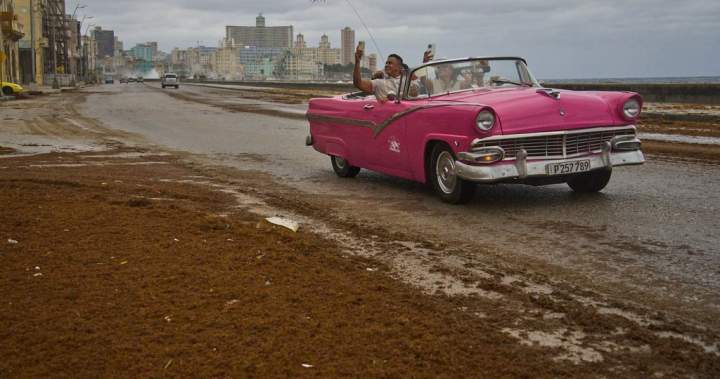
The suspension of Air Canada flights to Cuba after the country warned airlines of a fuel shortage marks the latest blow for the island’s economy amid increased pressure from the Trump administration.
Cuba had been weathering economic hardship before U.S. President Donald Trump effectively cut off oil shipments to the island by blockading its chief supplier, Venezuela, and threatening tariffs on any country that stepped in to fill the void.
After the U.S. captured Venezuelan President Nicolas Maduro in early January, Trump predicted Cuba’s government was “ready to fall” next.
U.S. Secretary of State Marco Rubio told senators at a hearing late last month that “we would love to see a change” in the regime, but added the U.S. wouldn’t “make” that change.

The White House has labelled Cuba “an unusual and extraordinary threat” to the U.S. due to the communist nation’s alliances with Russia, China and Iran.
Last week, Cuban President Miguel Díaz-Canel said his government is willing to enter negotiations with the Trump administration that could ease some of the economic pain. Whether that means the fall of the Cuban government is an open question.
“We may be reaching a breaking point,” said Max Cameron, a political science professor at the University of British Columbia who studies Latin America.
Cuba has been facing fuel shortages for years, and particularly since the outbreak of the COVID-19 pandemic, as Venezuela’s state oil company PDVSA has reduced exports in order to avoid fuel scarcity at home.
Other suppliers like Russia and Mexico have also reduced oil shipments, which the Cuban government has blamed on new U.S. sanctions imposed during Trump’s first term and later by former U.S. president Joe Biden.
The shortages have led to blackouts of the island’s fuel-powered electrical grid. In 2024, the entire population of over 10 million people was plunged into darkness when the grid ran out of fuel.

Cubans have also faced food and medicine shortages in recent years that have been exacerbated by hurricanes disrupting shipments of essential goods.
Get daily National news
Get the day’s top news, political, economic, and current affairs headlines, delivered to your inbox once a day.
Trump’s Venezuelan oil blockade, and his Jan. 29 order that countries will face tariffs if they supply oil to Cuba, has further compounded the pain the country is facing.
Diaz-Canel has imposed emergency measures including shorter workweeks and school days, limited transport between provinces and fuel rationing for essential services.
“I know we are going to live through difficult times. But we will overcome them together, with creative resilience,” he said during a rare press conference on Feb. 5 where he told residents they must “sacrifice” and “resist.”
Mark Entwistle, who served as Canada’s ambassador to Cuba from 1993 to 1997, said Trump’s pressure campaign on Cuba also puts countries like Canada in a “vice grip.”
“The reality is that we need to manage and renegotiate (the Canada-U.S.-Mexico Agreement on free trade),” he said in an interview.
“The Canadian government … needs to manage the U.S. relationship in a smart-minded way, (but at the same time) nobody wants to see a fellow country of the Americas be bullied and crushed and potentially fall into chaos.”
Entwistle said the federal government will also need to ensure the safety and security of thousands of Canadians in Cuba.
Global Affairs Canada says it is aware of more than 7,200 Canadians in Cuba and is providing consular assistance to anyone who requests it.
It also pointed to the government’s travel advisory for Cuba, which was upgraded Feb. 3 to warn travellers to “exercise a high degree of caution,” citing worsening power outages and shortages of basic necessities.

Canadians have long been the top market for Cuba’s lucrative tourism industry, which once generated $3 billion annually but has struggled to return to pre-pandemic levels. Many resorts have been forced to close or reduce their bookings because of the fuel and supply shortages.


Last year, around 754,000 Canadians visited the island, a 12-per cent drop from the year before and well below the 1.3 million pre-pandemic annual average, according to Cuba’s national statistics agency ONEI.
The number still outpaces other top markets like Russia and even Cuban nationals visiting from the U.S., and even exceeds the combined number of visitors from several other countries.
Pedro Monreal, a Cuban economist, said on X this week that Cuba’s tourism industry has become increasingly reliant on Canadian visitors, and that the recent drop-off has created a “pneumonia” across the sector.
The question of who’s to blame for Cuba’s economic crisis has led to finger-pointing between the Cuban government and the United States.
The U.S. has had an economic embargo on Cuba since the early 1960s, shortly after Fidel Castro’s socialist revolution in 1959. That embargo was codified into law in the 1990s, and has been relaxed and strengthened at various points since then.
A period of renewed U.S.-Cuba relations under the Obama administration came to an end when Trump took over the White House in 2017, an approach that continued under Biden.
Díaz-Canel said last week that U.S. sanctions have cost the country over $7.5 billion between March 2024 and February 2025, and called the “energy blockade” enacted by Trump a “psychological war.”
Rubio, the son of Cuban immigrants with deep ties to Miami’s Cuban community, told the U.S. Senate foreign relations committee on Jan. 28 that Cuba’s economic problems are the fault of the government’s decades of mismanagement.
“The suffering in the rural areas of Cuba are acute and they’re deep, and it’s not because of the embargo. It’s because they don’t know how to run an economy,” he said.
“How is it the fault of the U.S. embargo that Cuba, one of the world’s largest sugar producers, now imports sugar? Because no sector of their society works. It’s frozen and it’s broken.”
Entwistle and Cameron said both sides are partially responsible for the current situation. They said Cuba’s investments in health care and social services, while laudable, came at the expense of infrastructure that has been failing for decades.
The U.S. embargo, meanwhile, has blocked foreign investment and made sourcing goods difficult, though countries unfriendly to the U.S. like Russia, China and Venezuela have often stepped in to help.
The embargo has also, in the eyes of many experts and researchers, aimed to provoke regime change and force Cuba away from communism.
Although Entwistle said Cubans are “exhausted” by the worsening economic crisis and “would love to see a change in government,” he added the pressure from the U.S. is fueling Cuban nationalism and “anti-Americanism.”
“If there is a view in Washington that all Cubans on the island are waiting for them to come, or that Cubans will endure all suffering so that there can be a change in government — suffering even provoked by the U.S. government itself — that is an incorrect assessment,” he said.
Cameron added that a fall of the regime in Cuba could spark a power vacuum and civil strife that may create a new security crisis for the U.S. and the wider region.
“You don’t want to turn Cuba into another Haiti,” he said.
Politics
Record snow drought in Western US raises concerns for water shortages and wildfires TenX News
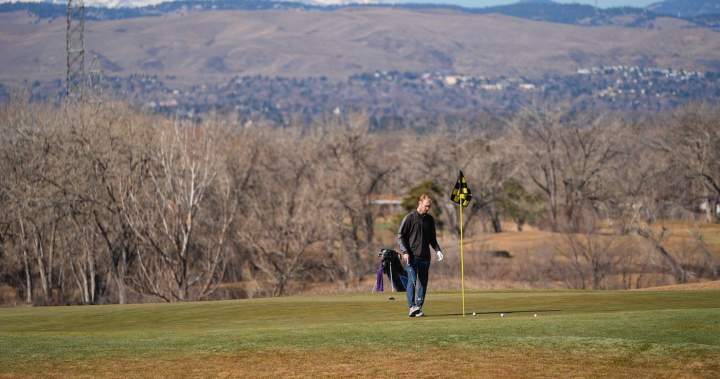
A record snow drought with unprecedented heat is hitting most of the American West, depleting future water supplies, making it more vulnerable to wildfires and hurting winter tourism and recreation.
Scientists say snow cover and snow depth are both at the lowest levels they’ve seen in decades, while at least 67 Western weather stations have measured their warmest December through early February on record.
Normal snow cover this time of year should be about 1.2 million square kilometres (460,000 square miles) — about the size of California, Utah, Idaho and Montana — but this year it’s only about one-third of that, about 401,448 square kilometres (155,000 square miles), according to the National Snow and Ice Data Center.
“I have not seen a winter like this before,” said center director Mark Serreze, who has been in Colorado almost 40 years. “This pattern that we’re in is so darned persistent.”
Taking advantage of daytime temperatures in the mid-to-high teens Celsius, a cyclist wheels through Washington Park, Friday, Feb. 6, 2026, in Denver.
AP Photo/David Zalubowski
The snowpack — measured by how much water is trapped inside — in Oregon is not only record low, but 30 per cent lower than the previous record, said Jason Gerlich, regional drought early warning system coordinator for the National Oceanic and Atmospheric Administration (NOAA).
Much of the U.S. east of the Rockies is snowbound and enduring more than two weeks of bone-chilling abnormal cold, but in West Jordan, Utah, a suburb of Salt Lake City, Trevor Stephens went to the store last week in gym shorts and a T-shirt.
“Right now there’s no snow on the ground,” he said in a video interview, looking out his window and lamenting the lack of snowboarding opportunities. “I’d definitely rather have icy roads and snow than whatever is going on out here right now.”
Concerns over water supply and wildfires
Get breaking National news
For news impacting Canada and around the world, sign up for breaking news alerts delivered directly to you when they happen.
Ski resorts had already been struggling through a difficult season, but the lack of snow has been persistent enough that concerns are growing about wider effects.
Oregon, Colorado and Utah have reported their lowest statewide snowpack since the early 1980s, as far back as records go.
A dry January has meant most states have received half their average precipitation or even less. Along with sunny days and higher-than-average temperatures, that’s meant little snow buildup in a month that historically gets a lot of snow accumulation across much of the Pacific Northwest and Northern Rockies. Because of heavy rains in December, California is in better shape than the other states, scientists said.
As of Monday, it had been 327 days since Salt Lake City International Airport got 2.54 centimeters (1 inch) of snow, making it the longest stretch since 1890-91, according to the National Weather Service.
The meager snow in Colorado and Utah has put the Upper Colorado River Basin at the heart of the snow drought, said Gerlich.
With a backdrop of snowless mountains, a couple walk around the lake in Denver’s Washington Park on Friday, Feb. 6, 2026.
AP Photo/David Zalubowski
A robust mountain snowpack that slowly melts as winter warms to spring provides a steady flow of water into creeks and rivers. That helps ensure there’s enough water later in the year for agriculture, cities, hydropower electric systems and more.
But lack of snow or a too-fast melt means less water will replenish rivers like the Colorado later in the season.
Related News
-
![]()
Record-setting temperatures in Alberta prompt warnings about wildfire danger
-
![]()
Temperatures soar in Western Canada as eastern parts of the country bundle up


“This is a pretty big problem for the Colorado basin,” said Daniel Swain of the University of California’s Water Resources Institute.
Experts said the snow drought could also kick-start an early wildfire season. Snow disappearing earlier than average leaves the ground exposed to warmer weather in the spring and summer, which dries soils and vegetation quicker, said Daniel McEvoy, researcher with the Western Regional Climate Center.
Too warm to snow
While it’s been dry, the record-low snowpack is mostly due to how warm the West has been, which is connected to climate change from the burning of coal, oil and natural gas, several scientists said. Since Dec. 1, there have been more than 8,500 daily high temperature records broken or tied in the West, according to NOAA data.
Much of the precipitation that would normally fall as snow and stay in the mountains for months is instead falling as rain, which runs off quicker, Swain and other scientists said. It’s a problem scientists have warned about with climate change.
Going snowless happens from time to time, but it’s the warmth that has been so extreme, which is easier to tie to climate change, said Russ Schumacher, professor of atmospheric science at Colorado State University and Colorado State Climatologist.
“It was so warm, especially in December, that the snow was only falling at the highest parts of the mountains,” McEvoy said. “And then we moved into January and it got really dry almost everywhere for the last three to four weeks and stayed warm.”
Canada geese sit in a small bank of dirt-covered snow melting in a parking lot in Sheridan, Co., on Feb. 6. 2026.
AP Photo/David Zalubowski
Wetter, cooler weather is coming
Meteorologists expect wetter, cooler weather across the West this week with some snow, so this may be the peak of the snow drought. But it’ll still be warmer than usual in many areas, and scientists aren’t optimistic the snow will be enough.
“I don’t think there’s any way we’re going to go back up to, you know, average or anywhere close to that,” said Schumacher. “But at least we can chip away at those deficits a little bit if it does get more active.”

© 2026 The Canadian Press
Politics
Ukrainian skeleton racer fights ban on helmet showing athletes killed in war – National TenX News
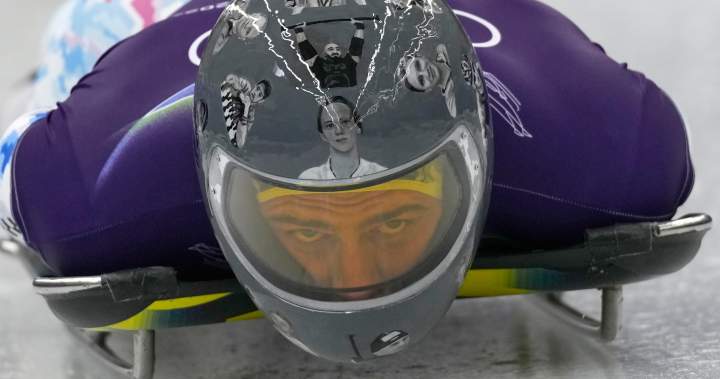
Ukrainian skeleton athlete Vladyslav Heraskevych has accused the International Olympic Committee (IOC) of “betrayal” after it banned him from wearing a helmet featuring pictures of athletes and friends killed during the ongoing Russian invasion in Ukraine.
Ukraine appealed the ban on the grounds that Heraskevych should be permitted to wear a commemorative helmet depicting weightlifter Alina Peregudova, boxer Pavlo Ishchenko and hockey player Oleksiy Loginov.

The IOC rejected the appeal, citing a violation of its rules on political expression.
Rule 50.2 of the Olympic Charter states: “No kind of demonstration or political, religious or racial propaganda is permitted in any Olympic sites, venues or other areas.”
IOC spokesperson Mark Adams said the governing body would allow Heraskevych to wear a black armband while competing.
“There was an informal meeting last night with Mr. Heraskevych, his coach and the delegation, and we reiterated our understanding of the athlete’s wish to pay tribute to his fellow Ukrainian athletes, which he’s done during training and on social media,” Adams said during a press conference.
Get breaking National news
For news impacting Canada and around the world, sign up for breaking news alerts delivered directly to you when they happen.
“After the meeting, we also have reiterated that we will make an exception to the guidelines to allow him to wear a black armband during competition to make that commemoration.”
This is not the first time Heraskevych has made a statement on the sporting world’s most prestigious stage.
While competing at the 2022 Beijing Olympics, he held up a sign reading, “No War in Ukraine.”
In an Instagram post on Tuesday, following the helmet ban, he shared a photograph from that moment, writing, “Unfortunately, over these years this call for peace has only become even more relevant.”
“Also over these 4 years, the IOC has changed dramatically. Back then, in that action, they saw a call for peace and did not apply any sanctions against me.”
“Now, at the Olympics, we have already seen a large number of Russian flags in the stands, on the helmet of one of the athletes — and for the IOC, this is not a violation.”


He said the helmet “pays tribute to members of the Ukrainian sports family who have been killed since the last Olympic Games were held.”
“The truth is on our side. I hope for a fair final decision from the IOC,” he concluded.
In a separate video, he criticized the IOC for inconsistent enforcement of its rules against Ukrainians and for “betraying” the athletes pictured on his helmet by not allowing them to be honoured.
He referenced other incidents throughout Olympic history when athletes were allowed to honour the death of loved ones without punishment, including German weightlifter Matthias Steiner, who, on the podium after winning gold at the 2008 Beijing Olympics, held a photo of his late wife, who had died in a car accident more than a year prior.
“Despite precedents in modern times and in the past when the IOC allowed such tributes, this time they decided to set special rules just for Ukraine,” Heraskevych wrote.
— With files from Global News’ Adriana Fallico
© 2026 Global News, a division of Corus Entertainment Inc.


Cuba is reaching ‘breaking point’ as fuel shortage worsens. What to know – National TenX News

Record snow drought in Western US raises concerns for water shortages and wildfires TenX News

Ukrainian skeleton racer fights ban on helmet showing athletes killed in war – National TenX News


-

 Fashion11 months ago
These ’90s fashion trends are making a comeback in 2017
-

 Entertainment11 months ago
The final 6 ‘Game of Thrones’ episodes might feel like a full season
-

 TenX Exclusive11 months ago
अमर योद्धा: राइफलमैन जसवंत सिंह रावत की वीरगाथा
-

 Politics9 months ago
Before being named Pope Leo XIV, he was Cardinal Robert Prevost. Who is he? – National TenX News
-

 Politics10 months ago
Puerto Rico faces island-wide blackout, sparking anger from officials – National TenX News
-

 Sports11 months ago
BCCI किस ग्रेड के खिलाड़ी को देती है कितना पैसा? इन 5 क्रिकेटर्स का कटेगा पत्ता! होंगे कई बड़े उलटफेर
-

 Fashion11 months ago
According to Dior Couture, this taboo fashion accessory is back
-

 Tech11 months ago
Indian-AI-software-which-caught-30-thousand-criminals-and-busted-18-terrorist-modules-its-demand-is-increasing-in-foreign-countries-also – News18 हिंदी