



Hossein Naseri, seen here in Canada in 2025, was killed by Iran’s regime forces on Jan. 9.
Handout

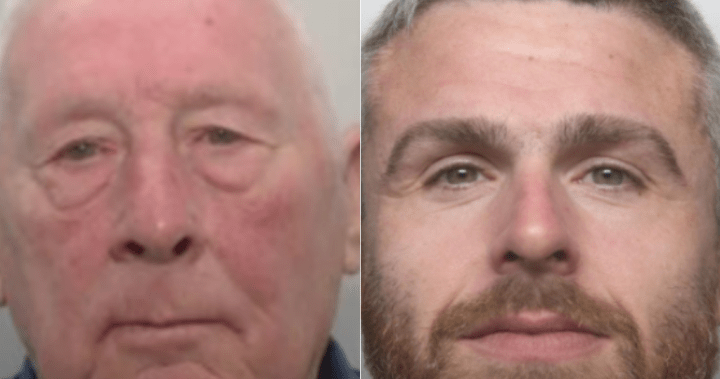
Four members of a U.K. organized crime gang, including an 80-year-old man and his son, have been jailed for almost 50 years following an investigation into a multimillion‑pound firearms and counterfeit drugs operation in Wigan, northern England, according to the Greater Manchester Police.
Authorities described the operation as an “industrial‑scale tablet manufacturing set-up.”
It was led by John Eric Spiby, 80, who had previously won £2.4 million (C$4.4 million) in a 2010 lottery draw. The four men involved were found guilty of producing and supplying counterfeit diazepam tablets, possessing a firearm, possession of ammunition and perverting the course of justice, among other charges.
(Diazepam is an anti-anxiety medication used to calm the nervous system, relieve muscle spasms, treat seizures and alleviate alcohol withdrawal.)
Both Spiby and John Spiby Jr., 37, had denied the offences but were found guilty after a trial in November 2025, Greater Manchester Police said.
Greater Manchester Police
Two other men, Callum Dorian, 35, and Lee Ryan Drury, 45, were also convicted and sentenced to 12 years and nine years, respectively. Dorian was jailed in 2024.
Great Manchester Police
The court heard that Spiby Sr. “provided the premises and helped adapt the premises and purchase machinery” worth thousands of pounds to produce the drugs, the Guardian reported.
According to the outlet, Judge Clarke KC, overseeing Spiby’s sentencing on Tuesday, told him: “Despite your lottery win, you continued to live a life of crime beyond what would normally have been your retirement years.”

For news impacting Canada and around the world, sign up for breaking news alerts delivered directly to you when they happen.
Prosecutor Emma Clarke said the gang was involved in producing counterfeit diazepam with an estimated street value of £288 million (C$424 million).
Police identified the facility as “a cottage located behind the home of Spiby Senior,” which was found to contain “an industrial‑scale tablet manufacturing set-up capable of producing tens of thousands of tablets per hour.”
The group rented a shipping container storing millions of pills awaiting distribution. Spiby also owned an industrial unit, which he purchased in 2021 with the intention of converting and expanding the group’s production capacity, police said.
Adam Kent KC, representing Spiby Sr, said Dorian was the “principal of this operation.” He said that in Dorian’s words, the “guy whose gaff we use is a millionaire,” meaning Spiby Sr.
Some of the firearms found at Spiby’s home were from the Second World War, he noted.
Social media messages sent via encrypted platforms were attributed to Dorian, who used the handle “Fallensoda,” police said.
“Messages and images linked to this username showed the facilitation and supply of firearms including AK‑47s, an Uzi, Tec‑9s, a Scorpion, a Grand Power pistol, silencers, and ammunition,” according to investigators.
In an attempt to operate undetected, Drury created a fake company in August 2020, complete with a website advertising tablet presses, mixers, packaging machines and powdered supplements.
“The sentences should serve as a clear warning: organized crime will not be tolerated,” Det. Insp. Alex Brown said in a statement.
“We will continue to pursue those who seek to profit from harm, and we will use every power and tool available to disrupt and dismantle serious organized crime gangs.”
© 2026 Global News, a division of Corus Entertainment Inc.
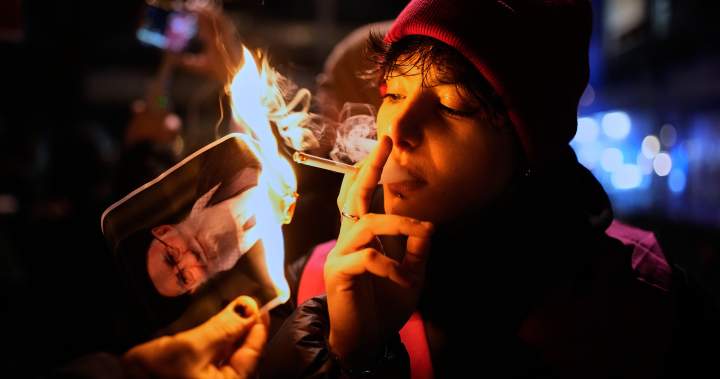
The last time Ottawa resident Mahnoosh Naseri spoke to her father, he had decided to take to the streets of Tehran to protest the Iranian regime.
It was Jan. 7 and Iranians fed up with the corruption, economic mismanagement and repressive religious rules of the regime were rallying like never before.
Two days later, her father left his apartment to join the demonstrators and never came home. It took his family four days to find him. He had been shot dead.
“He didn’t care anymore about his safety. What he cared about was the future of Iranian children,” Naseri told Global News in an interview.
Almost a month after Iranians mounted their biggest challenge to the Islamic regime that has ruled them for a half century, the shocking death toll is becoming more clear.
The protests began in late December and were growing by the day on Jan. 8, when Reza Pahlavi, the exiled son of Iran’s deposed Shah, called for mass demonstrations.
Millions marched in major cities, reassured by U.S. President Donald Trump, who had vowed that if Iran killed protesters, he would “come to their rescue.”
The uprising was the largest since the 1979 Islamic revolution, and fighters loyal to Supreme Leader Ali Khamenei responded with predictable violence. Activists say tens of thousands may have been killed.
To cover up the carnage, the regime cut off internet access, but as the bodies have piled up, families like Naseri’s have been finding out just how bad it was.
Handout
“This has touched a lot of people in the community,” said Ali Ehsassi, an Iranian-Canadian and the Member of Parliament for the Willowdale riding in Toronto.
Ehsassi said he had been hearing from community members whose friends and relatives had been detained or killed, and that Jan. 8 and 9 were “particularly bloody.”
While he did not know the Canadian government’s casualty estimates, the regime’s own figures mean it ranks as one of the bloodiest confrontations of its type in modern history.
“I have no doubt that the number of people who have died is very, very high, even by the standards of the Iranian regime,” the MP said in an interview.
In recent interviews, Global News spoke to Iranian-Canadians about the fate of those close to them who participated in the anti-regime events of Jan. 8 and 9.
“Slowly we learned the truth, and the truth was a massacre had taken place,” said Azam Jangravi, a tech industry professional in Toronto.
Among the casualties were 10 family members, Jangravi said, including one who was shot in the chest at a demonstration in Iran’s third-largest city, Esfahan.
The relative did not die at first but was afraid to seek medical help because the security forces were trolling hospitals to arrest protesters, she said.
After hiding in a house for two days, he succumbed to his injuries, said Jangravi, who fled Iran after she was convicted of showing her hair in public.
Handout
Another Iranian-Canadian, Pieman Azimi, said his nephew, a 20-year-old mechanic, had been gunned down during the demonstration.
His family searched police stations and hospitals for a day until finding him among the sea of bodies, said Azimi, who lives in Ottawa.
Another Ottawa resident described the shooting of a friend, who survived a bullet to the waist. Later, the friend told her how the suppression tactics had escalated.
“The first two days, they were shooting with paintballs,” said Nona Dourandish. “And then they decided to bring in military powers and their special units.”
The authorities used drones to monitor the city, and when a crowd gathered to chant anti-regime slogans, gunmen were quickly on the scene, she said, relaying her friend’s account.
“He said basically they were shooting people in their face, in their chest, so they would not get up. So they would not survive,” Dourandish said.
Naseri was close to her father, Hossein. “I can’t believe that my dad is gone,” she said. Harder still to believe was that he was among so many killed that day.
When Naseri was growing up in Tehran, she said she was repeatedly taken into custody for violating the regime’s strict dress code for women.
Her infractions included not covering all her hair with a headscarf and wearing shirts and pants that were deemed too short or too tight, she said.
Following the regime’s brutal crackdown against women’s rights advocates in 2022, she joined her brother in Ottawa in September 2023.
Handout
A 73-year-old retired Tehran accountant, her father visited her in Ottawa last summer. He spent three months in the capital, attending her wedding and her brother’s graduation ceremony.
“I’m so glad that I had the chance to show him some cities in Canada. He really loved the nature here, the museums and the freedom,” Naseri said.
Although he disliked the Islamic government, Hossein had previously refrained from taking part in protests, fearing that it could impact his two children.
But early last month, Naseri spoke to him on WhatsApp, and he had decided that it was time to go out to support the demonstrations.
“He told me, ‘I know you are safe. You are there. There is no danger for you two. And right now I feel free to go and, like others, ask for what we want,’” she said.
Hossein left home at about 7 p.m. on Jan. 9, she said.
Videos and eyewitness testimony amassed by Amnesty International show that, on that night, security forces positioned themselves on rooftops and opened fire.
The “deadly crackdown” was carried out primarily by the Islamic Revolutionary Guard Corps (IRGC) and Iranian police, the human rights organization said.
Thousands died, making last month “the deadliest period of repression by the Iranian authorities in decades of Amnesty’s research,” according to the group.
Naseri began to worry when she didn’t hear from her father. She sent a message to a friend who had internet access. A week later, her aunt called.
The family had searched through bodies until finding Hossein. He had been shot in the main artery in his leg, his daughter said.
Communicating with her family has been a challenge, amid fears that international calls are being monitored. Naseri still knows very little about what happened, but she believes her father could have been saved had made it to a hospital.
She blames the Revolutionary Guard, whose mission is to defend the Islamic government from both internal and external threats. “The IRGC has long experience killing protesters.”
The Mujahedin-e-Khalq, an anti-regime militant group, announced Hossein’s death, calling him one of the “martyrs of the heroic nationwide uprising.”
Canada joined Australia and the European Union on Jan. 9 in condemning “the killing of protestors, the use of violence, arbitrary arrests, and intimidation tactics by the Iranian regime against its own people.”
But Deputy Conservative leader MP Melissa Lantsman said the federal government had to do more than issue statements.
“Canada must exploit the regime’s fragility,” she said in a statement to Global News that called on the government to set up a registry for those engaged in foreign interference.
She also urged Ottawa to expel members of Iran’s regime who have arrived in Canada, and to “work with allies to keep information flowing freely to the brave Iranian people.”
“Anything would be a step above nothing.”
Liberal MP Ehasassi said the government was working on a collective response together with allies, and that Canada had already listed the IRGC as a terrorist group.
But Ehsassi said Canada has been “well ahead” of other countries in adopting measures against Iran, including banning senior regime members from the country.
Last week, the European Union followed suit, sanctioning the Revolutionary Guard, saying that “Repression cannot go unanswered.”
“Our officials in various departments are in touch with each other, deciding what there is that we can possibly do,” Ehsassi said. “Obviously, I would like to see us do a lot more. I think the Iranian-Canadian community would like to see that,” he said.
“And I have every confidence that there are going to be a suite of measures.”
The U.S. has been moving military assets to the Middle East, and on Monday, Trump warned Iran of “bad things,” but he has so far refrained from an attack and Khamanei said an American strike would trigger a regional war.
Naseri thinks the era of an Iran run by extremist mullahs has come to an end. “This protest shows that the people of Iran, they don’t accept this regime anymore.”
“They don’t want it.”
Stewart.Bell@globalnews
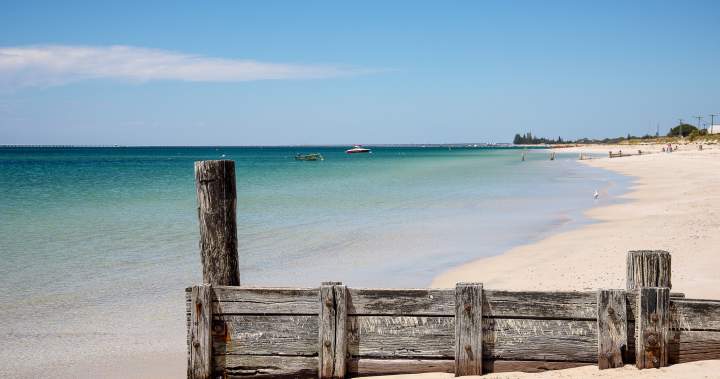
A 13-year-old Australian boy is being praised for completing a heroic four-hour swim to save his mother and siblings from being swept out to sea in Western Australia, state police said in a statement on Monday.
The family was on vacation in Quindalup, on Geographe Bay, about 250 kilometres south of Perth, on Friday, when strong winds blew their inflatable paddleboards and a kayak offshore.
The boy attempted to paddle back to shore in his kayak before it began taking on water, so he swam four hours back to the beach in fading daylight, where he alerted authorities that his two siblings and mother were stranded.
Naturaliste Marine Rescue commander Paul Bresland told the Australian Broadcasting Corporation (ABC) that the boy’s 47-year-old mother, 12-year-old brother and eight-year-old sister were found at about 8:30 p.m. on Friday, clinging to a paddleboard about 14 kilometres offshore.
Bresland said the boy’s efforts were “superhuman.”
Get the day’s top news, political, economic, and current affairs headlines, delivered to your inbox once a day.
“He swam in, he reckons, the first two hours with a life jacket on,” he said.
“And the brave fella thought he’s not going to make it with a life jacket on, so he ditched it, and he swam the next two hours without a life jacket,” Bresland told the Australian outlet.
Naturaliste Volunteer Marine Rescue Group, which aided in the rescue effort, told the BBC, “The bravery, strength and courage shown by this family were extraordinary, especially the young fella who swam four kilometres to raise the alarm.”
Once he reached land, a multi-agency effort was launched to rescue the boy’s family members, comprising WA Water Police, local volunteers and a helicopter.
A volunteer marine rescue vessel was directed to their location, and all three were successfully rescued and returned to shore, police confirmed.
Insp. James Bradley said the incident should serve as a reminder of how quickly conditions at sea can shift and of the importance of taking safety precautions.
“This incident is a reminder that ocean conditions can change rapidly. Thankfully, all three people were wearing lifejackets, which contributed to their survival,” he said. “The actions of the 13-year-old boy cannot be praised highly enough — his determination and courage ultimately saved the lives of his mother and siblings.”
Bresland said the boy’s description of the colour of the kayak and paddleboards was crucial in directing a successful search effort.
“Within an hour, we found the kayak,” Bradley told ABC.
He said the family had kept themselves afloat in rough seas for hours before they were rescued, and that the mother managed to keep the other two children safe with the help of the paddleboard.
“Physically, she just said, ‘I’m struggling, I can’t,’ but she just said they’re looking her in the eye, and she just kept going and kept them together,” Bresland added.
The trio were assessed by St John WA paramedics before being conveyed to Busselton Health Campus for medical assessment.
ABC said the family was discharged from the hospital over the weekend and visited the rescue crews who saved their lives to thank them for their efforts.
© 2026 Global News, a division of Corus Entertainment Inc.
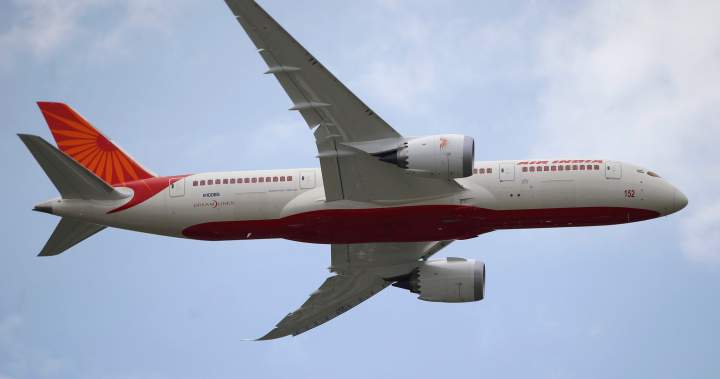
Air India said on Monday it had grounded one of its Boeing Dreamliners after one of its pilots reported an issue with the fuel control switch, which is at the center of an ongoing probe into a deadly air crash last year.
“We have grounded said aircraft and are involving the OEM to get the pilot’s concerns checked on a priority basis,” the airline said, adding that the matter has been communicated to India’s aviation regulator.
Boeing and India’s civil aviation ministry, which houses the aviation regulator, did not immediately respond to a Reuters’ request for comment.
Get the day’s top news, political, economic, and current affairs headlines, delivered to your inbox once a day.
Global News sent a request to Transport Canada, and asked if there are any plans to ground the same jets in Canada amid these new reports. A response was not received by publication.
The Tata Group and Singapore Airlines-owned carrier has faced intense scrutiny since a Dreamliner crash in June last year killed 260 people.
Air India said on Monday it had checked the fuel control switches on all Boeing 787 aircraft in its fleet after a directive from the regulator last year, and had found no issues.
A cockpit recording of dialog between the two pilots of the June 12 Air India flight suggested that the captain cut the flow of fuel to the plane’s engines, a source briefed on U.S. officials’ early assessment of evidence told Reuters last year.
– With a file from Global’s Ariel Rabinovitch





These ’90s fashion trends are making a comeback in 2017


The final 6 ‘Game of Thrones’ episodes might feel like a full season

अमर योद्धा: राइफलमैन जसवंत सिंह रावत की वीरगाथा


Before being named Pope Leo XIV, he was Cardinal Robert Prevost. Who is he? – National TenX News


Puerto Rico faces island-wide blackout, sparking anger from officials – National TenX News

According to Dior Couture, this taboo fashion accessory is back


BCCI किस ग्रेड के खिलाड़ी को देती है कितना पैसा? इन 5 क्रिकेटर्स का कटेगा पत्ता! होंगे कई बड़े उलटफेर


Indian-AI-software-which-caught-30-thousand-criminals-and-busted-18-terrorist-modules-its-demand-is-increasing-in-foreign-countries-also – News18 हिंदी


