
Politics
Israel, Hamas to enter 2nd stage of ceasefire soon, Netanyahu says – National TenX News

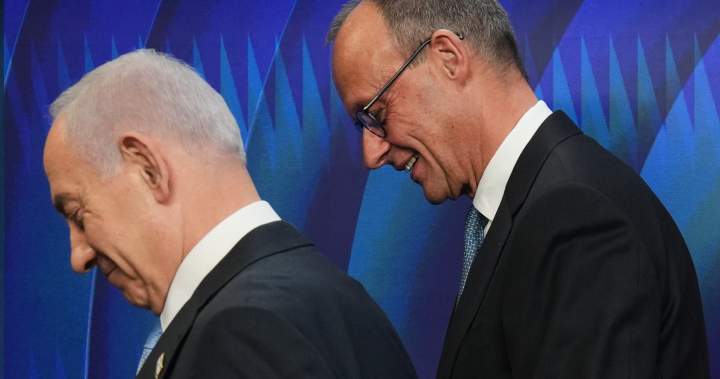
Israeli Prime Minister Benjamin Netanyahu said Sunday that Israel and Hamas are “very shortly expected to move into the second phase of the ceasefire,” after Hamas returns the remains of the last hostage held in Gaza.
Netanyahu spoke during a news conference with visiting German Chancellor Friedrich Merz and stressed that the second phase, which addresses the disarming of Hamas and the withdrawal of Israeli troops from Gaza, could begin as soon as the end of the month.
Hamas has yet to hand over the remains of Ran Gvili, a 24-year-old police officer who was killed in the Hamas-led Oct. 7, 2023, attack that sparked the conflict. His body was taken to Gaza.
The ceasefire’s second stage also includes the deployment of an international force to secure Gaza and forming a temporary Palestinian government to run day-to-day affairs under the supervision of an international board led by U.S. President Donald Trump.
A senior Hamas official on Sunday told The Associated Press the group is ready to discuss “freezing or storing or laying down” its weapons as part of the ceasefire in a possible approach to one of the most difficult issues ahead.
Netanyahu says second phase will be challenging
Netanyahu said few people believed the ceasefire’s first stage could be achieved, and the second phase is just as challenging.
“As I mentioned to the chancellor, there’s a third phase, and that is to deradicalize Gaza, something that also people believed was impossible. But it was done in Germany, it was done in Japan, it was done in the Gulf States. It can be done in Gaza, too, but of course Hamas has to be dismantled,” he said.
The return of Gvili’s remains — and Israel’s return of 15 bodies of Palestinians in exchange — would complete the first phase of Trump’s 20-point ceasefire plan.

Hamas says it has not been able to reach all remains because they are buried under rubble left by Israel’s two-year offensive in Gaza. Israel has accused the militants of stalling and threatened to resume military operations or withhold humanitarian aid if all remains are not returned.

Get daily National news
Get the day’s top news, political, economic, and current affairs headlines, delivered to your inbox once a day.
A group of families of hostages said in a statement that “we cannot advance to the next phase before Ran Gvili returns home.”
Meanwhile, Israeli military Chief of Staff Lt. Gen. Eyal Zamir on Sunday called the so-called Yellow Line that divides the Israeli-controlled majority of Gaza from the rest of the territory a “new border.”
“We have operational control over extensive parts of the Gaza Strip and we will remain on those defense lines,” Zamir said. “The Yellow Line is a new border line, serving as a forward defensive line for our communities and a line of operational activity.”
Germany says support for Israel is unchanged
Merz said Germany, one of Israel’s closest allies, is assisting with the implementation of the second phase by sending officers and diplomats to a U.S.-led civilian and military coordination center in southern Israel, and by sending humanitarian aid to Gaza.
The chancellor also said Germany still believes that a two-state-solution is the best possible option but that “the German federal government remains of the opinion that recognition of a Palestinian state can only come at the end of such a process, not at the beginning.”


The U.S.-drafted plan for Gaza leaves the door open to Palestinian independence. Netanyahu has long asserted that creating a Palestinian state would reward Hamas and eventually lead to an even larger Hamas-run state on Israel’s borders.

Netanyahu also said that while he would like to visit Germany, he hasn’t planned a diplomatic trip because he is concerned about an arrest warrant issued by the International Criminal Court, the U.N.’s top war crimes court, last year in connection with the conflict in Gaza.
Merz said there are currently no plans for a visit but he may invite Netanyahu in the future. He added that he is not aware of future sanctions against Israel from the European Union nor any plans to renew German bans on military exports to Israel.
Germany had a temporary ban on exporting military equipment to Israel, which was lifted after the ceasefire began on Oct. 10.
Israel kills militant in Gaza
The Israeli military said it killed a militant who approached its troops across the Yellow Line.
Gaza’s Health Ministry says Israeli forces have killed more than 370 Palestinians since the start of the ceasefire, and that the bodies of six people killed in attacks had been brought to local hospitals over the past 24 hours.
In the original Hamas-led attack in 2023, the militants killed around 1,200 people and took more than 250 others hostage. Almost all the hostages or their remains have been returned in ceasefires or other deals.
Israel’s offensive in Gaza has killed at least 70,360 Palestinians, according to Gaza’s Health Ministry, which operates under the Hamas-run government. The ministry does not differentiate between civilians and combatants, but says that nearly half the dead have been women and children. The ministry is part of Gaza’s Hamas government and its numbers are considered reliable by the U.N. and other international bodies.
—Grieshaber reported from Berlin.
© 2025 The Canadian Press

Politics
Canadian canola farmers express ‘cautious optimism’ over trade agreement with China TenX News
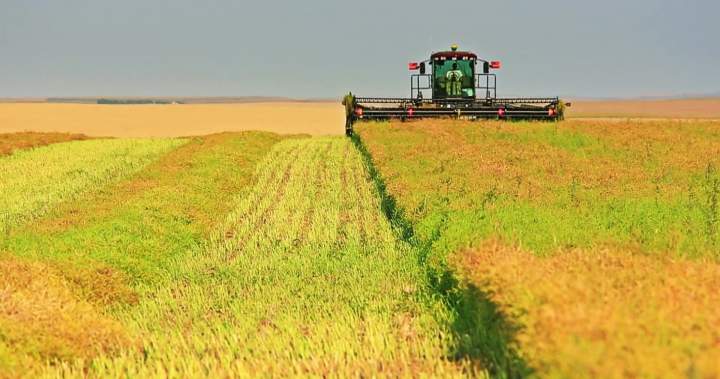
“It’s a huge step forward, but a little disappointing at the same time.”
That’s how Stephen Vandervalk, who grows canola near Fort McLeod, Alta. and is also vice-president of the Wheat Growers Association, reacted to news of the preliminary trade deal between Canada and China.
The agreement, announced Friday, following a meeting between Prime Minister Mark Carney and Chinese President Xi Jinping, in Beijing, is expected to slash punishing tariffs on the sale of Canadian agriculture and seafood products to China, part of a tit-for-tat tariff war between the two countries.
Prime Minister Mark Carney meets with President of China Xi Jinping at the Great Hall of the People in Beijing, China, on Jan. 16, 2026.
THE CANADIAN PRESS/Sean Kilpatrick
It started in the summer of 2024, when Canada announced a 100 per cent tariff on Chinese electric automobiles that Ottawa claimed were being dumped on global markets.
China responded in 2025 with tariffs of up to 100 per cent on some Canadian canola products, along with a 25 per cent levy on Canadian pork and seafood products.
Prime Minister Mark Carney, fourth right, meets with President of China Xi Jinping, fourth left, at the Great Hall of the People in Beijing, China, on Jan. 16, 2026.
THE CANADIAN PRESS/Sean Kilpatrick
The deal announced Friday is expected to result in Beijing slashing duties on canola seed to 15 per cent by March 1, 2026, in return for Canada allowing 49,000 Chinese electric vehicles to be sold in Canada at a tariff of just 6.1 per cent. That number will increase to about 70,000 vehicles within five years.
Ottawa also expects to have tariffs on Canadian canola meal, lobsters, crabs and peas reduced or removed from March 1 until at least the end of the year.

While Vandervalk called the agreement “a huge step forward,” he also expressed “cautious optimism,” saying a 15 per cent tariff on canola meal means Canada could still struggle to be competitive with other countries, like Australia, that can sell the same products to the Chinese market.
He’s also concerned about how Americans will react to the deal because the 100 per cent tariff on Chinese EVs was put in place by both Canada and the U.S. to help protect the North American auto industry.

Get weekly money news
Get expert insights, Q&A on markets, housing, inflation, and personal finance information delivered to you every Saturday.
“They’re our biggest trading partner for sure, they take almost all of our canola meal. When you crush canola seed, you get oil, and you get meal. So a huge market is our canola meal and oil and seed everything into the U.S., so it’s for sure much, much larger than China,” said Vandervalk.
“So if we somehow get a little bit of access to China at the expense of having potentially no access to our largest trading partner, we have huge concerns with that,” added Vandervalk.
The trade war between Canada and China prompted the Chinese government to impose tariffs of up to 100 per cent on the import of some Canadian canola products.
Global News
In an emailed statement, the Canola Council of Canada and Canadian Canola Growers Association called news of the deal on tariffs, “an important milestone in Canada’s trading relationship with China.”
“The Canadian canola industry has been clear since the outset that these tariffs are a political issue requiring a political solution. We are pleased to see significant progress in restoring market access for seed and meal and will continue to build on this development by working to achieve permanent and complete tariff relief, including for canola oil, moving forward,” reads the statement.
Andre Harpe, Chair of the Alberta Canola Producers, who farms near Grand Prairie, Alta., called the tentative agreement “great news.”
“I was up at three o’clock this morning looking at the announcement and I did happen to glance at the prices then and they were up quite a bit. So it was a good response to see from the market,” said Harpe.
“I’m really, really hoping things settle down a little bit, but it’s been a roller-coaster ride. It’s been absolutely terrible. The uncertainty, you know,” added Harpe.
Saskatchewan Premier Scott Moe (centre), was among the delegates who accompanied Prime Minister Mark Carney on his trip to China.
Global News
Saskatchewan Premier Scott Moe, who accompanied the Prime Minister on his trip to China and spoke to Global News from there, was almost euphoric in his reaction to the agreement, calling it “a good day for Canadians.”
“This is very significant. It is going to literally allow billions of dollars of agricultural products of all kinds, whether it’s canola, pulse crops, seafood, to flow again, which was not moving in any way to our second largest trading partner in the world,” said Moe. “So this is an absolute deal of tremendous significance to not only the Canadian agriculture industry, but to the Canadian economy.”
Related News
-
![]()
Saskatchewan Premier praises canola deal between Canada and China
-
![]()
Canola and food exports: What Budget 2025 proposes as trade war continues


“Not only does this restore trade that was existing, but it definitely provides a very foundation for us build additional trade opportunities with not only a country like China, but many Asian countries in the area,” added Moe.
Federal Conservative labour critic, Kyle Seeback, who represents the riding of Dufferin-Caledon in southern Ontario, the centre of Canada’s automobile manufacturing industry, characterized the trade deal as a double-edged sword.
“I think that if you’re a canola farmer, you’re cautiously optimistic. I think if you are an auto worker in Canada, you’re extremely worried about what this is going to mean for the Canadian auto sector,” said Seeback.
He’s also concerned that, so far, China has only agreed to lower tariffs until the end of 2026.
“We’re dealing with China and China has a history of not being a reliable trading partner,” said Seeback. “So it’s always dangerous when you make these kinds of deals with China.”
“I think that this is going to come back to be viewed as an absolutely terrible decision to try and enter into a strategic alliance with China,” Seeback added. “Time will tell, but I think the liberals are going to one day deeply regret that they’ve made this decision.”
With files from The Canadian Press.

Politics
X outages reported by tens of thousands of users worldwide: Downdetector – National TenX News

X, formerly Twitter, was down for tens of thousands of users worldwide on Friday, according to outage tracking website Downdetector.com.
There were more than 62,000 reports of issues with the social media platform as of 10:22 a.m. EST, according to Downdetector, which tracks outages by collating status reports from a number of sources.
Get daily National news
Get the day’s top news, political, economic, and current affairs headlines, delivered to your inbox once a day.
Users in the U.K. reported around 11,000 incidents and over 3,000 issues were reported in India.


The actual number of affected users may differ from what is shown on the platform, as the reports are submitted by users.
Politics
Trump says he may tariff countries that don’t ‘go along’ with Greenland plans – National TenX News
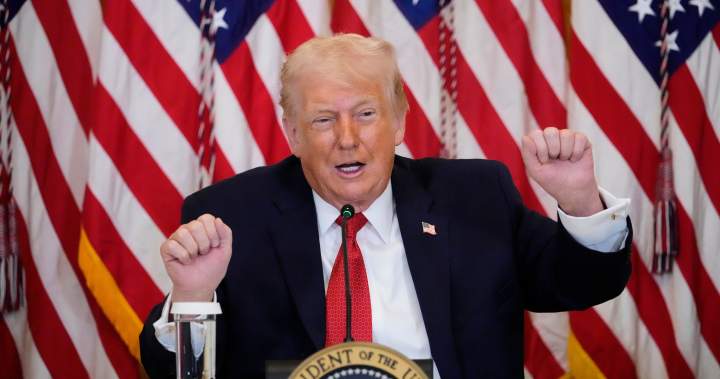
U.S. President Donald Trump suggested Friday that he may punish countries with tariffs if they don’t back the U.S. controlling Greenland, a message that came as a bipartisan Congressional delegation sought to lower tensions in the Danish capital.
Trump for months has insisted that the U.S. should control Greenland, a semiautonomous territory of NATO ally Denmark, and said earlier this week that anything less than the Arctic island being in U.S. hands would be “unacceptable.”
During an unrelated event at the White House about rural health care, he recounted Friday how he had threatened European allies with tariffs on pharmaceuticals.
“I may do that for Greenland too,” Trump said. “I may put a tariff on countries if they don’t go along with Greenland, because we need Greenland for national security. So I may do that,” he said.
He had not previously mentioned using tariffs to try to force the issue.
Earlier this week, the foreign ministers of Denmark and Greenland met in Washington this week with U.S. Vice President JD Vance and Secretary of State Marco Rubio.
That encounter didn’t resolve the deep differences but did produce an agreement to set up a working group — on whose purpose Denmark and the White House then offered sharply diverging public views.
European leaders have insisted that is only for Denmark and Greenland to decide on matters concerning the territory, and Denmark said this week that it was increasing its military presence in Greenland in cooperation with allies.

A relationship ‘we need to nurture’
In Copenhagen, a group of senators and members of the House of Representatives met Friday with Danish and Greenlandic lawmakers, and with leaders including Danish Prime Minister Mette Frederiksen.
Delegation leader Sen. Chris Coons, a Delaware Democrat, thanked the group’s hosts for “225 years of being a good and trusted ally and partner” and said that “we had a strong and robust dialog about how we extend that into the future.”
Get daily National news
Get the day’s top news, political, economic, and current affairs headlines, delivered to your inbox once a day.
Sen. Lisa Murkowski, an Alaska Republican, said after meeting lawmakers that the visit reflected a strong relationship over decades and “it is one that we need to nurture.” She told reporters that “Greenland needs to be viewed as our ally, not as an asset, and I think that’s what you’re hearing with this delegation.”
The tone contrasted with that emanating from the White House. Trump has sought to justify his calls for a U.S. takeover by repeatedly claiming that China and Russia have their own designs on Greenland, which holds vast untapped reserves of critical minerals. The White House hasn’t ruled out taking the territory by force.
“We have heard so many lies, to be honest and so much exaggeration on the threats towards Greenland,” said Aaja Chemnitz, a Greenlandic politician and member of the Danish parliament who took part in Friday’s meetings. “And mostly, I would say the threats that we’re seeing right now is from the U.S. side.”
Murkowski emphasized the role of Congress in spending and in conveying messages from constituents.

“I think it is important to underscore that when you ask the American people whether or not they think it is a good idea for the United States to acquire Greenland, the vast majority, some 75%, will say, we do not think that that is a good idea,” she said.
Along with Sen. Jeanne Shaheen, a New Hampshire Democrat, Murkowski has introduced bipartisan legislation that would prohibit the use of U.S. Defense or State department funds to annex or take control of Greenland or the sovereign territory of any NATO member state without that ally’s consent or authorization from the North Atlantic Council.

Inuit council slams White House
The dispute is looming large in the lives of Greenlanders. Greenland’s prime minister, Jens-Frederik Nielsen, said on Tuesday that “if we have to choose between the United States and Denmark here and now, we choose Denmark. We choose NATO. We choose the Kingdom of Denmark. We choose the EU.””
The chair of the Nuuk, Greenland-based Inuit Circumpolar Council, which represents around 180,000 Inuit from Alaska, Canada, Greenland, and Russia’s Chukotka region on international issues, said persistent statements from the White House that the U.S. must own Greenland offer “a clear picture of how the US administration views the people of Greenland, how the U.S. administration views Indigenous peoples, and peoples that are few in numbers.”
Sara Olsvig told The Associated Press in Nuuk that the issue is “how one of the biggest powers in the world views other peoples that are less powerful than them. And that really is concerning.”
Indigenous Inuit in Greenland do not want to be colonized again, she said.
© 2026 The Canadian Press


Canadian canola farmers express ‘cautious optimism’ over trade agreement with China TenX News

X outages reported by tens of thousands of users worldwide: Downdetector – National TenX News

Trump says he may tariff countries that don’t ‘go along’ with Greenland plans – National TenX News


-

 Fashion10 months ago
These ’90s fashion trends are making a comeback in 2017
-

 Entertainment10 months ago
The final 6 ‘Game of Thrones’ episodes might feel like a full season
-

 TenX Exclusive10 months ago
अमर योद्धा: राइफलमैन जसवंत सिंह रावत की वीरगाथा
-

 Politics8 months ago
Before being named Pope Leo XIV, he was Cardinal Robert Prevost. Who is he? – National TenX News
-

 Politics9 months ago
Puerto Rico faces island-wide blackout, sparking anger from officials – National TenX News
-

 Fashion10 months ago
According to Dior Couture, this taboo fashion accessory is back
-

 Tech10 months ago
Indian-AI-software-which-caught-30-thousand-criminals-and-busted-18-terrorist-modules-its-demand-is-increasing-in-foreign-countries-also – News18 हिंदी
-

 Politics9 months ago
Scientists detect possible signs of life on another planet — but it’s not aliens – National TenX News