
Politics
Hong Kong officials say unsafe netting contributed to deadly building fire – National TenX News

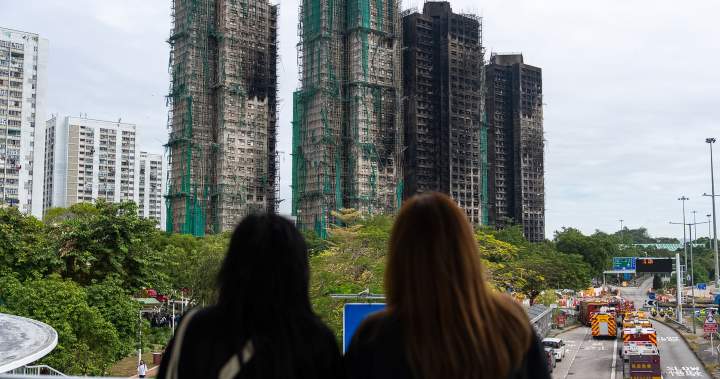
Hong Kong officials said Monday that their investigation into a deadly blaze that killed at least 151 has revealed some of the netting that covered scaffolding used in renovations was not up to fire-safety codes, as a wave of public sympathy and support was met by government moves to stifle criticism.
Wednesday’s blaze, which took until Friday to fully extinguish, started on the lower-level netting covering bamboo scaffolding around one building in the high-rise Wang Fuk Court complex. It then swept inside as foam panels placed over windows caught fire and blew out the glass. Winds carried flames from building to building that all were covered in scaffolding and netting, until seven of eight were ablaze.
Initial tests of the netting showed it was up to code, but subsequently investigators collected 20 samples from all areas, including higher floors, and found seven failed safety standards, suggesting contractors skimped to make greater profits, said Eric Chan, Hong Kong’s Chief Secretary.
“They just wanted to make money at the expense of people’s lives,” he told reporters.
Donations for survivors of the fire had reached 900 million Hong Kong dollars ($115 million) as of Monday, authorities said, as a steady stream of people placed flowers, cards and other tributes at a makeshift memorial near the burned out block of buildings.
“When something happens, we come out to help each other, ” said Loretta Loh, after paying her regards at the site. “I have a heavy heart.”

Some 4,600 people lived in the Wang Fuk Court complex in the suburb of Tai Po.

Get breaking National news
For news impacting Canada and around the world, sign up for breaking news alerts delivered directly to you when they happen.
Hong Kong police Disaster Victim Identification Unit staff had searched five of the burned buildings but only made partial progress through the remaining two, said Tsang Shuk-yin, head of the police casualty enquiry unit. Teams were assessing the safety of the other buildings, including the one that caught fire first and suffered the worst damage.
On Monday they recovered another eight bodies, including three that firefighters found earlier but could not retrieve. Dozens of people remain unaccounted for, but some are likely among the 39 bodies not yet identified, Tsang said.
“We will have to wait until we get through all seven blocks before we can make a final report,” she said.
Private donations and 300 million Hong Kong dollars ($38.5 million) in start-up capital from the government will be used to help victims rebuild their homes and provide long–term support, local officials said. The government has also given survivors cash subsidies to help with expenses, including funerals, and is working to find them housing.
By Monday, 683 residents had found places in local hotels and hostels, and another 1,144 moved into transitional housing units. Two emergency shelters remained open for others, authorities said.

Residents had complained for almost a year about the construction netting, Hong Kong’s Labor Department said. It confirmed officials had carried out 16 inspections of the renovation project since July 2024 and had warned contractors multiple times in writing that they had to meet fire safety requirements. The latest inspection was just a week before the fire.


Hong Kong’s anti-corruption authorities and police have arrested 14 people, including the directors and an engineering consultant of a construction company, according to Chris Tang, the secretary for security.
People increasingly have been questioning whether government officials should also be held responsible.
“People are angry and think that the HK (Hong Kong) government should be accountable,” said Jean-Pierre Cabestan, a locally-based political scientist and senior research fellow at Paris’s Asia Centre think tank.
But the leeway for dissent is limited in the former British colony, which came under Chinese control in 1997 and has moved to quiet public criticism on national security grounds.
“There are rumors being spread by bad people giving fake news about the firefighters not employing the correct tactics to fight the fire, or victims being charged 8,000 Hong Kong dollars a night to stay in hotels – these are all false,” Tang said.
“We will arrest these rumor mongers.”

On Saturday, the Office for Safeguarding National Security blasted what it called “evil schemes” that had ”the ulterior motives of using the disaster to create trouble and disrupt Hong Kong.” It did not give specifics.
Also Saturday, a man who helped organize an online petition calling for government accountability was arrested on suspicion of sedition, local media including HK01 and Sing Tao Daily reported. Two others were arrested on Sunday, including a volunteer who offered help in Tai Po after the fire broke out, the same outlets reported.
Cabestan said Hong Kong officials were operating like authorities in mainland China, forestalling protests before they might develop.
Tang would not give specific details of the three arrests, but said that police “must take action” against those who try to “endanger national security,” saying broadly that some people have been “taking advantage of the saddening moment … and attempting to incite hatred against the government.”
Dissent in the city has been muzzled since hundreds of thousands took to the streets in 2019 against government plans to allow extradition to mainland China. Hong Kong now virtually bans mass protests and bars opposition political figures from running in legislature elections.
© 2025 The Canadian Press

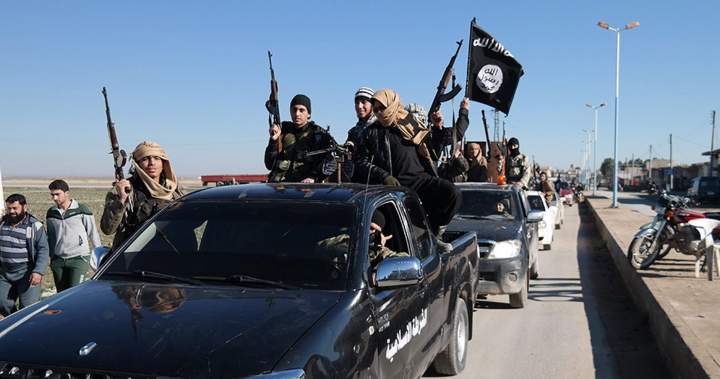
A Crown prosecutor says a Calgary man who willingly joined and worked for an Islamic State terrorist group in the Middle East over a decade ago should spend 16 years in prison, while a defence lawyer has recommended 12 years.
Jamal Borhot, 35, was convicted in December of three counts of participation in a terrorist group for assisting in the terrorist activities of ISIS in Syria in 2013.
Court heard Borhot and his cousin Hussein Borhot illegally entered Syria through Turkey.
Hussein Borhot pleaded guilty in a separate trial and was sentenced in 2022 to 12 years.
In December, Justice Corina Dario found Jamal Borhot participated in violent acts, actively recruited others to join the cause and worked in administration.
He returned to Calgary after one year.
Jamal Borhot travelled to Syria in 2013 with his cousin Hussein Borhot, seen here outside the Calgary Court Centre, after pleading guilty in a separate trial in 2022.
Global News
The judge is scheduled to sentence Borhot on Feb. 4.
Get daily National news
Get the day’s top news, political, economic, and current affairs headlines, delivered to your inbox once a day.
At a sentencing hearing Friday, prosecutor Kent Brown said 16 years is appropriate for Jamal Borhot, as the cousin received less time for his pleas.
“The focus remains deterrence and denunciation and that is largely due to the pernicious nature of terrorism offences. Anyone who engages in those activities should expect a significant sentence as a result,” Brown said.
Borhot planned the trip to Syria and tried to hide his movements, the prosecutor said.
“There was real risk of serious harm caused by the offender’s conduct. I submit that’s without question here, given his involvement in battles in Syria.”
Brown added outside court that the case was difficult to prosecute since it happened so long ago. “It’s a cold case that happened in a country half way around the world.”
Defence lawyer Pawel Milczarek said his client has lived a peaceful life since returning to Canada and should have a sentence that’s proportionate to his cousin’s prison time.
Milczarek said Borhot became radicalized and wanted to help fight the Syrian government, as he believed it was randomly slaughtering civilians.
“Mr. Borhot was motivated by this purpose to travel to Syria. He found the wrong group to fight with,” the lawyer said.
“With 20/20 hindsight, we can all identify that ISIS became a violent terrorist organization after Mr. Borhot left Syria. We should not harshly punish Mr. Borhot for making a mistake with imperfect information.”
Borhot did not address the court.

© 2026 The Canadian Press

As Iran returned to uneasy calm after a wave of protests that drew a bloody crackdown, a senior hard-line cleric called Friday for the death penalty for detained demonstrators and directly threatened U.S. President Donald Trump — evidence of the rage gripping authorities in the Islamic Republic.
Trump, though, struck a conciliatory note, thanking Iran’s leaders for not executing hundreds of detained protesters, in a further sign he may be backing away from a military strike. Executions, as well as the killing of peaceful protesters, are two of the red lines laid down by Trump for possible action against Iran.
Harsh repression that has left several thousand people dead appears to have succeeded in stifling demonstrations that began Dec. 28 over Iran’s ailing economy and morphed into protests directly challenging the country’s theocracy.
There have been no signs of protests for days in Tehran, where shopping and street life have returned to outward normality, though a week-old internet blackout continued. Authorities have not reported any unrest elsewhere in the country.
“Iran canceled the hanging of over 800 people,” Trump told reporters in Washington, adding that “I greatly respect the fact that they canceled.”
Trump did not clarify who he spoke to in Iran to confirm the state of any planned executions.

The U.S.-based Human Rights Activists News Agency on Friday put the death toll at 3,090. The number, which exceeds that of any other round of protest or unrest in Iran in decades and recalls the chaos surrounding the 1979 revolution, continues to rise.
The agency has been accurate throughout the years of demonstrations, relying on a network of activists inside Iran that confirms all reported fatalities.
The AP has been unable to independently confirm the toll. Iran’s government has not provided casualty figures.
Hard-line cleric’s fiery sermon
In contrast, the sermon by Ayatollah Ahmad Khatami carried by Iranian state radio sparked chants from those gathered for prayers, including: “Armed hypocrites should be put to death!”
Get daily National news
Get the day’s top news, political, economic, and current affairs headlines, delivered to your inbox once a day.
Khatami, a member of Iran’s Assembly of Experts and Guardian Council long known for his hard-line views, described the protesters as the “butlers” of Israeli Prime Minister Benjamin Netanyahu and “Trump’s soldiers.” He said Netanyahu and Trump should await “hard revenge from the system.”
“Americans and Zionists should not expect peace,” the cleric said.
FILE – Iranian senior cleric Ahmad Khatami delivers his sermon during Friday prayer ceremony in Tehran, Iran, Friday, Jan. 5, 2018. (AP Photo/Ebrahim Noroozi, File).
EN
His fiery speech came as allies of Iran and the United States alike sought to defuse tensions. Russian President Vladimir Putin spoke Friday to both Iranian President Masoud Pezeshkian and Israel’s Netanyahu, Kremlin spokesman Dmitry Peskov said.
Russia had previously kept largely quiet about the protests. Moscow has watched several key allies suffer blows as its resources and focus are consumed by its 4-year-old war against Ukraine, including the downfall of Syria’s former President Bashar Assad in 2024, last year’s U.S. and Israeli attacks on Iran and the U.S. seizure of Venezuelan leader Nicolas Maduro this month.
Exiled Iranian royal calls for fight to continue
Days after Trump pledged “help is on its way” for the protesters, both the demonstrations and the prospect of imminent U.S. retaliation appeared to have receded. One diplomat told The Associated Press that top officials from Egypt, Oman, Saudi Arabia and Qatar had raised concerns with Trump that a U.S. military intervention would shake the global economy and destabilize an already volatile region.
Iran’s exiled Crown Prince Reza Pahlavi urged the U.S. to make good on its pledge to intervene. Pahlavi, whose father was overthrown by Iran’s 1979 Islamic Revolution, said he still believes the president’s promise of assistance.
“I believe the president is a man of his word,” Pahlavi told reporters in Washington. He added that “regardless of whether action is taken or not, we as Iranians have no choice to carry on the fight.“
“I will return to Iran,” he vowed. Hours later, he urged protesters to take to the streets again from Saturday to Monday.
Despite support by diehard monarchists in the diaspora, Pahlavi has struggled to gain wider appeal within Iran. But that has not stopped him from presenting himself as the transitional leader of Iran if the regime were to fall.


Iran authorities list protest damage
Khatami, the hard-line cleric, also provided the first overall statistics on damage from the protests, claiming 350 mosques, 126 prayer halls and 20 other holy places had sustained damage. Another 80 homes of Friday prayer leaders — an important position within Iran’s theocracy — were also damaged, likely underlining the anger demonstrators felt toward symbols of the government.
He said 400 hospitals, 106 ambulances, 71 fire department vehicles, and another 50 emergency vehicles also sustained damage.
Even as protests appeared to have been smothered inside Iran, thousands of exiled Iranians and their supporters have taken to the streets in cities across Europe to shout out their rage at the government of the Islamic Republic.
Amid the continuing internet shutdown, some Iranians crossed borders to communicate with the outside world. At a border crossing in Turkey’s eastern province of Van, a trickle of Iranians crossing on Friday said they were traveling to get around the communications blackout.
“I will go back to Iran after they open the internet,” said a traveler who gave only his first name, Mehdi, out of security concerns.
Also crossing the border were some Turkish citizens escaping the unrest in Iran.

Mehmet Önder, 47, was in Tehran for his textiles business when the protests erupted. He said he laid low in his hotel until it was shut for security reasons, then stayed with one of his customers until he was able to return to Turkey.
Although he did not venture into the streets, Önder said he heard heavy gunfire.
“I understand guns, because I served in the military in the southeast of Turkey,” he said. “The guns they were firing were not simple weapons. They were machine-guns.”
In a sign of the conflict’s potential to spill over borders, a Kurdish separatist group in Iraq said it has launched attacks on Iran’s paramilitary Revolutionary Guard in recent days in retaliation for Tehran’s crackdown on protests.
A representative of the Kurdistan Freedom Party, or PAK, said its members have “played a role in the protests through both financial support and armed operations to defend protesters when needed.” The group said the attacks were launched by members of its military wing based inside Iran.
Amiri reported from New York. Associated Press journalists Will Weissert and Darlene Superville in Washington and Serra Yedikardes at the Kapikoy Border Crossing, Turkey, contributed.
Politics
Canadian canola farmers express ‘cautious optimism’ over trade agreement with China TenX News
“It’s a huge step forward, but a little disappointing at the same time.”
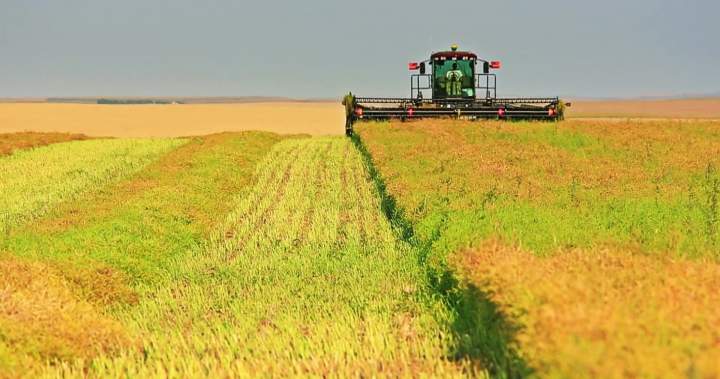
That’s how Stephen Vandervalk, who grows canola near Fort McLeod, Alta. and is also vice-president of the Wheat Growers Association, reacted to news of the preliminary trade deal between Canada and China.
The agreement, announced Friday, following a meeting between Prime Minister Mark Carney and Chinese President Xi Jinping, in Beijing, is expected to slash punishing tariffs on the sale of Canadian agriculture and seafood products to China, part of a tit-for-tat tariff war between the two countries.
Prime Minister Mark Carney meets with President of China Xi Jinping at the Great Hall of the People in Beijing, China, on Jan. 16, 2026.
THE CANADIAN PRESS/Sean Kilpatrick
It started in the summer of 2024, when Canada announced a 100 per cent tariff on Chinese electric automobiles that Ottawa claimed were being dumped on global markets.
China responded in 2025 with tariffs of up to 100 per cent on some Canadian canola products, along with a 25 per cent levy on Canadian pork and seafood products.
Prime Minister Mark Carney, fourth right, meets with President of China Xi Jinping, fourth left, at the Great Hall of the People in Beijing, China, on Jan. 16, 2026.
THE CANADIAN PRESS/Sean Kilpatrick
The deal announced Friday is expected to result in Beijing slashing duties on canola seed to 15 per cent by March 1, 2026, in return for Canada allowing 49,000 Chinese electric vehicles to be sold in Canada at a tariff of just 6.1 per cent. That number will increase to about 70,000 vehicles within five years.
Ottawa also expects to have tariffs on Canadian canola meal, lobsters, crabs and peas reduced or removed from March 1 until at least the end of the year.

While Vandervalk called the agreement “a huge step forward,” he also expressed “cautious optimism,” saying a 15 per cent tariff on canola meal means Canada could still struggle to be competitive with other countries, like Australia, that can sell the same products to the Chinese market.
He’s also concerned about how Americans will react to the deal because the 100 per cent tariff on Chinese EVs was put in place by both Canada and the U.S. to help protect the North American auto industry.

Get weekly money news
Get expert insights, Q&A on markets, housing, inflation, and personal finance information delivered to you every Saturday.
“They’re our biggest trading partner for sure, they take almost all of our canola meal. When you crush canola seed, you get oil, and you get meal. So a huge market is our canola meal and oil and seed everything into the U.S., so it’s for sure much, much larger than China,” said Vandervalk.
“So if we somehow get a little bit of access to China at the expense of having potentially no access to our largest trading partner, we have huge concerns with that,” added Vandervalk.
The trade war between Canada and China prompted the Chinese government to impose tariffs of up to 100 per cent on the import of some Canadian canola products.
Global News
In an emailed statement, the Canola Council of Canada and Canadian Canola Growers Association called news of the deal on tariffs, “an important milestone in Canada’s trading relationship with China.”
“The Canadian canola industry has been clear since the outset that these tariffs are a political issue requiring a political solution. We are pleased to see significant progress in restoring market access for seed and meal and will continue to build on this development by working to achieve permanent and complete tariff relief, including for canola oil, moving forward,” reads the statement.
Andre Harpe, Chair of the Alberta Canola Producers, who farms near Grand Prairie, Alta., called the tentative agreement “great news.”
“I was up at three o’clock this morning looking at the announcement and I did happen to glance at the prices then and they were up quite a bit. So it was a good response to see from the market,” said Harpe.
“I’m really, really hoping things settle down a little bit, but it’s been a roller-coaster ride. It’s been absolutely terrible. The uncertainty, you know,” added Harpe.
Saskatchewan Premier Scott Moe (centre), was among the delegates who accompanied Prime Minister Mark Carney on his trip to China.
Global News
Saskatchewan Premier Scott Moe, who accompanied the Prime Minister on his trip to China and spoke to Global News from there, was almost euphoric in his reaction to the agreement, calling it “a good day for Canadians.”
“This is very significant. It is going to literally allow billions of dollars of agricultural products of all kinds, whether it’s canola, pulse crops, seafood, to flow again, which was not moving in any way to our second largest trading partner in the world,” said Moe. “So this is an absolute deal of tremendous significance to not only the Canadian agriculture industry, but to the Canadian economy.”
Related News
-
![]()
Saskatchewan Premier praises canola deal between Canada and China
-
![]()
Canola and food exports: What Budget 2025 proposes as trade war continues


“Not only does this restore trade that was existing, but it definitely provides a very foundation for us build additional trade opportunities with not only a country like China, but many Asian countries in the area,” added Moe.
Federal Conservative labour critic, Kyle Seeback, who represents the riding of Dufferin-Caledon in southern Ontario, the centre of Canada’s automobile manufacturing industry, characterized the trade deal as a double-edged sword.
“I think that if you’re a canola farmer, you’re cautiously optimistic. I think if you are an auto worker in Canada, you’re extremely worried about what this is going to mean for the Canadian auto sector,” said Seeback.
He’s also concerned that, so far, China has only agreed to lower tariffs until the end of 2026.
“We’re dealing with China and China has a history of not being a reliable trading partner,” said Seeback. “So it’s always dangerous when you make these kinds of deals with China.”
“I think that this is going to come back to be viewed as an absolutely terrible decision to try and enter into a strategic alliance with China,” Seeback added. “Time will tell, but I think the liberals are going to one day deeply regret that they’ve made this decision.”
With files from The Canadian Press.



Crown says Calgary man who joined ISIS should serve a 16-year terrorism sentence TenX News

Iran protests appear to calm, fate of detained demonstrators unclear – National TenX News

Canadian canola farmers express ‘cautious optimism’ over trade agreement with China TenX News


-

 Fashion10 months ago
These ’90s fashion trends are making a comeback in 2017
-

 Entertainment10 months ago
The final 6 ‘Game of Thrones’ episodes might feel like a full season
-

 TenX Exclusive10 months ago
अमर योद्धा: राइफलमैन जसवंत सिंह रावत की वीरगाथा
-
 Politics8 months ago
Before being named Pope Leo XIV, he was Cardinal Robert Prevost. Who is he? – National TenX News
-

 Politics9 months ago
Puerto Rico faces island-wide blackout, sparking anger from officials – National TenX News
-
 Fashion10 months ago
According to Dior Couture, this taboo fashion accessory is back
-

 Tech10 months ago
Indian-AI-software-which-caught-30-thousand-criminals-and-busted-18-terrorist-modules-its-demand-is-increasing-in-foreign-countries-also – News18 हिंदी
-

 Politics9 months ago
Scientists detect possible signs of life on another planet — but it’s not aliens – National TenX News