
Politics
Dropped charges, police overreach: How the ‘Indigo 11’ case fell apart TenX News


Sixteen months after her arrest in a nighttime raid on her home, Toronto school teacher Suzanne Narain sat in a packed courtroom, anxiously waiting for a judge to hand down her fate.
Charges against Narain and two others were withdrawn on Thursday in a courtroom bursting with supporters, at what was expected to be the conclusion of the cases against 11 activists accused in the vandalism of a downtown Indigo bookstore in November 2023.
And although Judge Vincenzo Rondinelli reserved his judgment for two of the group who pleaded guilty Thursday, it seems likely that this large-scale investigation involving more than 70 police officers and 10 nighttime raids will not achieve a single registered criminal conviction.
“We’re saying it’s a victory for us,” Narain tells Global News in an exclusive interview.
“They invaded our homes, destroyed our lives and spent millions of dollars to do this. And there hasn’t been one conviction. Just to silence organizers speaking out against Palestine. And none of us are silent,” Narain says.
Suzanne Narain, one of the ‘Indigo 11’ accused in the vandalism of a downtown Toronto bookstore, had her charges withdrawn on Thursday.
Ashleigh Stewart
Supporters flooded the courtroom Thursday, many of them wearing keffiyehs, a symbol of Palestinian culture and resistance, in support of a group of professors, teachers and activists who have become collectively known as “the Indigo 11.”
The group faced charges of mischief, conspiracy and criminal harassment in relation to the Nov. 10, 2023, vandalism of an Indigo bookstore in downtown Toronto, in which red paint was splashed across the storefront and posters of Jewish CEO Heather Reisman’s face, above the caption “funding genocide,” were glued to the windows, weeks into the Israel-Hamas conflict.
Reisman’s HESEG Foundation provides tuition to former lone soldiers who serve in the Israel Defense Forces.
Police labelled the incident a “hate-motivated mischief investigation,” while Jewish advocacy groups called the act antisemitic, as hate crimes against Jews spiked across the country. The incident became a flashpoint for local tensions amid the Israel-Hamas conflict, as the line between hate crime and legitimate protest became harder to define.

According to Toronto police, there have been 488 demonstrations related to the conflict in the Middle East since Oct. 7. Those resulted in 94 arrests — 10 of them related to hate crimes.
But several of the Indigo 11 argue this isn’t the same thing; that protests should not be criminalized. They also argue that the police investigation has been heavy-handed, that raiding their homes in the middle of the night without warning has left many of them traumatized and subjected to abuse and death threats.
But the Jewish community says the police’s failure to register a criminal conviction against any of the Indigo 11 undermines public confidence in authorities.
“By sending the signal that our courts take these acts of hate lightly, this decision risks emboldening extremists and encouraging further law-breaking,” says Michelle Stock with the Centre for Israel and Jewish Affairs.

Others point to the police response as an example of “overreach” and a tendency to judge pro-Palestinian protests more harshly.
“There’s a big difference between hate speech and protesting against the IDF’s actions in Gaza,” says Bruce Ryder, a professor at York University’s Osgoode Hall Law School.
“And it’s really unfortunate that the police didn’t seem to show any appreciation of the sensitivity and nuance required to make the distinction between valid political speech and hate speech.”

As the case now reaches its conclusion, seven of the accused have had their charges withdrawn and four have pleaded guilty. Two of those guilty pleas have received absolute discharges, and the other two are likely to be granted the same.
As authorities continue to grapple with how to handle protests in the wake of Oct. 7, how did this case go so wrong?
‘I felt it necessary to act’
Toronto police say they have made 220 arrests and laid 604 charges for hate crimes since the war broke out not including demonstrations. Antisemitic hate crimes made up 46.9 per cent of all hate crimes in 2025.

Get breaking National news
For news impacting Canada and around the world, sign up for breaking news alerts delivered directly to you when they happen.
In January, a Toronto man was charged with 29 crimes, including advocating genocide and inciting hate, after he allegedly spent eight months posting online to encourage attacks on the Jewish community in support of Palestinians.
Those actions were labelled hate-motivated offences. The Indigo 11 argue their case is not the same thing.
Global News sat down with two members of the group, Narain and Sharmeen Khan, ahead of their court appearance on Thursday. As their bail conditions disallowed them from associating with each other, Narain had to leave before Khan arrived. Both Khan and Narain later had their charges withdrawn.
Activist Sharmeen Khan says postering is a form of protest and should not be criminalized.
Ashleigh Stewart
After 16 months of silence, they wanted to finally attempt to clear their names. However, because each was expecting their charges to be withdrawn, they closed ranks as soon as they were questioned about Nov. 10.
“There were posters put up with a satirical message and washable red paint,” says Narain, a former TDSB school teacher who is currently under investigation by the Ontario College of Teachers due to her arrest.
“I think that’s the message. Who was there, who did it, whose charges got dropped…that doesn’t matter as much.”
What is clear, from the Crown’s summary of facts, is that at about 4 a.m., at least four of the accused, who entered guilty pleas, visited Indigo and stuck up about 50 posters, and several of them poured red paint over the window. It caused about $9,000 worth of damage, the Crown said.
York University doctoral student Stuart Schussler pleaded guilty to his role in buying the supplies at Home Depot. Immigration lawyer Macdonald Scott, who also pleaded guilty, told the court, “This was a time that I felt it necessary to act.” Both now await sentencing on April 10.

In the days following, police arrested one of the group, Nisha Toomey, and found a chat thread on the messaging app Signal, in which several of the accused discussed committing the vandalism.
This formed the basis for a slew of nighttime raids, involving battering rams in some cases, on 10 activists’ houses. Toomey later pleaded guilty and received an absolute discharge.
According to documents from the group’s lawyers, Narain was only a part of the Signal chat group for eight hours. Khan says the group was formed to discuss “three days of action for Palestine,” but the list of 10 arrestees was “weird or incomplete” and she doesn’t know how police collated it.
Many of the accused were involved with the advocacy group No One Is Illegal Toronto. Narain and Khan say they did not know all of the arrestees well. They believe the only real connection was that they were all protesters.


There were also several errors in the arrests, according to their lawyers. They say police broke down the door of an address one accused hadn’t lived in for years and items outside the parameters of police warrants were searched. Many say police did not announce themselves at their door. Several of the group say their Charter rights were violated.

Khan, who works for CUPE Local 3903, says she was awoken at about 5 a.m. to police in her bedroom, some in plain clothes.
“I thought there were burglars, or as though they were the gang members who found the wrong house,” Khan says.
“My neighbor called the police on the police, thinking this was some sort of break in. I was just scared. I just said ‘please don’t hurt me’.”
Khan says police took photographs of pages out of a personal diary from 2022. Narain says her partner’s car was searched, which police didn’t have a warrant for. Narain says police watched her go to the toilet, and had to “ask them for privacy to wipe myself.”
After police released their names and charges in a statement, Narain and Khan say they were subjected to a vicious backlash, including racist and sexist messages and emails and derogatory comments about their appearances.
“I was distraught. It really broke my heart. You know, I just thought, ‘Wow, this is everything I am against.’ And you’re saying that this is who I am, you know?” Narain says.

Lawyers also alleged police misconduct after the warrant for Toomey’s arrest, obtained by Global News, showed night arrest was disallowed and other requests for items to be searched were crossed out or had restrictions imposed on them. Several requests were crossed out as “too vague” and another was scratched as a “potential Charter breach.”
However, when police arrested the remaining 10 accused, it was with a night warrant granted from a different justice of the peace, without restrictions. Lawyers say police had a duty to disclose prior warrant restrictions. The group also argued that police ignored specific timelines the warrant dictated for searches for Toomey’s phone, which, they say, helped them arrest the remaining 10 people.
Toronto police would not answer any questions in relation to the nighttime raids, allegations from the accused, the list of arrestees or about the warrants.
‘Criminal behaviour…has consequences’
There was no cheering from assembled supporters of the so-called ‘Indigo 11’ as charges were withdrawn against Narain and two others on Thursday. Instead, it was a muted shuffle out of the court chambers after Judge Rondinelli reserved judgement in two of the cases — Scott’s and Schussler’s — for sentencing, which was expected to be handed down on the same day. A planned triumphant press conference was scaled back.
Khan said the bookstore defacement should never have been considered a crime, and that it was a “total misrepresentation” that Reisman was targeted specifically for being Jewish, that they were protesting against HESEG.
Both Narain and Khan acknowledged that the ordeal would not stop them from protesting. They were also considering launching legal action against the police.
“I don’t find postering an act of vandalism, it’s a form of protest speech and free speech,” Khan says.
“It’s not public or private property vandalism or damage [if] a company is engaged in practices that are harming people.”

Toronto police, however, disagree. Taking Thursday’s hearing and guilty pleas as a triumph, spokesperson Stephanie Sayer said: “Acts of vandalism and targeted intimidation are not protected forms of expression; they are criminal offences that have real and lasting impacts on our communities.”
“Today’s outcome sends a clear message: criminal behaviour—regardless of motive—has consequences.”
Professor Ryder, however, believes the court’s decision is appropriate — that vandalism should be rightly considered a crime, but the nighttime raids and slew of criminal charges were a clear example of “police overreach.”
“The police response from the outset seemed disproportionate given that what we’re dealing with is the right to protest. And vandalism…should be the subject of mischief charges, but also the police should show some restraint given that the protesters are exercising their right to engage in political expression on one of the most important issues of our time,” Ryder says.
He says pro-Palestinian protests in Canada, and in the Western world, were often dealt with in a similar way, which needs to be carefully considered.
“We need to think very carefully about why is it that we are seeing such heavy-handed police responses to pro-Palestinian protest,” he said, “and what can we do to ensure that our institutions are approaching these issues in a more balanced and nuanced way.”

Politics
Trump says he may tariff countries that don’t ‘go along’ with Greenland plans – National TenX News
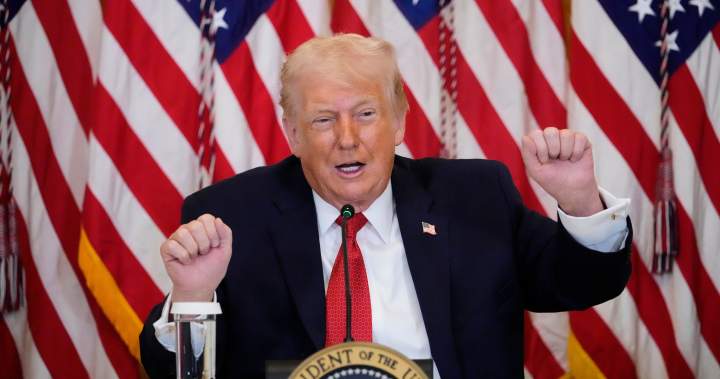
U.S. President Donald Trump suggested Friday that he may punish countries with tariffs if they don’t back the U.S. controlling Greenland, a message that came as a bipartisan Congressional delegation sought to lower tensions in the Danish capital.
Trump for months has insisted that the U.S. should control Greenland, a semiautonomous territory of NATO ally Denmark, and said earlier this week that anything less than the Arctic island being in U.S. hands would be “unacceptable.”
During an unrelated event at the White House about rural health care, he recounted Friday how he had threatened European allies with tariffs on pharmaceuticals.
“I may do that for Greenland too,” Trump said. “I may put a tariff on countries if they don’t go along with Greenland, because we need Greenland for national security. So I may do that,” he said.
He had not previously mentioned using tariffs to try to force the issue.
Earlier this week, the foreign ministers of Denmark and Greenland met in Washington this week with U.S. Vice President JD Vance and Secretary of State Marco Rubio.
That encounter didn’t resolve the deep differences but did produce an agreement to set up a working group — on whose purpose Denmark and the White House then offered sharply diverging public views.
European leaders have insisted that is only for Denmark and Greenland to decide on matters concerning the territory, and Denmark said this week that it was increasing its military presence in Greenland in cooperation with allies.

A relationship ‘we need to nurture’
In Copenhagen, a group of senators and members of the House of Representatives met Friday with Danish and Greenlandic lawmakers, and with leaders including Danish Prime Minister Mette Frederiksen.
Delegation leader Sen. Chris Coons, a Delaware Democrat, thanked the group’s hosts for “225 years of being a good and trusted ally and partner” and said that “we had a strong and robust dialog about how we extend that into the future.”
Get daily National news
Get the day’s top news, political, economic, and current affairs headlines, delivered to your inbox once a day.
Sen. Lisa Murkowski, an Alaska Republican, said after meeting lawmakers that the visit reflected a strong relationship over decades and “it is one that we need to nurture.” She told reporters that “Greenland needs to be viewed as our ally, not as an asset, and I think that’s what you’re hearing with this delegation.”
The tone contrasted with that emanating from the White House. Trump has sought to justify his calls for a U.S. takeover by repeatedly claiming that China and Russia have their own designs on Greenland, which holds vast untapped reserves of critical minerals. The White House hasn’t ruled out taking the territory by force.
“We have heard so many lies, to be honest and so much exaggeration on the threats towards Greenland,” said Aaja Chemnitz, a Greenlandic politician and member of the Danish parliament who took part in Friday’s meetings. “And mostly, I would say the threats that we’re seeing right now is from the U.S. side.”
Murkowski emphasized the role of Congress in spending and in conveying messages from constituents.


“I think it is important to underscore that when you ask the American people whether or not they think it is a good idea for the United States to acquire Greenland, the vast majority, some 75%, will say, we do not think that that is a good idea,” she said.
Along with Sen. Jeanne Shaheen, a New Hampshire Democrat, Murkowski has introduced bipartisan legislation that would prohibit the use of U.S. Defense or State department funds to annex or take control of Greenland or the sovereign territory of any NATO member state without that ally’s consent or authorization from the North Atlantic Council.

Inuit council slams White House
The dispute is looming large in the lives of Greenlanders. Greenland’s prime minister, Jens-Frederik Nielsen, said on Tuesday that “if we have to choose between the United States and Denmark here and now, we choose Denmark. We choose NATO. We choose the Kingdom of Denmark. We choose the EU.””
The chair of the Nuuk, Greenland-based Inuit Circumpolar Council, which represents around 180,000 Inuit from Alaska, Canada, Greenland, and Russia’s Chukotka region on international issues, said persistent statements from the White House that the U.S. must own Greenland offer “a clear picture of how the US administration views the people of Greenland, how the U.S. administration views Indigenous peoples, and peoples that are few in numbers.”
Sara Olsvig told The Associated Press in Nuuk that the issue is “how one of the biggest powers in the world views other peoples that are less powerful than them. And that really is concerning.”
Indigenous Inuit in Greenland do not want to be colonized again, she said.
© 2026 The Canadian Press
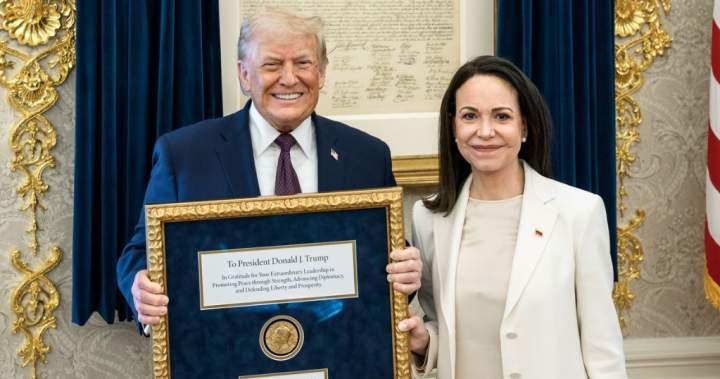
Venezuelan opposition leader María Corina Machado said she presented her Nobel Peace Prize medal to President Donald Trump at the White House on Thursday even as he has questioned her credibility to take over her country after the U.S. ousted then-President Nicolás Maduro.
The Nobel Institute has said Machado could not give her prize to Trump, an honour that he has coveted. Even if the gesture proves to be purely symbolic, it was extraordinary given that Trump has effectively sidelined Machado, who has long been the face of resistance in Venezuela. He has signalled his willingness to work with acting President Delcy Rodríguez, who had been Maduro’s second in command.
“I presented the president of the United States the medal, the Nobel Peace Prize,” Machado told reporters after leaving the White House and heading to Capitol Hill. She said she had done so “as a recognition for his unique commitment with our freedom.”

Trump confirmed later on social media that Machado had left the medal for him to keep, and he said it was an honour to meet her.
“She is a wonderful woman who has been through so much. María presented me with her Nobel Peace Prize for the work I have done,” Trump said in his post. “Such a wonderful gesture of mutual respect. Thank you María!”
The White House later posted a photo of Machado standing next to Trump in the Oval Office as he holds the medal in a large frame. A text in the frame reads, “Presented as a personal symbol of gratitude on behalf of the Venezuelan people in recognition of President Trump’s principled and decisive action to secure a free Venezuela.”
Trump has raised doubts about his stated commitment to backing democratic rule in Venezuela, giving no timetable on when elections might be held. Machado indicated that he had provided few specifics on that front during their discussion.
Get breaking National news
For news impacting Canada and around the world, sign up for breaking news alerts delivered directly to you when they happen.
She did not provide more information on what was said.
‘We can count on President Trump’
After the closed-door meeting, Machado greeted dozens of cheering supporters waiting for her near the White House gates, stopping to hug many.
“We can count on President Trump,” she told them without elaborating, prompting some to briefly chant, “Thank you, Trump.”
Before her visit to Washington, Machado had not been seen in public since she travelled last month to Norway, where her daughter received the peace prize on her behalf. She had spent 11 months in hiding in Venezuela before she appeared in Norway after the ceremony.
The jubilant scene after her meeting with Trump stood in contrast to political realities in Venezuela. Rodríguez remains in charge of day-to-day government operations, along with others in Maduro’s inner circle. In her first state of the union speech Thursday, the interim president promoted the resumption of diplomatic ties between the historic adversaries and advocated for opening the state-run oil industry to more foreign investment after Trump pledged to seize control of Venezuelan crude sales.

Trump has said it would be difficult for Machado to lead because she “doesn’t have the support within or the respect within the country.” Her party is widely believed to have won 2024 elections rejected by Maduro.
White House press secretary Karoline Leavitt called Machado “a remarkable and brave voice” but also said the meeting didn’t mean Trump’s opinion of her changed, calling it “a realistic assessment.”
Leavitt told reporters that Trump supported new Venezuelan elections “when the time is right” but did not say when he thought that might be.
A ‘frank and positive discussion’ about Venezuela
Leavitt said Machado had sought the face-to-face meeting without setting expectations for what would occur. She spent about two and a half hours at the White House.

“I don’t think he needs to hear anything from Ms. Machado,” the press secretary said while the meeting was still going on, other than to have a ”frank and positive discussion about what’s taking place in Venezuela.”
After leaving the White House, Machado went on to a closed-door meeting with a bipartisan group of senators.
Sen. Chris Murphy, D-Conn., said Machado told them that “if there’s not some progress, real progress towards a transition in power, and/or elections in the next several months, we should all be worried.”
“She reminded us that Delcy Rodríguez is, in many ways, worse than Maduro,” he added.
Asked if Machado had heard any commitment from the White House on holding elections in Venezuela, Murphy said, “No, I don’t think she got any commitment from them.”

Sen. Bernie Moreno, an Ohio Republican, was exultant following the meeting, saying Machado “delivered a message that loud and clear: What President Trump did was the most important, significant event in Latin America. That getting rid of Maduro was absolutely essential.”
Machado’s Washington stop coincided with U.S. forces in the Caribbean Sea seizing another sanctioned oil tanker that the Trump administration says had ties to Venezuela. It is part of a broader U.S. effort to take control of the South American country’s oil after U.S. forces captured Maduro and his wife less than two weeks ago at a heavily guarded compound in the Venezuelan capital of Caracas and brought them to New York to stand trial on drug trafficking charges.
Leavitt said Venezuela’s interim authorities have been fully cooperating with the Trump administration and noted that Rodríguez’s government said it planned to release more prisoners detained under Maduro. Among those released were five Americans this week.
Trump said Wednesday that he had a “great conversation” with Rodríguez, their first since Maduro was ousted.
Machado doesn’t get the nod from Trump
Just hours after Maduro’s capture, Trump said of Machado that “it would be very tough for her to be the leader.” Machado had steered a careful course to avoid offending Trump, notably after winning the peace prize, and had sought to cultivate relationships with him and key administration voices like Secretary of State Marco Rubio.
The industrial engineer and daughter of a steel magnate, Machado began challenging the ruling party in 2004, when the nongovernmental organization she co-founded, Súmate, promoted a referendum to recall then-President Hugo Chávez. The initiative failed, and Machado and other Súmate executives were charged with conspiracy.
A year later, she drew the anger of Chávez and his allies again for travelling to Washington to meet President George W. Bush, whom Chávez considered an adversary.
Almost two decades later, she marshalled millions of Venezuelans to reject Chávez’s successor, Maduro, for another term in the 2024 election. But ruling party-loyal electoral authorities declared him the winner despite ample credible evidence to the contrary. Ensuing anti-government protests ended in a brutal crackdown.
Politics
IMF chief backs Jerome Powell, U.S. Fed independence amid Trump pressure – National TenX News
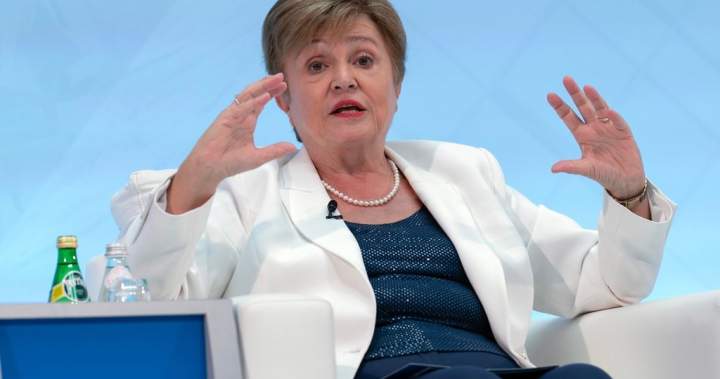
International Monetary Fund chief Kristalina Georgieva on Thursday underscored the importance of keeping central banks independent and threw her support behind beleaguered Federal Reserve Chair Jerome Powell, who is facing a Trump administration investigation for renovation cost overruns.
Georgieva told Reuters in an interview that there was ample evidence that central bank independence worked in the interest of businesses and households, and that evidence-based, data-based decision-making is good for the economy.
The IMF managing director said she had worked with Powell and respected his professionalism.
“I have worked with Jay Powell. He is a very good professional, very decent man, and I think that his standing among his colleagues tells the story,” she said, when asked about a letter of support signed by her predecessor, Christine Lagarde, now head of the European Central Bank, and other large central banks.
Powell on Sunday disclosed that the Trump administration had opened an investigation into him over cost overruns for a $2.5 billion project to renovate two historical buildings at the Fed’s Washington headquarters complex.
Get daily National news
Get the day’s top news, political, economic, and current affairs headlines, delivered to your inbox once a day.
Powell denies wrongdoing and has called the unprecedented actions a pretext to put pressure on him for not bowing to U.S. President Donald Trump’s long-running demands for sharply lower interest rates.


The probe has sparked widespread criticism from some key members of Trump’s Republican Party in the U.S. Senate, which must confirm his nominee to succeed Powell, along with foreign economic officials, investors and former U.S. government officials from both political parties.
Trump has repeatedly derided Powell’s leadership of the Fed and attacked him, often personally, over what he sees as the Fed chair’s slow moves to cut interest rates. On Wednesday, he dismissed concerns that eroding central bank independence would undermine the value of the U.S. dollar and spark inflation, telling Reuters, “I don’t care.”
Georgieva said the IMF looked carefully at issues such as monetary and financial stability, as well as the strength of a country’s institutions. It was specifically interested in the Fed, given the role of the U.S. dollar as a reserve currency.
“It would be very good to see that there is a recognition … that the Fed is precious for the Americans. It is very important for the rest of the world,” she said.
Trump has also attempted to fire another Fed official, Governor Lisa Cook, who has challenged her termination in a legal case that will be argued before the Supreme Court next week.


Trump says he may tariff countries that don’t ‘go along’ with Greenland plans – National TenX News

Trump gifted Nobel Peace Prize by Venezuela’s María Corina Machado – National TenX News

IMF chief backs Jerome Powell, U.S. Fed independence amid Trump pressure – National TenX News


-

 Fashion10 months ago
These ’90s fashion trends are making a comeback in 2017
-

 Entertainment10 months ago
The final 6 ‘Game of Thrones’ episodes might feel like a full season
-

 TenX Exclusive10 months ago
अमर योद्धा: राइफलमैन जसवंत सिंह रावत की वीरगाथा
-
 Politics8 months ago
Before being named Pope Leo XIV, he was Cardinal Robert Prevost. Who is he? – National TenX News
-

 Politics9 months ago
Puerto Rico faces island-wide blackout, sparking anger from officials – National TenX News
-

 Fashion10 months ago
According to Dior Couture, this taboo fashion accessory is back
-

 Tech10 months ago
Indian-AI-software-which-caught-30-thousand-criminals-and-busted-18-terrorist-modules-its-demand-is-increasing-in-foreign-countries-also – News18 हिंदी
-

 Politics9 months ago
Scientists detect possible signs of life on another planet — but it’s not aliens – National TenX News