
Politics
Israeli airstrikes on Gaza shatter ceasefire as over 400 killed – National TenX News

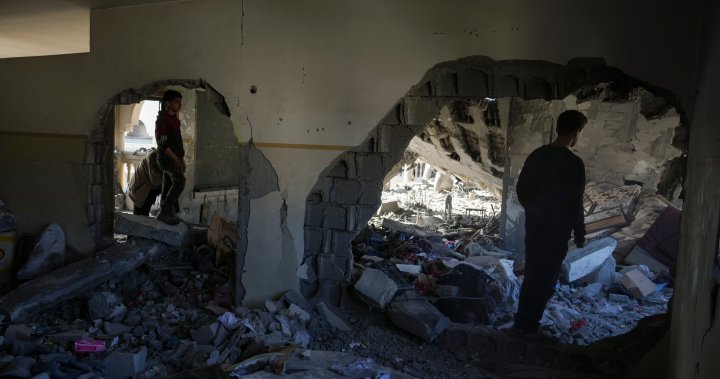
Israel launched airstrikes across the Gaza Strip early Tuesday, killing at least 404 Palestinians, including women and children, according to hospital officials. The surprise bombardment shattered a ceasefire in place since January and threatened to fully reignite the 17-month-old war.
Prime Minister Benjamin Netanyahu ordered the strikes after Hamas refused Israeli demands to change the ceasefire agreement. Officials said the operation was open-ended and was expected to expand. The White House said it had been consulted and voiced support for Israel’s actions.
The Israeli military ordered people to evacuate eastern Gaza, including much of the northern town of Beit Hanoun and other communities further south, and head toward the center of the territory, indicating that Israel could soon launch renewed ground operations.
“Israel will, from now on, act against Hamas with increasing military strength,” Netanyahu’s office said.

The attack during the Muslim holy month of Ramadan could resume a conflict that has already killed tens of thousands of Palestinians and caused widespread destruction across Gaza. It also raised questions about the fate of the roughly two dozen Israeli hostages held by Hamas who are believed to still be alive.
A senior Hamas official said Netanyahu’s decision to return to conflict amounts to a “death sentence” for the remaining hostages. Izzat al-Risheq accused Netanyahu of launching the strikes to try and save his far-right governing coalition and called on mediators to “reveal facts” on who broke the truce. Hamas said at least four senior officials were killed in Tuesday’s strikes.
There were no reports of any attacks by Hamas several hours after the bombardment, indicating it still hoped to restore the truce.
The strikes came as Netanyahu comes under mounting domestic pressure, with mass protests planned over his handling of the hostage crisis and his decision to fire the head of Israel’s internal security agency. His latest testimony in a long-running corruption trial was canceled after the strikes.
The main group representing families of the captives accused the government of backing out of the ceasefire, saying it “chose to give up on the hostages.”
“We are shocked, angry and terrified by the deliberate dismantling of the process to return our loved ones from the terrible captivity of Hamas,” the Hostages and Missing Families Forum said in a statement.
Palestinians inspect the damage at Al-Tabi’in School in central Gaza Strip following an Israeli airstrike, Tuesday, March 18, 2025.
AP Photo/Jehad Alshrafi
Wounded stream into Gaza hospitals
A strike on a home in the southern city of Rafah killed 17 members of one family, including at least 12 women and children, according to the European Hospital, which received the bodies. The dead included five children, their parents, and another father and his three children.
In the southern city of Khan Younis, Associated Press reporters saw explosions and plumes of smoke. Ambulances brought wounded people to Nasser Hospital, where patients lay on the floor, some screaming. A young girl cried as her bloody arm was bandaged.

Get daily National news
Get the day’s top news, political, economic, and current affairs headlines, delivered to your inbox once a day.
Many Palestinians said they had expected a return to conflict when talks over the second phase of the ceasefire did not begin as scheduled in early February. Israel instead embraced an alternative proposal and cut off all shipments of food, fuel and other aid to the territory’s 2 million Palestinians to try to pressure Hamas to accept it.
“Nobody wants to fight,” Palestinian resident Nidal Alzaanin told the AP by phone from Gaza City. “Everyone is still suffering from the previous months,” he said.
Gaza’s Health Ministry said at least 404 people were killed in the strikes and more than 560 had been wounded. It revised its confirmed count after saying earlier Tuesday that 413 were dead and 660 wounded. Rescuers were still searching the rubble for dead and wounded as the strikes continued. It was among the deadliest days of the war.

U.S. backs Israel and blames Hamas
The White House sought to blame Hamas for the renewed fighting. National Security Council spokesman Brian Hughes said the militant group “could have released hostages to extend the ceasefire but instead chose refusal and war.”
An Israeli official, speaking on condition of anonymity to discuss the unfolding operation, said Israel was striking Hamas’ military, leaders and infrastructure and planned to expand the operation beyond air attacks. The official accused Hamas of attempting to rebuild and plan new attacks. Hamas militants and security forces quickly returned to the streets in recent weeks after the ceasefire went into effect.
Netanyahu’s office said the Israeli leader held security consultations with senior officials. It did not provide further details.
Talks on a second phase of the ceasefire had stalled
The strikes came two months after a ceasefire was reached to pause the war. Over six weeks, Hamas released 25 Israeli hostages and the bodies of eight more in exchange for nearly 2,000 Palestinian prisoners in a first phase of the ceasefire.


But since that ceasefire ended two weeks ago, the sides have not been able to agree on a way forward with a second phase aimed at releasing the 59 remaining hostages, 35 of whom are believed to be dead, and ending the conflict altogether.
Hamas has demanded an end to the conf;ict and full withdrawal of Israeli troops in exchange for the release of the remaining hostages. Israel says it will not end the conflict until it destroys Hamas’ governing and military capabilities and frees all hostages — two goals that could be incompatible.

Netanyahu’s office on Tuesday said Hamas had “repeatedly refused to release our hostages and rejected all offers it received from the U.S. presidential envoy, Steve Witkoff, and from the mediators.”
Israel wants Hamas to release half of the remaining hostages in return for a promise to negotiate a lasting truce. Hamas instead wants to follow the ceasefire deal reached by the two sides, which calls for negotiations to begin on the ceasefire’s more difficult second phase, in which the remaining hostages would be released and Israeli forces would withdraw from Gaza.
A return to conflict would allow Netanyahu to avoid the tough trade-offs called for in the second phase of the agreement and the thorny question of who would govern Gaza. It would also shore up his coalition, which depends on far-right lawmakers who want to depopulate Gaza and re-build Jewish settlements there.
Gaza already was in a humanitarian crisis
The conflict erupted when Hamas-led militants stormed into southern Israel on Oct 7, 2023, killing some 1,200 people, mostly civilians, and taking 251 hostages. Most have been released in ceasefires or other deals, with israeli forces rescuing only eight and recovering dozens of bodies.
Israel responded with a military offensive that killed over 48,000 Palestinians, according to local health officials, and displaced an estimated 90% of Gaza’s population. The territory’s Health Ministry doesn’t differentiate between civilians and militants, but says over half of the dead have been women and children.
The ceasefire had brought some relief to Gaza and allowed hundreds of thousands of displaced Palestinians to resume to what remained of their homes.
Netanyahu faces mounting criticism
The released hostages, some of whom were emaciated, have repeatedly implored the government to press ahead with the ceasefire to return all remaining captives. Tens of thousands of Israelis have taken part in mass demonstrations calling for a ceasefire and return of all hostages.
Mass demonstrations are planned later Tuesday and Wednesday following Netanyahu’s announcement this week that he wants to fire the head of Israel’s Shin Bet internal security agency. Critics have lambasted the move as an attempt by Netanyahu to divert blame for his government’s failures in the Oct. 7 attack and handling of the war.
Since the ceasefire in Gaza began in mid-January, Israeli forces have killed dozens of Palestinians who the military says approached its troops or entered unauthorized areas.
Still, the deal has tenuously held without an outbreak of wide violence. Egypt, Qatar and the United States have been trying to mediate the next steps in the ceasefire.
Federman reported from Jerusalem and Magdy from Cairo. Associated Press reporters Mohammad Jahjouh in Khan Younis, Gaza Strip; Abdel Kareem Hana in Gaza City, Gaza Strip; Fatma Khaled in Cairo; and Tia Goldenberg in Tel Aviv, Israel, contributed.

Politics
IMF chief backs Jerome Powell, U.S. Fed independence amid Trump pressure – National TenX News
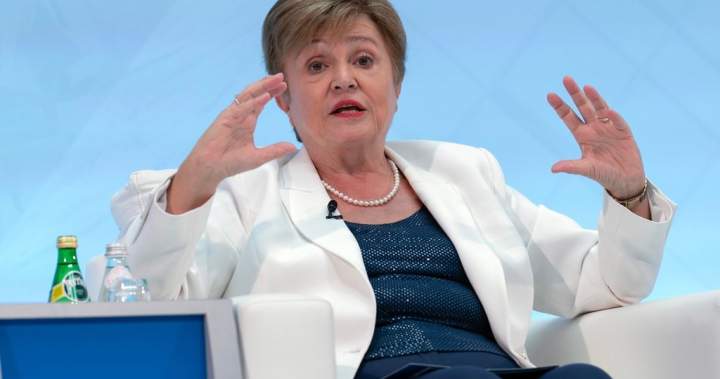
International Monetary Fund chief Kristalina Georgieva on Thursday underscored the importance of keeping central banks independent and threw her support behind beleaguered Federal Reserve Chair Jerome Powell, who is facing a Trump administration investigation for renovation cost overruns.
Georgieva told Reuters in an interview that there was ample evidence that central bank independence worked in the interest of businesses and households, and that evidence-based, data-based decision-making is good for the economy.
The IMF managing director said she had worked with Powell and respected his professionalism.
“I have worked with Jay Powell. He is a very good professional, very decent man, and I think that his standing among his colleagues tells the story,” she said, when asked about a letter of support signed by her predecessor, Christine Lagarde, now head of the European Central Bank, and other large central banks.
Powell on Sunday disclosed that the Trump administration had opened an investigation into him over cost overruns for a $2.5 billion project to renovate two historical buildings at the Fed’s Washington headquarters complex.
Get daily National news
Get the day’s top news, political, economic, and current affairs headlines, delivered to your inbox once a day.
Powell denies wrongdoing and has called the unprecedented actions a pretext to put pressure on him for not bowing to U.S. President Donald Trump’s long-running demands for sharply lower interest rates.


The probe has sparked widespread criticism from some key members of Trump’s Republican Party in the U.S. Senate, which must confirm his nominee to succeed Powell, along with foreign economic officials, investors and former U.S. government officials from both political parties.
Trump has repeatedly derided Powell’s leadership of the Fed and attacked him, often personally, over what he sees as the Fed chair’s slow moves to cut interest rates. On Wednesday, he dismissed concerns that eroding central bank independence would undermine the value of the U.S. dollar and spark inflation, telling Reuters, “I don’t care.”
Georgieva said the IMF looked carefully at issues such as monetary and financial stability, as well as the strength of a country’s institutions. It was specifically interested in the Fed, given the role of the U.S. dollar as a reserve currency.
“It would be very good to see that there is a recognition … that the Fed is precious for the Americans. It is very important for the rest of the world,” she said.
Trump has also attempted to fire another Fed official, Governor Lisa Cook, who has challenged her termination in a legal case that will be argued before the Supreme Court next week.

B.C. Premier David Eby spoke to reporters on Thursday morning from Mumbai, India, during his six-day trade mission.
He said that mining and energy companies in India are showing an interest in B.C.
“They are looking strongly to LNG as one of their ways of reducing carbon intensity, as well as reducing smog in the country,” Eby said.
“And so B.C. LNG has been an item of considerable interest, especially the projects that are reaching final investment decision over the next year — LNG Canada Phase 2, KSI Lisims LNG — as well as the projects that are under construction like Woodfibre LNG.”

Eby was also asked about the rise in extortion cases in B.C.
He said the province’s extortion task force will provide an update next week.
Get breaking National news
For news impacting Canada and around the world, sign up for breaking news alerts delivered directly to you when they happen.
“We have assembled a remarkable and historic task force, RCMP, CBSA,” Eby said.


“There are more police in Surrey right now than there have ever been. The RCMP has surged resources into the community.”
Eby said he has not been happy with the fact that there has been no update from the task force and he has asked them to provide one.
“There have been some important developments, people deported, an arrest here in India, cooperation between the Indian government and the Canadian government on this at the law enforcement level,” he added.
“That needs to continue, but, bluntly, we need better results, we need to see more arrests and whatever we can do to support the police to get the job done, we will do so.”
As of Jan. 12, Surrey police said there have been 16 reported extortion incidents in the city since the beginning of the year.
© 2026 Global News, a division of Corus Entertainment Inc.
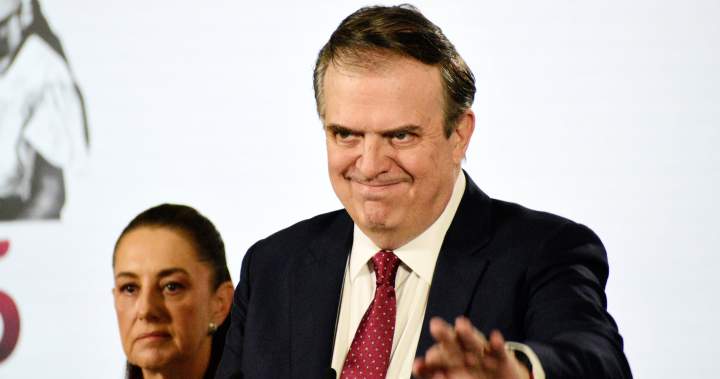
Amid persistent doubts over the future of the Canada-United States-Mexico trade agreement (CUSMA), Mexico’s Economy Minister Marcelo Ebrard insisted on Thursday that the agreement remains firmly intact and that the three countries will close a deal to extend it.
“We’re already in the treaty review phase, and we have to finish by July 1; that’s our deadline,” Ebrard said during Mexican President Claudia Sheinbaum’s daily morning press conference.
“We have made good progress on all the points that concern each of the parties.”
Ebrard’s comments were his first on the topic since U.S. President Donald Trump again cast doubt on the treaty’s future earlier this week.
“There’s no real advantage to it, it’s irrelevant,” Trump said on Tuesday, as he toured a Ford factory in Dearborn, Michigan.
The trilateral trade agreement, known as USMCA, replaced the North American Free Trade Agreement in 2020 and is a backbone of Mexico’s economy.
The treaty, which was negotiated during Trump’s first term, requires the three countries to hold a joint review this year to extend the pact.
Get breaking National news
For news impacting Canada and around the world, sign up for breaking news alerts delivered directly to you when they happen.
If extended, the treaty will remain in place another 16 years. If not, it is subject to annual reviews.

Technically, July 1 is a key date in the treaty’s review process, but many analysts expect negotiations to extend late into 2026 and said Trump will likely avoid extending the treaty before the U.S. midterm elections in November.

Trump’s recent threats to pursue military action against cartels have also added a new layer of uncertainty to U.S.-Mexico relations.
“I think Ebrard is betting on a best-case scenario, but the window for a July successful review is closing fast,” said Alexia Bautista, a former Mexican diplomat and lead Mexico analyst at the political risk consultancy firm Horizon Engage.
“Given recent events and statements, the risk is that Trump injects security into the process, turning the trade review into a far more political negotiation.”
Pedro Casas, chief executive of the American Chamber of Commerce of Mexico, said he expects the U.S. will continue imposing tariffs on a wide spectrum of Mexican exports, regardless of the treaty’s future.
The Trump administration has imposed sweeping 50 per cent duties on steel and aluminum exports to the U.S., along with a 25 per cent tariff on cars shipped from Mexico, even when those vehicles comply with the terms of the trade deal.
“I think the most likely scenario is a positive review process where we agree to extend the treaty for another 16 years, but steep tariffs still remain on Mexican exports that undermine the strength of the agreement,” Casas said.


IMF chief backs Jerome Powell, U.S. Fed independence amid Trump pressure – National TenX News

B.C. Premier David Eby says province’s LNG, mining of interest to India TenX News

Mexico confident CUSMA will remain as Trump suggests it could expire – National TenX News


-

 Fashion10 months ago
These ’90s fashion trends are making a comeback in 2017
-

 Entertainment10 months ago
The final 6 ‘Game of Thrones’ episodes might feel like a full season
-

 TenX Exclusive10 months ago
अमर योद्धा: राइफलमैन जसवंत सिंह रावत की वीरगाथा
-

 Politics8 months ago
Before being named Pope Leo XIV, he was Cardinal Robert Prevost. Who is he? – National TenX News
-

 Politics9 months ago
Puerto Rico faces island-wide blackout, sparking anger from officials – National TenX News
-

 Fashion10 months ago
According to Dior Couture, this taboo fashion accessory is back
-

 Tech10 months ago
Indian-AI-software-which-caught-30-thousand-criminals-and-busted-18-terrorist-modules-its-demand-is-increasing-in-foreign-countries-also – News18 हिंदी
-

 Politics9 months ago
Scientists detect possible signs of life on another planet — but it’s not aliens – National TenX News